All Blog
Blog
Batillipes chandrayaani

Context:
- A new species of marine tardigrade discovered from the southeast coast of Tamil Nadu has been named Batillipes chandrayaani after the Chandrayaan-3 moon mission by researchers at the Cochin University of Science and Technology (Cusat).
Batillipes chandrayaani
- Batillipes Chandrayaani belongs to the phylum Tardigrada and the family Batillipedidae.
- The Batillipes Chandrayaani is the third marine tardigrade species identified in Indian waters, and the second found along the East Coast.
- Named in honor of the Chandrayaan-3 mission, this tardigrade measures about 0.15 millimeters in length and 0.04 millimeters in width, similar in size to its counterparts. It features a distinct trapezoid-shaped head and four pairs of legs adorned with sharp-tipped sensory spines.
- Interestingly, both male and female specimens exhibit comparable morphology and size.
- Batillipes Chandrayaani marks the 39th species documented under the Batillipes genus.
- Prior discoveries include Stygarctus keralensis from the southwest coast in 2021 and Batillipes kalami from the southeast coast in 2023.
Tardigrades:
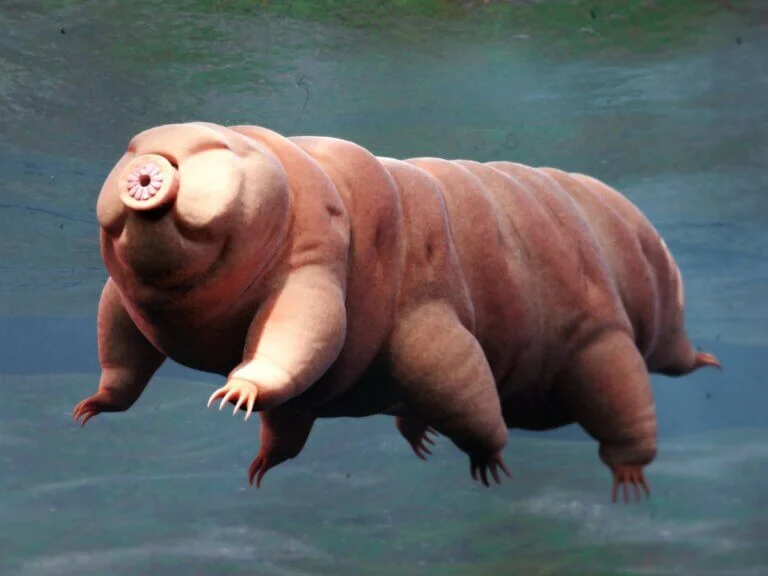
- Tardigrades, also known as water bears or moss piglets, are microscopic, multicellular organisms belonging to the phylum Tardigrada. They are among the most resilient animals on Earth.Marine tardigrades account for 17% of all known tardigrade species and are found in all the oceans.
- Details about Tardigrades:
- Habitats: Tardigrades are found in diverse habitats worldwide, including terrestrial environments such as mosses, lichens, soil, and leaf litter, as well as aquatic environments like freshwater and marine ecosystems. They can thrive in extreme conditions, ranging from polar regions to deserts, deep sea trenches, and even outer space.
- Resilience: Tardigrades are renowned for their remarkable resilience and ability to survive extreme environmental conditions and they can withstand extremes of temperature, pressure, radiation, and desiccation, as well as exposure to vacuum and high levels of toxins.
- Anatomy: Tardigrades have a distinctive barrel-shaped body with four pairs of stubby legs, each typically ending in claws or adhesive pads. They possess a well-developed buccopharyngeal apparatus used for feeding, and their digestive system includes a simple gut.
- Life Cycle: Tardigrades undergo a simple life cycle, typically consisting of four stages: egg, immature stage (larva), sexually mature adult, and molted exuvia. They reproduce sexually, with males and females producing sperm and eggs, respectively. Some species can also reproduce asexually by parthenogenesis.
- Feeding: Tardigrades are primarily microphagous feeders, meaning they consume microscopic food particles such as algae, bacteria, and small invertebrates. They use their stylets, which are needle-like structures located in their mouth, to pierce and suck fluids from their prey.
- Cryptobiosis: Tardigrades have the remarkable ability to enter a state of cryptobiosis in response to unfavorable environmental conditions. During cryptobiosis, they undergo extreme dehydration and metabolic shutdown, effectively suspending their biological processes until conditions become favorable again.
- Research Interest: Tardigrades have attracted significant attention from scientists due to their unique biology and extreme resilience. They are studied for their potential applications in fields such as astrobiology, biotechnology, and medicine, as well as their insights into the mechanisms of stress tolerance and adaptation.