

Current Affairs
UPSC Mugger crocodiles, Valmiki Tiger Reserve and , Chitwan National Park - English
Why in inews: According to a recent study, anthropogenic threats like illegal fishing and sand mining pose a threat to the mugger crocodiles (Crocodylus plaustris) of the Rapti river.
About mugger crocodiles :

- The mugger crocodile (Crocodylus palustris ) is a medium-sized broad-snouted crocodile, also known as the mugger and the marsh crocodile.
- It inhabits marshes, lakes, rivers, and artificial ponds.
- Geographic Range:
- They are found all over south Asia — India, Pakistan, Sri Lanka, Nepal, and Bangladesh — as well as south-eastern Iran.
- The mugger is found in 15 Indian states, with the largest populations in the middle Ganges (Bihar-Jharkhand) and Chambal (Madhya Pradesh, Gujarat, and Rajasthan) basins.
Conservation Status:
- CITES Appendix I
- IUCN Red List: Vulnerable
Conservation Projects:
- Mugger Project At Ramatirtha
- Kakra Crocodile Trail: it is going on in Terai Eastern Forest Division at Khatima, Uttarakhand.
- The Indian Crocodile Conservation Project: it was launched in 1975 in different states in the country.
Other crocodiles species in India
Saltwater or Estuarine Crocodile
- Habitat: Blackish and freshwater regions of eastern India, Southeast Asia, and northern Australia.
- IUCN Red List: Least Concern
- Wild Life (Protection) Act, 1972: Schedule I
Gharial (Gavialis gangeticus)
- It is the longest among all living crocodilians.
- IUCN Red List: Critically Endangered
- Wildlife Protection Act, 1972: Schedule I
- CITES : Appendix I
About Valmiki Tiger Reserve :
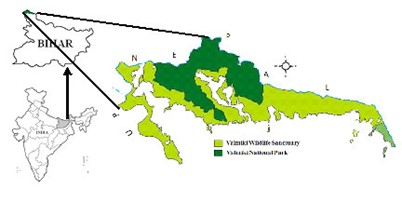
- Valmiki Tiger Reserve forms the easternmost limit of the Himalayan Terai forests in India.
- It is the only tiger reserve in Bihar.
- It is situated in the Gangetic Plains bio-geographic zone of the country; the forest has a combination of Bhabar and terai tracts.
- It lies in the northwestern portion of the West Champaran district of Bihar.
- Wild mammals found in the forests of Valmiki Tiger Reserve include tiger, sloth bear, leopard, wild dog, bison, wild boar, etc.
About Chitwan National Park:
- Chitwan National Park (CNP), established in 1973, was Nepal’s first National Park.
- It is located in the Southern Central Terai of Nepal.
- The park is the last surviving example of the natural ecosystems of the ‘Terai’ region and covers subtropical lowland, wedged between two east-west river valleys at the base of the Siwalik range of the outer Himalayas.
- The core area lies between the Narayani (Gandak) and Rapti rivers to the north and the Reu River and Nepal-India international border in the south, over the Sumeswar and Churia hills, and from the Dawney hills west of the Narayani, and borders with Parsa Wildlife Reserve to the east.
- The Chitwan National Park (CNP) is a world heritage property. Beeshazar within it were designated as a wetland of international importance under the Ramsar Convention.
- In 2003, and associated lakes the buffer zone
About the Gandak River :
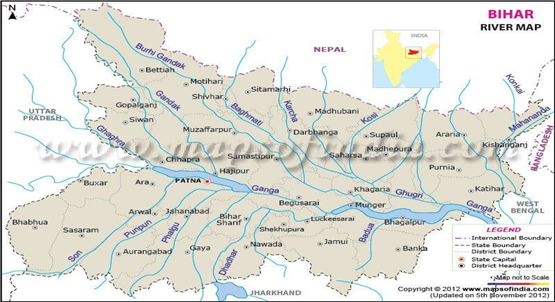
- It is also known as the Kali Gandaki and Narayani after the confluence with the Trisuli river in Nepal.
- It is a north-bank tributary of the Ganga in India.
- Origin — It rises in Tibet near the Nepal border.
- It flows southwest into India and then turns southeast along the Uttar Pradesh–Bihar state border and across the Indo-Gangetic Plain.
About Rapti River:
- The West Rapti River is a tributary of the Ghaghara River.
- It has its origins in Nepal.
- The West Rapti River originates at a summit in the Western Himalayas and the Mahabharat range of mountains.
- It joins Ganga River near Patna, Bihar.
- Lungri Khola, Jhimruk Khola, Ami River, Rohini River are the major left-bank tributaries of Rapti.
- Arun Khola is the right bank tributary of the Rapti.
SI/POLICE ACHIEVERS Achievers
-

DEVARAJAN
SI / POLICE SI / POLICE
