

CeNS–IIT Delhi technique stops colour blurring in white LEDs – Quiz (28.11.2026)
CeNS–IIT Delhi technique stops colour blurring in white LEDs – Quiz (28.11.2026) – 5 questions, subject: Current Affairs. Every question has the correct answer with a two-line explanation; tap "Show Answer". Free practice for TNPSC, UPSC, SSC, Bank and RRB exams – Shanmugam IAS Academy, Coimbatore.
Link to this page from your website / blog (HTML code)
Correct Answer: D [Blue]
Explanation:
Blue – a yellow phosphor (Ce:YAG) converts part of the blue light and the mix looks white. Efficient blue LEDs won the 2014 Physics Nobel.
Correct Answer: C [Forward biased]
Explanation:
Forward biased – electrons and holes then recombine at the junction and release energy as light. Under reverse bias almost no current flows.
Correct Answer: B [Calcium titanate]
Explanation:
Calcium titanate (CaTiO₃), named in 1839 after Russian mineral collector Lev Perovski. CsPbBr₃ (green) and CsPbI₃ (red), used here, share its ABX₃ structure.
Correct Answer: A [Aluminium oxide]
Explanation:
Aluminium oxide (Al₂O₃), i.e. alumina – used in this study as a thin barrier against ion migration. Chromium makes ruby red.
Correct Answer: D [Kelvin]
Explanation:
Kelvin (K). Low values look warm (yellowish), high values cool (bluish). Lumen is luminous flux; lux is illuminance.
29 November 2026 TNPSC Current Affairs in Tamil | நடப்பு நிகழ்வுகள் | TNPSC Group 4 வினா விடை
📚 TNPSC குரூப் 4 / 2 / 2A – பொதுத்தமிழ், பொது அறிவு நூல்கள்
PDF நூல்கள் · ₹149 முதல் · ஒவ்வொன்றுக்கும் 50 பக்க இலவச மாதிரி · UPI-இல் பணம் செலுத்தியதும் உடனே பதிவிறக்கம்
 பொதுத் தமிழ் — முழுமையான கையேடு (TNPSC குரூப் 2 · 2A · 4)
₹199
 TNPSC முழுமையான பாடநூல்கள் – முழுத் தொகுப்பு (9 நூல்கள்)
₹1599
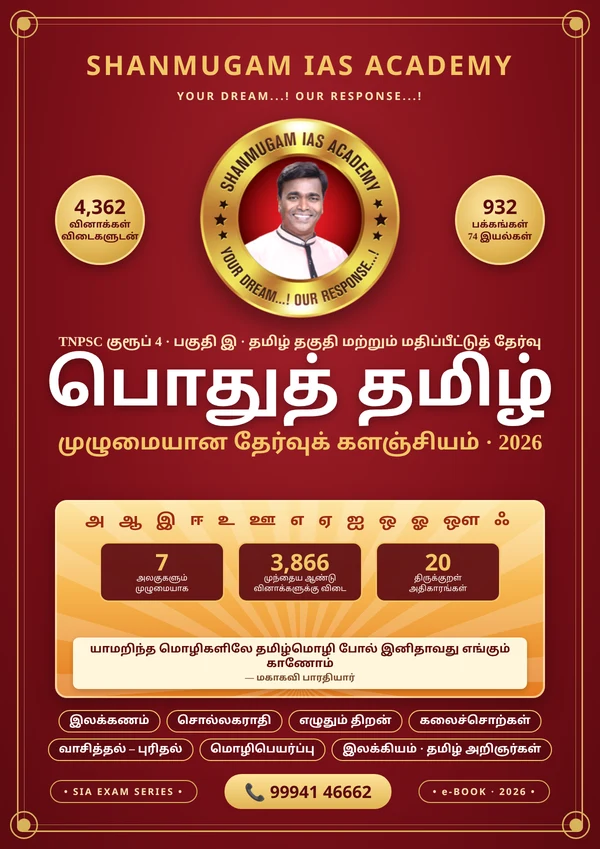 TNPSC குரூப் 4 பொதுத் தமிழ் – முழுமையான தேர்வுக் களஞ்சியம் 2026
₹249
 பொதுத் தமிழ் — முந்தைய ஆண்டு வினா – விடை – விளக்கம் (புதிய பாடத்திட்டம்)
₹199
TNPSC குரூப் 1, 2/2A, 4 – நேரடி வகுப்புகள் · கோவை & மதுரை
2006 முதல் சண்முகம் IAS அகாடமி · Classroom & online coaching in Coimbatore and Madurai
