

El Niño-linked dry spell helped TN's dengue decline: Health Director – Quiz (23.11.2026)
El Niño-linked dry spell helped TN's dengue decline: Health Director – Quiz (23.11.2026) – 5 questions, subject: Current Affairs. Every question has the correct answer with a two-line explanation; tap "Show Answer". Free practice for TNPSC, UPSC, SSC, Bank and RRB exams – Shanmugam IAS Academy, Coimbatore.
Link to this page from your website / blog (HTML code)
Correct Answer: D [Four]
Explanation:
Four – DENV-1 to DENV-4. Infection with one gives lifelong immunity only to that serotype; a later infection with a different serotype raises the risk of severe dengue.
Correct Answer: C [Japanese encephalitis]
Explanation:
Japanese encephalitis (spread by Culex); yellow fever and Zika are also flaviviruses. Chikungunya is an alphavirus; malaria a parasite.
Correct Answer: D [Andrographis paniculata]
Explanation:
Andrographis paniculata (nilavembu) with eight other herbs. Azadirachta is neem, Ocimum is tulsi, Phyllanthus is keezhanelli.
Correct Answer: A [16 May]
Explanation:
16 May – pre-monsoon awareness (2026: 'Check, Clean and Cover'). 20 Aug is World Mosquito Day; 25 Apr is World Malaria Day.
Correct Answer: B [Platelet count]
Explanation:
Platelet count – a rapid fall in platelets with a rising haematocrit (a sign of plasma leakage) is a warning sign in the WHO (2009) guidelines; such patients need close monitoring and careful fluid therapy.
நடப்பு நிகழ்வுகள் 24 நவம்பர் 2026 | Today Current Affairs in Tamil | TNPSC Group 4 வினா விடை
📚 TNPSC குரூப் 4 / 2 / 2A – பொதுத்தமிழ், பொது அறிவு நூல்கள்
PDF நூல்கள் · ₹149 முதல் · ஒவ்வொன்றுக்கும் 50 பக்க இலவச மாதிரி · UPI-இல் பணம் செலுத்தியதும் உடனே பதிவிறக்கம்
 பொதுத் தமிழ் — முழுமையான கையேடு (TNPSC குரூப் 2 · 2A · 4)
₹199
 TNPSC முழுமையான பாடநூல்கள் – முழுத் தொகுப்பு (9 நூல்கள்)
₹1599
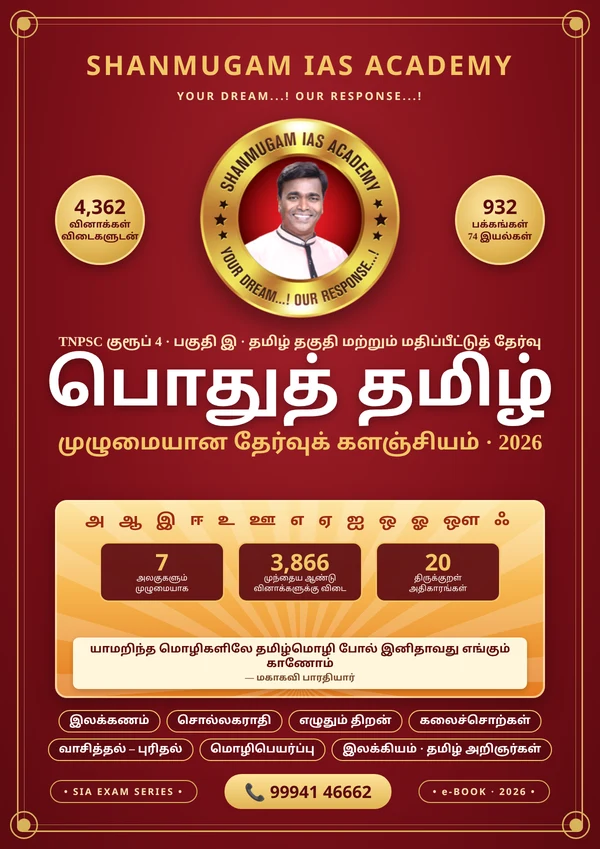 TNPSC குரூப் 4 பொதுத் தமிழ் – முழுமையான தேர்வுக் களஞ்சியம் 2026
₹249
 பொதுத் தமிழ் — முந்தைய ஆண்டு வினா – விடை – விளக்கம் (புதிய பாடத்திட்டம்)
₹199
TNPSC குரூப் 1, 2/2A, 4 – நேரடி வகுப்புகள் · கோவை & மதுரை
2006 முதல் சண்முகம் IAS அகாடமி · Classroom & online coaching in Coimbatore and Madurai
