

Group 2/2A Mains M02-E Ch.3: Classical Tamil (26 MCQs)
Group 2/2A Mains M02-E Ch.3: Classical Tamil (26 MCQs) – 26 வினாக்கள், பாடம்: தமிழக வரலாறு, பண்பாடு. ஒவ்வொரு வினாவுக்கும் சரியான விடையும் இரண்டு வரி விளக்கமும் உண்டு; "Show Answer" அழுத்திப் பாருங்கள். TNPSC குரூப் 1, 2, 2A, 4, SI, TET தேர்வுகளுக்கான இலவசப் பயிற்சி – சண்முகம் ஐ.ஏ.எஸ். அகாடமி, கோயம்புத்தூர்.
உங்கள் இணையதளம் / Blog-இல் இணைக்க (HTML code)
Correct Answer: B [Tamil]
விளக்கம்:
இந்தியாவில் முதன்முதலில் செம்மொழியாக அறிவிக்கப்பட்ட மொழி தமிழ் (12 அக்டோபர் 2004). அதன் பின் சமஸ்கிருதம் (2005), தெலுங்கு, கன்னடம் (2008), மலையாளம் (2013), ஒடியா (2014) ஆகியவை அறிவிக்கப்பட்டன.
Correct Answer: C [Telugu, Kannada]
விளக்கம்:
Telugu and Kannada were declared classical languages together in 2008. They followed Tamil (2004) and Sanskrit (2005), and were followed by Malayalam (2013) and Odia (2014).
Correct Answer: A [2014]
விளக்கம்:
Odia was granted classical-language status in 2014, the sixth language to get it. Malayalam received it in 2013 and the five newest languages were added in October 2024.
Correct Answer: D [11]
விளக்கம்:
In October 2024 five languages (Marathi, Pali, Prakrit, Assamese and Bengali) were added to the earlier six classical languages, making 11. The earlier six were Tamil (2004), Sanskrit (2005), Telugu and Kannada (2008), Malayalam (2013) and Odia (2014).
Correct Answer: C [Gujarati]
விளக்கம்:
3 அக்டோபர் 2024 அன்று மராத்தி, பாலி, பிராகிருதம், அசாமி, வங்காளம் ஆகிய ஐந்து மொழிகள் செம்மொழித் தகுதி பெற்றன; குஜராத்தி அதில் இல்லை. இதனால் இந்தியாவில் செம்மொழிகளின் எண்ணிக்கை 11 ஆனது.
Correct Answer: B [Parithimar Kalaignar]
விளக்கம்:
Parithimar Kalaignar (V.G. Suryanarayana Sastri) was among the first, early in the 20th century, to insist that Tamil is a classical language.
Correct Answer: A [Robert Caldwell]
விளக்கம்:
'A Comparative Grammar of the Dravidian or South-Indian Family of Languages' நூலை இராபர்ட் கால்டுவெல் 1856-இல் வெளியிட்டார். 'திராவிட மொழிக் குடும்பம்' என்ற கருத்தை 1816-இல் முதலில் முன்வைத்தவர் எஃப்.டபிள்யூ. எல்லிஸ்.
Correct Answer: D [Brahui]
விளக்கம்:
பாகிஸ்தானின் பலூசிஸ்தான் பகுதியில் பேசப்படும் பிராகுயி (Brahui) ஒரு வடதிராவிட மொழி. குருக், மால்தோ ஆகியவையும் வடதிராவிட மொழிகளே, ஆனால் அவை இந்தியாவில் (ஜார்க்கண்ட், ஒடிசா பகுதி) பேசப்படுகின்றன.
Correct Answer: B [South-Central Dravidian]
விளக்கம்:
Telugu belongs to the South-Central Dravidian branch, along with Gondi, Kui and Kuvi. Tamil, Malayalam, Kannada and Tulu belong to the South Dravidian branch.
Correct Answer: C [Agglutinative]
விளக்கம்:
In an agglutinative language like Tamil, suffixes are added one after another to an unchanging root, as in 'pada + ithu + kondu + irunthan'. A fusional language such as Sanskrit merges several meanings into one ending, and an isolating language such as Chinese uses separate words.
Correct Answer: A [The Chief Minister of Tamil Nadu]
விளக்கம்:
The Chief Minister of Tamil Nadu is the ex-officio chairperson of the governing board of the Central Institute of Classical Tamil. The institute itself is funded and administered under the Union Ministry of Education.
Correct Answer: B [Central Institute of Indian Languages, Mysore]
விளக்கம்:
தமிழ் செம்மொழியாக அறிவிக்கப்பட்ட பின், செம்மொழித் தமிழாய்வுக்கான மையம் முதலில் மைசூரில் உள்ள இந்திய மொழிகளின் நடுவண் நிறுவனத்தில் (CIIL) தொடங்கப்பட்டது. 2008-இல் அது சென்னைக்கு மாறி செம்மொழித் தமிழாய்வு மத்திய நிறுவனம் (CICT) ஆனது.
Correct Answer: D [41]
விளக்கம்:
The CICT has taken up 41 classical Tamil works for study, from the Tolkappiyam to the Muthollayiram. These include the 18 Sangam works, the 18 Keezhkanakku works, Silappathikaram, Manimekalai and Iraiyanar Akapporul.
Correct Answer: C [Coimbatore]
விளக்கம்:
உலகத் தமிழ்ச் செம்மொழி மாநாடு 2010 ஜூன் 23 முதல் 27 வரை கோயம்புத்தூரில் நடைபெற்றது. தமிழ் செம்மொழித் தகுதி பெற்றதைக் கொண்டாடிய இம்மாநாடு, வழக்கமான உலகத் தமிழ் மாநாட்டு வரிசையிலிருந்து வேறானது.
Correct Answer: A [1 and 2 only]
விளக்கம்:
Statements 1 and 2 are correct: the Central Institute of Classical Tamil (CICT) is an autonomous body in Chennai, and the Presidential Tolkappiyar Award for classical Tamil is given through it. Statement 3 is wrong because it functions under the Union Ministry of Education, not a Tamil Nadu department.
Correct Answer: D [1, 2 and 3]
விளக்கம்:
All three are correct: Tamil divides nouns into uyarthinai (humans and gods) and akrinai (all else), Old Tamil has no separate aspirated letters such as kha or gha, and Dravidian languages generally follow subject–object–verb order. These are standard features used to show Dravidian languages differ from Indo-Aryan.
Correct Answer: B [1 and 2 only]
விளக்கம்:
Statements 1 and 2 are correct: high antiquity of early texts and an original literary tradition are criteria for classical status. Statement 3 is wrong because a classical language need not still be spoken, as shown by Pali and Prakrit, which were declared classical in October 2024.
Correct Answer: D [A-3, B-4, C-1, D-2]
விளக்கம்:
The International Association for Tamil Research (IATR) was founded in 1964, the International Institute of Tamil Studies, Chennai, in 1970, Tamil University, Thanjavur, in 1981, and the Tamil Virtual University (now Tamil Virtual Academy) in 2001. So the match is A-3, B-4, C-1, D-2.
Correct Answer: A [A-3, B-4, C-2, D-1]
விளக்கம்:
Tulu belongs to South Dravidian, Gondi to South-Central Dravidian, Kolami to Central Dravidian and Kurukh to North Dravidian. So the match is A-3, B-4, C-2, D-1; Telugu also belongs to the South-Central group.
Correct Answer: D [2, 3, 4, 1]
விளக்கம்:
கால்டுவெல்லின் ஒப்பிலக்கணம் 1856, தஞ்சைத் தமிழ்ப் பல்கலைக்கழகம் 1981, தமிழ் முதல் செம்மொழி 2004, CICT மைசூரிலிருந்து சென்னைக்கு மாறி தன்னாட்சி பெற்றது 2008. எனவே வரிசை 2, 3, 4, 1.
Correct Answer: A [Both A and R are true and R is the correct explanation of A]
விளக்கம்:
Both statements are true and R explains A: Tamil is called a living classical language because it has been spoken and written without a break for more than two thousand years. Unlike Latin or classical Sanskrit, its ancient literature is still read and its language is used daily.
Correct Answer: D [A is false but R is true]
விளக்கம்:
A is false because Francis Whyte Ellis first pointed out a separate South Indian (Dravidian) language family in 1816. R is true: Robert Caldwell published 'A Comparative Grammar of the Dravidian or South-Indian Family of Languages' in 1856 and popularised the term 'Dravidian'.
Correct Answer: D [Thanjavur]
விளக்கம்:
தமிழ்ப் பல்கலைக்கழகம் 1981-இல் தஞ்சாவூரில் தமிழ் ஆய்வுக்கென்றே தொடங்கப்பட்டது. சிதம்பரம் (அண்ணாமலைப் பல்கலைக்கழகம்), சென்னை, மதுரை ஆகியவை இதன் இருப்பிடம் அல்ல; தமிழ் வளர்ச்சிக்கெனவே அமைந்த சிறப்புப் பல்கலைக்கழகம் இது.
Correct Answer: A [Perumbakkam]
விளக்கம்:
செம்மொழித் தமிழாய்வு மத்திய நிறுவனத்தின் (CICT) சொந்த வளாகம் சென்னை பெரும்பாக்கத்தில் உள்ளது; இதைப் பிரதமர் 12 ஜனவரி 2022 அன்று திறந்து வைத்தார். இந்நிறுவனம் 2008-இல் மைசூரிலிருந்து சென்னைக்கு மாறி இந்திய அரசின் கல்வி அமைச்சகத்தின் கீழ் தன்னாட்சி நிறுவனமாக இயங்குகிறது.
Correct Answer: C [A.R. Rahman]
விளக்கம்:
A.R. Rahman composed the music for 'Semmozhiyana Thamizh Mozhiyam', the theme song of the World Classical Tamil Conference held in Coimbatore in June 2010. The lyrics were written by M. Karunanidhi.
Correct Answer: B [1956]
விளக்கம்:
The Madras State Official Language Act of 1956 made Tamil the official language of the State.
➤ Full book – complete notes, model answers and all MCQs: M02-E Tamil Society (₹249): www.shanmugamiasacademy.in/study-materials/tnpsc-group-2-mains-tamil-society-english
Today Current Affairs in Tamil | 23 நவம்பர் 2026 | TNPSC Group 4 முக்கிய வினாக்கள்
📚 TNPSC குரூப் 2 / 2A Mains – மாதிரி விடைகளுடன் நூல்கள்
PDF நூல்கள் · ₹149 முதல் · ஒவ்வொன்றுக்கும் 50 பக்க இலவச மாதிரி · UPI-இல் பணம் செலுத்தியதும் உடனே பதிவிறக்கம்
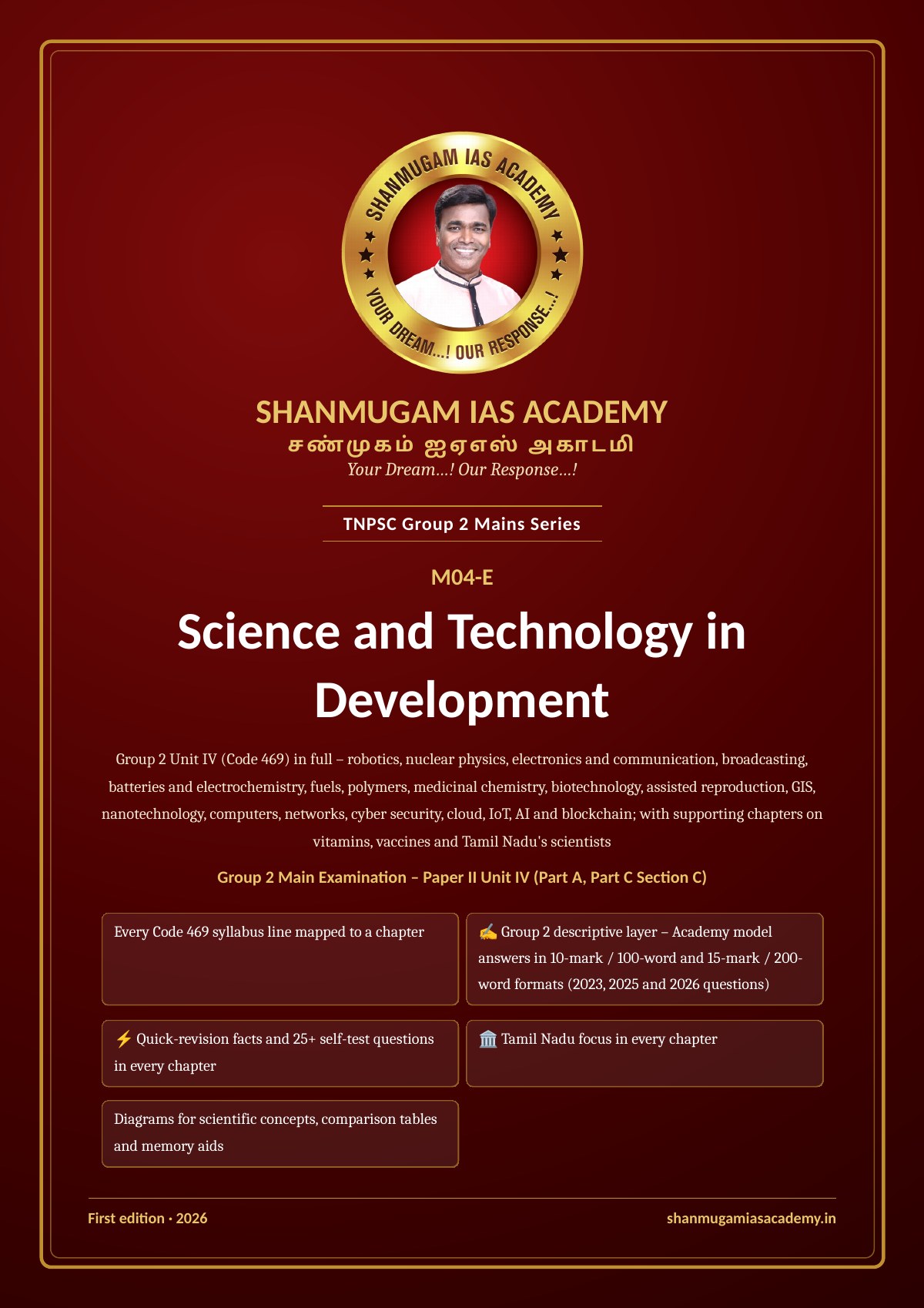 M04-E · Science & Technology – TNPSC Group 2/2A Mains (English)
₹249
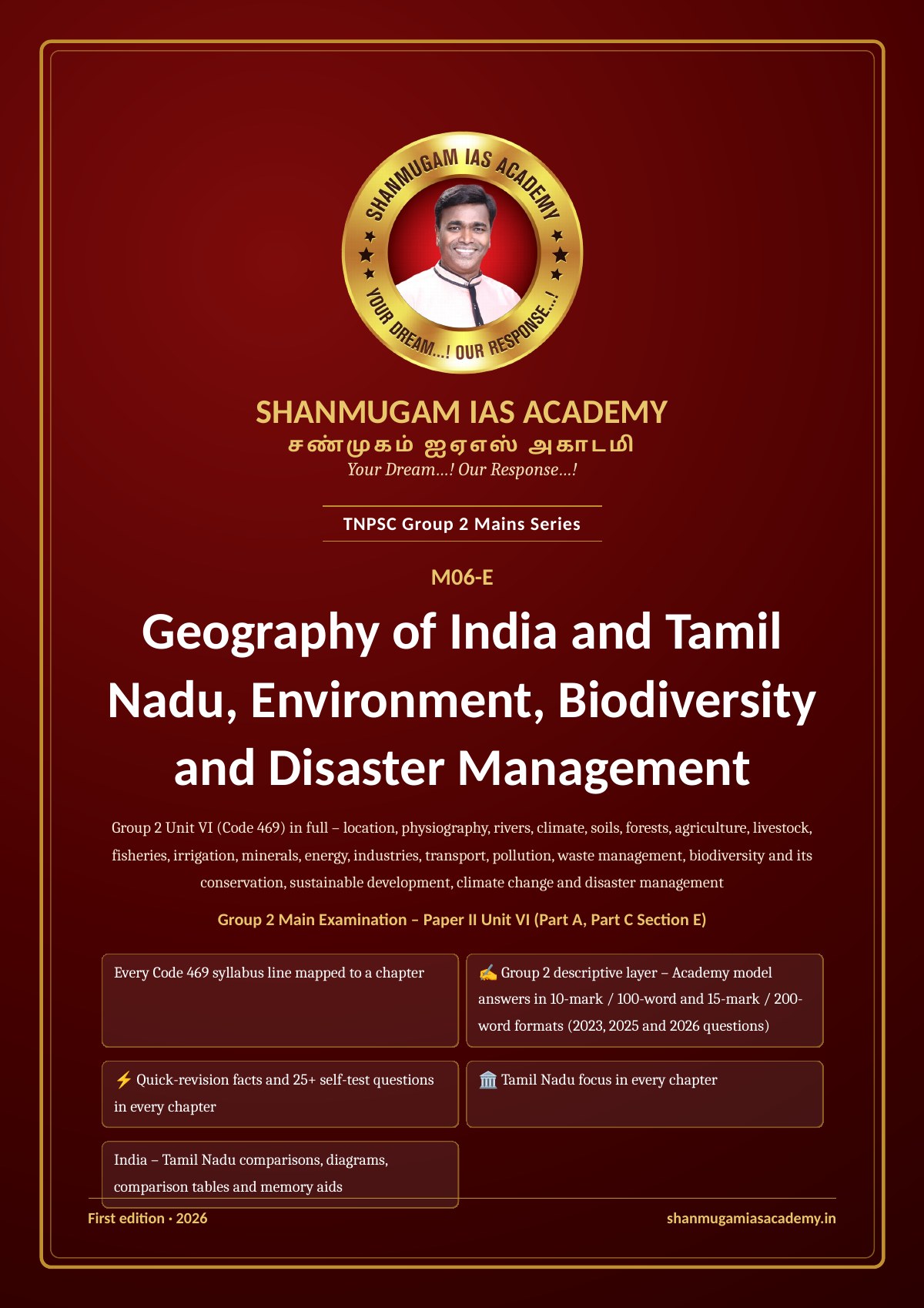 M06-E · Geography & Environment – TNPSC Group 2/2A Mains (English)
₹249
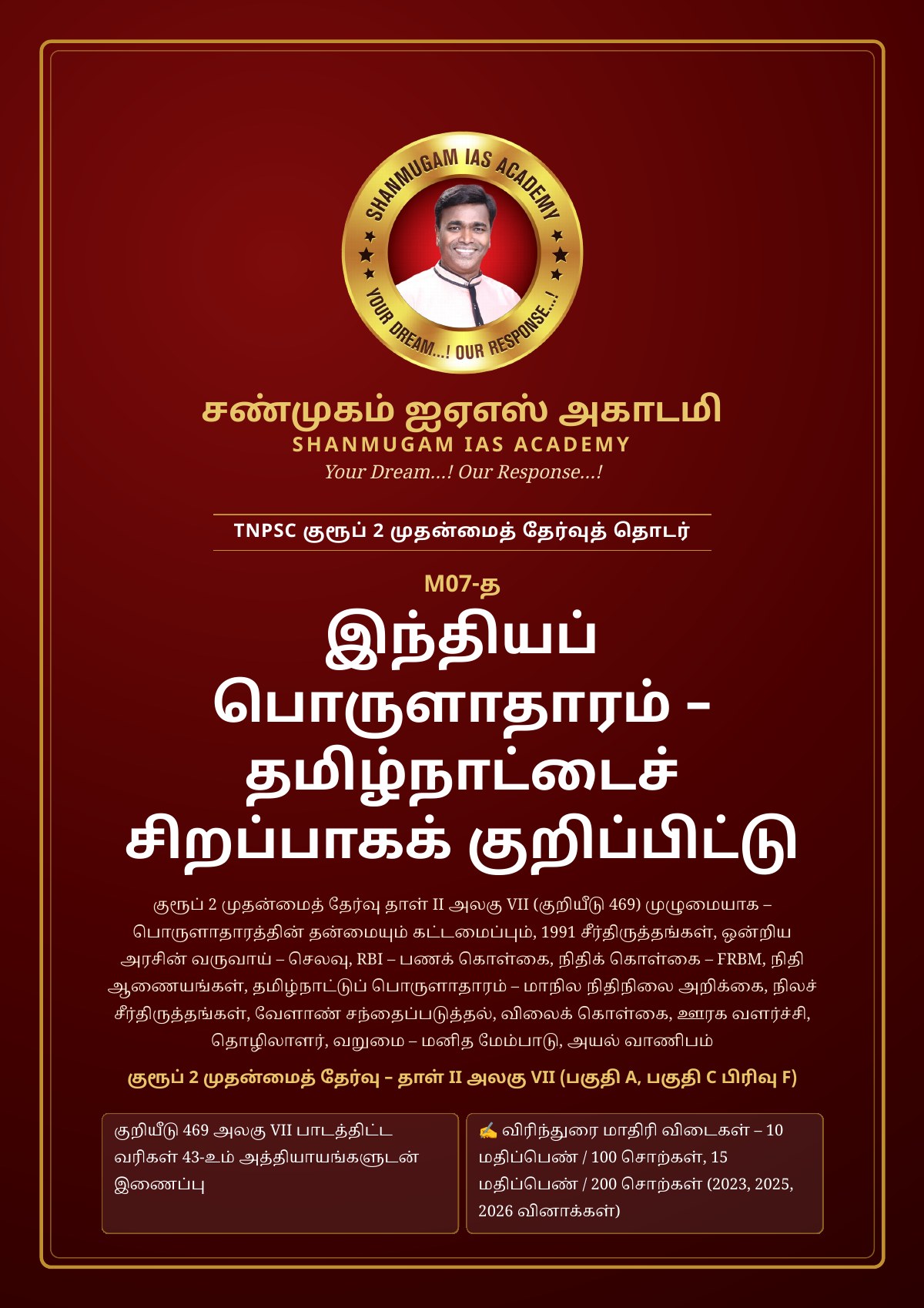 M07-த · இந்தியப் பொருளாதாரம் – TNPSC குரூப் 2/2A Mains (தமிழ்)
₹249
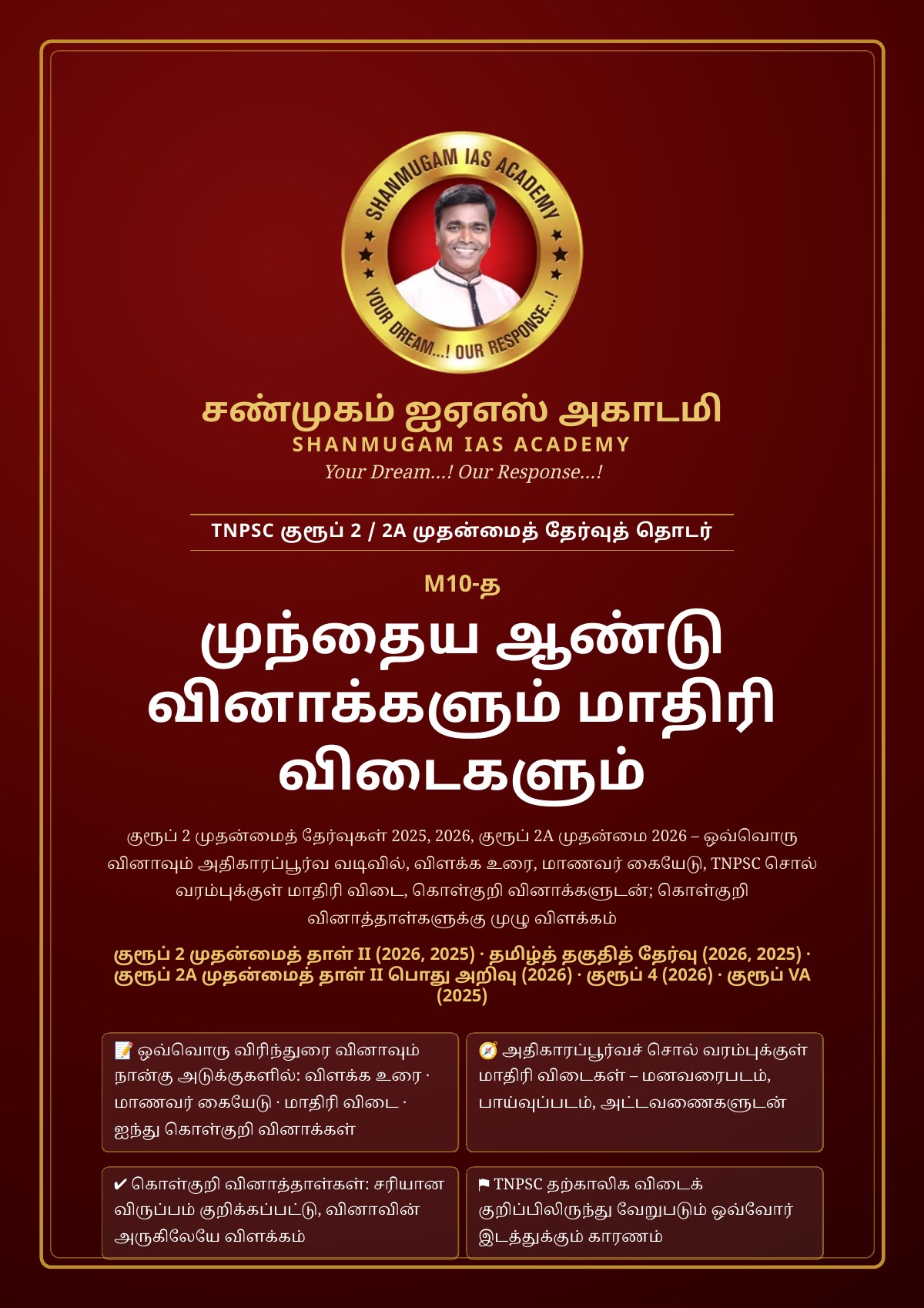 M10-த · குரூப் 2/2A Mains முந்தைய வினா & மாதிரி விடை (தமிழ்)
₹249
TNPSC குரூப் 1, 2/2A, 4 – நேரடி வகுப்புகள் · கோவை & மதுரை
2006 முதல் சண்முகம் IAS அகாடமி · Classroom & online coaching in Coimbatore and Madurai
