

Group 2/2A Mains M03-E Ch.3: Population Control… (25 MCQs)
Group 2/2A Mains M03-E Ch.3: Population Control… (25 MCQs) – 19 வினாக்கள், பாடம்: தமிழக பொருளாதாரம். ஒவ்வொரு வினாவுக்கும் சரியான விடையும் இரண்டு வரி விளக்கமும் உண்டு; "Show Answer" அழுத்திப் பாருங்கள். TNPSC குரூப் 1, 2, 2A, 4, SI, TET தேர்வுகளுக்கான இலவசப் பயிற்சி – சண்முகம் ஐ.ஏ.எஸ். அகாடமி, கோயம்புத்தூர்.
உங்கள் இணையதளம் / Blog-இல் இணைக்க (HTML code)
Correct Answer: B [1952]
விளக்கம்:
India launched its National Family Planning Programme in 1952, during the First Five Year Plan. It was the first state-sponsored family planning programme of its kind in the world.
Correct Answer: C [1977]
விளக்கம்:
In 1977, after the Emergency's forced sterilisation drive, the Janata government renamed the family planning programme as family welfare. The new name stressed voluntary acceptance and a wider focus on mother and child health.
Correct Answer: D [1996]
விளக்கம்:
The target-free approach, which dropped method-specific contraceptive targets set from above, was introduced across India in April 1996. It was later renamed the Community Needs Assessment Approach and paved the way for the RCH programme of 1997.
Correct Answer: A [2045]
விளக்கம்:
The long-term objective of NPP 2000 is a stable population by 2045, at a level consistent with sustainable economic growth, social development and environmental protection. Its medium-term objective was to bring TFR to replacement level (2.1) by 2010.
Correct Answer: B [The Prime Minister]
விளக்கம்:
The National Commission on Population, constituted in May 2000 under NPP 2000, is chaired by the Prime Minister. Its role is to review, monitor and guide implementation of the National Population Policy.
Correct Answer: C [below 100 per 1,00,000 live births]
விளக்கம்:
One of the national socio-demographic goals of NPP 2000 was to bring the maternal mortality ratio below 100 per 1,00,000 live births. The same policy aimed to reduce the infant mortality rate to below 30 per 1,000 live births, which is the tempting option a.
Correct Answer: D [84th]
விளக்கம்:
84-ஆவது அரசமைப்புத் திருத்தம் (2001) மக்களவைத் தொகுதி எண்ணிக்கை முடக்கத்தை 2026-க்குப் பிந்தைய முதல் கணக்கெடுப்பு வரை நீட்டித்தது. இந்த முடக்கத்தை முதலில் 2000 வரை கொண்டுவந்தது 42-ஆவது திருத்தம் (1976).
Correct Answer: A [1 and 2 only]
விளக்கம்:
NPP 2000's immediate objective is to meet the unmet need for contraception, and among its national goals is 80% institutional deliveries and 100% deliveries by trained persons. Statement 3 is wrong because the policy rests on voluntary and informed choice, not compulsion.
Correct Answer: B [an injectable contraceptive given once in three months]
விளக்கம்:
Antara is the injectable contraceptive DMPA (medroxyprogesterone acetate) given once every three months, offered free in public health facilities under the national family planning programme. Its companion new method, Chhaya, is a weekly non-hormonal pill, which is the tempting option a.
Correct Answer: C [146 high-fertility districts in 7 states]
விளக்கம்:
Mission Parivar Vikas, launched in 2016, covered 146 high-fertility districts (TFR of 3 or more) in seven states – Uttar Pradesh, Bihar, Rajasthan, Madhya Pradesh, Chhattisgarh, Jharkhand and Assam. It improved access to contraceptives and family planning services in these districts.
Correct Answer: D [21 days]
விளக்கம்:
Under the Registration of Births and Deaths Act, 1969, a birth or death reported within 21 days of the event is registered free of charge. Registration after 21 days needs a late fee, and after one year an order of a magistrate is also required.
Correct Answer: D [1, 2 and 3]
விளக்கம்:
The Registration of Births and Deaths (Amendment) Act, 2023 came into force on 1 October 2023 and created national and state databases of registered births and deaths. It also made the digital birth certificate a single document to prove date of birth for school admission, government jobs, driving licence and voter list, so all three statements are correct.
Correct Answer: B [A-2, B-4, C-1, D-3]
விளக்கம்:
CRS records registered births and deaths, SRS gives annual sample estimates of IMR and TFR, MCCD (Medical Certification of Cause of Death) records causes of death in hospitals, and NFHS collects contraception and nutrition data from household samples. Hence A-2, B-4, C-1, D-3.
Correct Answer: A [International Institute for Population Sciences, Mumbai]
விளக்கம்:
The National Family Health Survey is conducted by the Union Ministry of Health and Family Welfare with the International Institute for Population Sciences (IIPS), Mumbai, as the nodal agency. The first round, NFHS-1, was held in 1992–93.
Correct Answer: C [4, 3, 2, 1]
விளக்கம்:
கெய்ரோ ICPD (1994), RCH-I திட்டம் (1997), தேசிய ஊரகச் சுகாதார இயக்கம் (2005), மிஷன் பரிவார் விகாஸ் (2016) என்பதால் வரிசை 4, 3, 2, 1. மிஷன் பரிவார் விகாஸ் அதிகக் கருவுறுதல் கொண்ட மாவட்டங்களில் குடும்பநல சேவைகளை விரிவாக்கும் திட்டம்.
Correct Answer: A [Both A and R are true, and R correctly explains A]
விளக்கம்:
The 84th Constitutional Amendment Act, 2001 extended the freeze on the number of Lok Sabha seats allotted to states, based on the 1971 Census, until the first Census after 2026. The aim was that states which succeeded in population control should not lose representation, so R explains A.
Correct Answer: C [A is true, R is false]
விளக்கம்:
The Sample Registration System is a large-scale sample-based dual record survey that gives reliable annual state-wise estimates of IMR, TFR and birth and death rates. It is not a complete registration; complete registration of births and deaths is done by the Civil Registration System, so A is true and R is false.
Correct Answer: B [Village Health Nurse]
விளக்கம்:
In Tamil Nadu the Village Health Nurse (VHN) posted at each health sub-centre is the frontline worker for maternal and child care, immunisation and contraceptive counselling. She also registers pregnant women in the PICME system.
Correct Answer: A [Both A and R are true, and R correctly explains A]
விளக்கம்:
Tamil Nadu reached replacement fertility long before India, and high female education with a strong primary health system explains this, so R explains A.
➤ Full book – complete notes, model answers and all MCQs: M03-E Social Issues (₹249): www.shanmugamiasacademy.in/study-materials/tnpsc-group-2-mains-social-issues-english
Today Current Affairs in Tamil | 23 நவம்பர் 2026 | TNPSC Group 4 முக்கிய வினாக்கள்
📚 TNPSC குரூப் 2 / 2A Mains – மாதிரி விடைகளுடன் நூல்கள்
PDF நூல்கள் · ₹149 முதல் · ஒவ்வொன்றுக்கும் 50 பக்க இலவச மாதிரி · UPI-இல் பணம் செலுத்தியதும் உடனே பதிவிறக்கம்
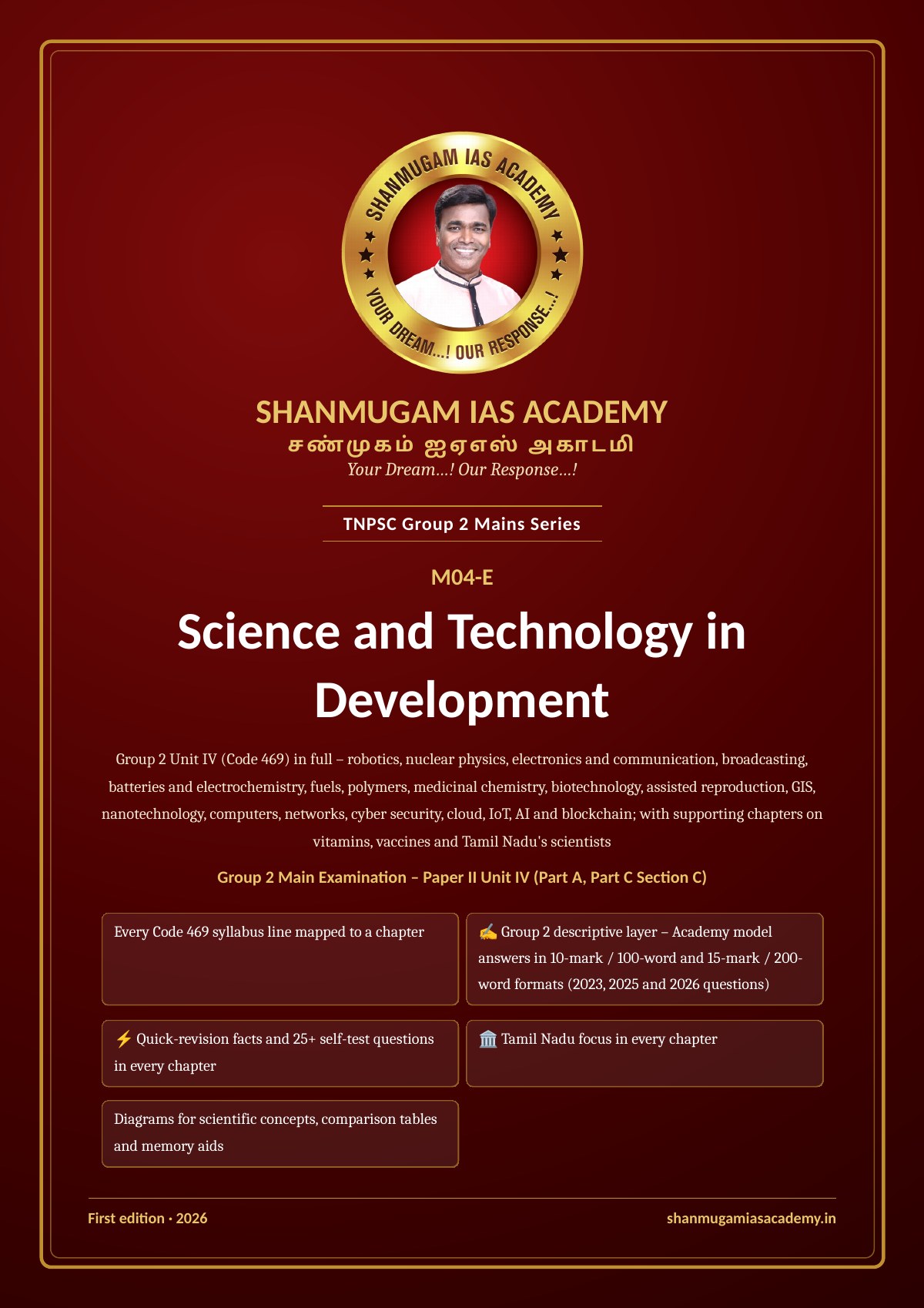 M04-E · Science & Technology – TNPSC Group 2/2A Mains (English)
₹249
 M06-E · Geography & Environment – TNPSC Group 2/2A Mains (English)
₹249
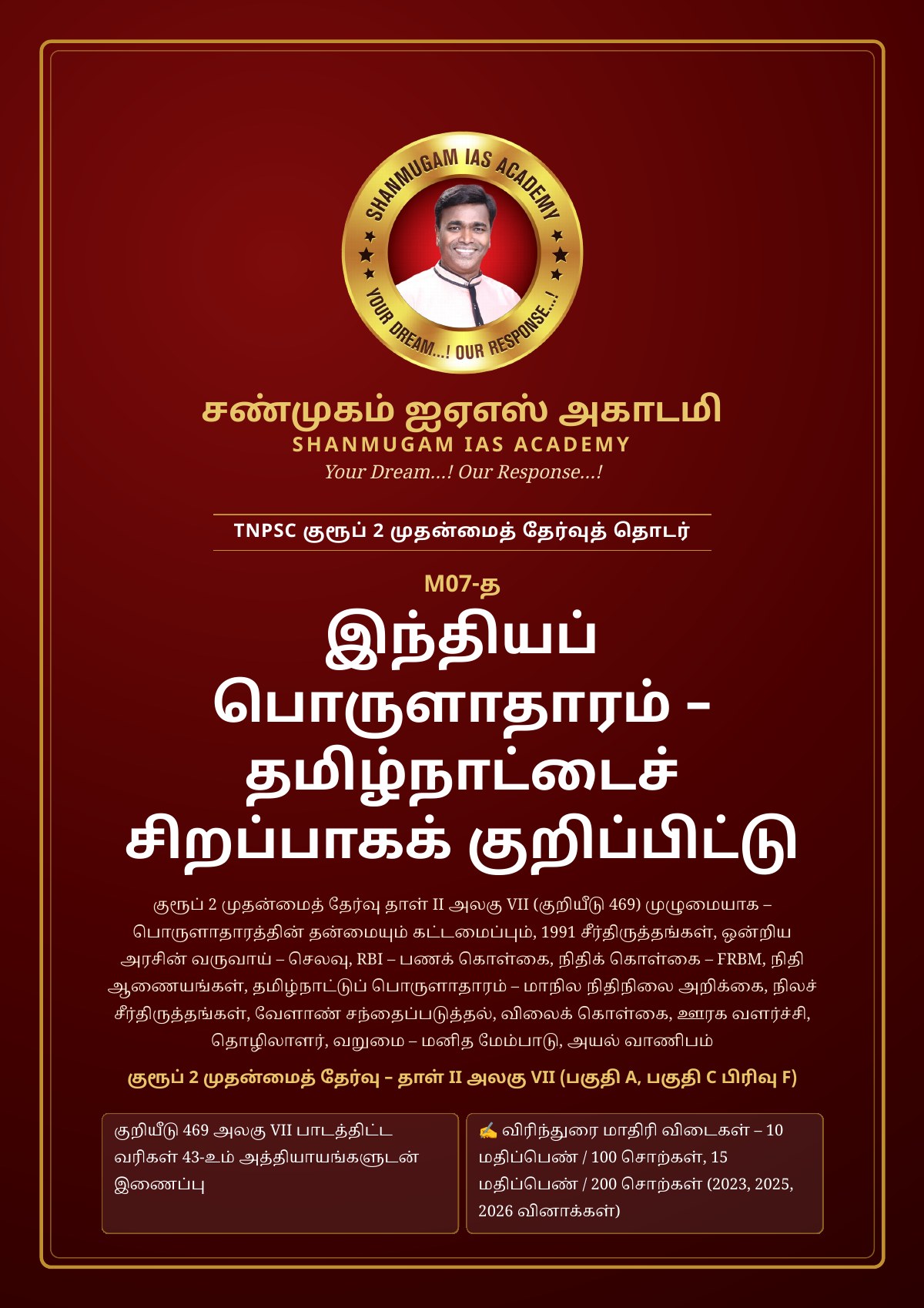 M07-த · இந்தியப் பொருளாதாரம் – TNPSC குரூப் 2/2A Mains (தமிழ்)
₹249
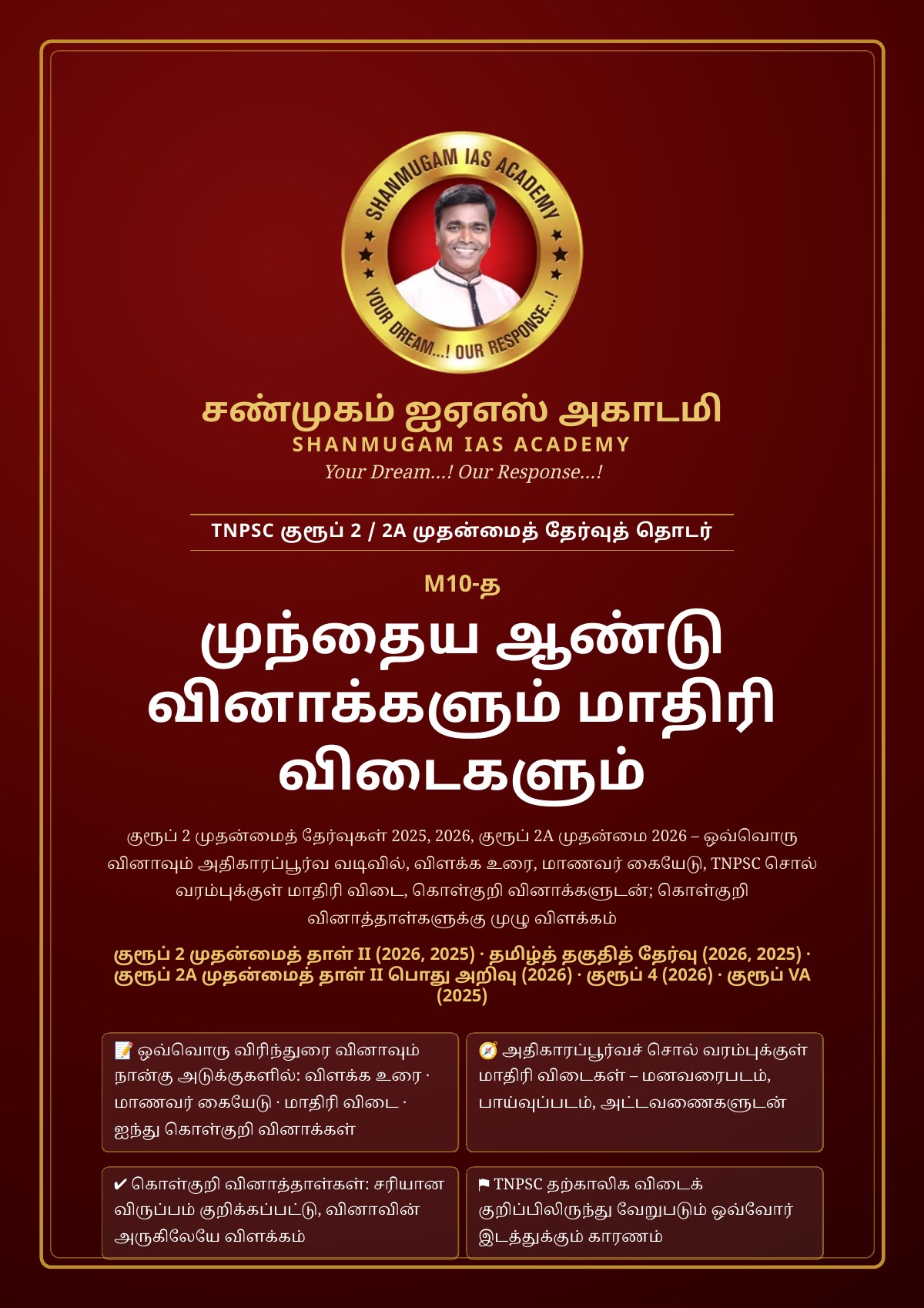 M10-த · குரூப் 2/2A Mains முந்தைய வினா & மாதிரி விடை (தமிழ்)
₹249
TNPSC குரூப் 1, 2/2A, 4 – நேரடி வகுப்புகள் · கோவை & மதுரை
2006 முதல் சண்முகம் IAS அகாடமி · Classroom & online coaching in Coimbatore and Madurai
