

Group 2/2A Mains M04-E Ch.12: Recombinant DNA, DNA… (25 MCQs)
Group 2/2A Mains M04-E Ch.12: Recombinant DNA, DNA… (25 MCQs) – 25 வினாக்கள், பாடம்: அறிவியல். ஒவ்வொரு வினாவுக்கும் சரியான விடையும் இரண்டு வரி விளக்கமும் உண்டு; "Show Answer" அழுத்திப் பாருங்கள். TNPSC குரூப் 1, 2, 2A, 4, SI, TET தேர்வுகளுக்கான இலவசப் பயிற்சி – சண்முகம் ஐ.ஏ.எஸ். அகாடமி, கோயம்புத்தூர்.
உங்கள் இணையதளம் / Blog-இல் இணைக்க (HTML code)
Correct Answer: B [Paul Berg]
விளக்கம்:
முதல் மறுசேர்க்கை DNA (recombinant DNA) மூலக்கூறை 1972-இல் பால் பெர்க் SV40 வைரஸ் DNA, லாம்டா (λ) ஃபேஜ் DNA இணைத்து உருவாக்கினார். PCR முறையைக் கண்டுபிடித்தவர் கேரி முல்லிஸ்.
Correct Answer: D [white]
விளக்கம்:
நீல–வெள்ளைத் திரையிடலில் (blue–white screening) செருகப்பட்ட DNA lacZ மரபணுவைச் செயலிழக்கச் செய்வதால் மறுசேர்க்கை DNA கொண்ட குடியிருப்புகள் வெள்ளையாகத் தோன்றும். செருகல் இல்லாத குடியிருப்புகளில் lacZ செயல்படுவதால் அவை நீலமாக இருக்கும்.
Correct Answer: A [Alec Jeffreys]
விளக்கம்:
DNA விரல்ரேகைப் பதிவு (DNA fingerprinting) முறையை 1984-இல் இங்கிலாந்தின் லெய்செஸ்டர் பல்கலைக்கழகத்தின் அலெக் ஜெஃப்ரீஸ் உருவாக்கினார். இது குற்ற விசாரணை, தந்தைமை உறுதிப்படுத்தலில் பரவலாகப் பயன்படுகிறது.
Correct Answer: C [Lalji Singh]
விளக்கம்:
ஹைதராபாத் CCMB நிறுவனத்தின் லால்ஜி சிங் 'இந்தியாவில் DNA விரல்ரேகைப் பதிவின் தந்தை' எனப்படுகிறார். DNA விரல்ரேகை முறையை உலகில் முதலில் உருவாக்கியவர் அலெக் ஜெஃப்ரீஸ் (1984).
Correct Answer: B [Thermus aquaticus]
விளக்கம்:
Taq polymerase is obtained from Thermus aquaticus, a bacterium found in hot springs, so the enzyme is heat-stable. It survives the denaturation step of about 95 °C in every PCR cycle, so fresh enzyme need not be added after each cycle.
Correct Answer: A [RNA]
விளக்கம்:
The genome of SARS-CoV-2 is made of single-stranded RNA, so in RT-PCR the enzyme reverse transcriptase first converts the RNA into complementary DNA (cDNA). This cDNA is then amplified by PCR, because the polymerase used in PCR can copy only DNA.
Correct Answer: D [antigens or antibodies]
விளக்கம்:
ELISA (enzyme-linked immunosorbent assay) detects antigens or antibodies through specific antigen–antibody binding, made visible by an enzyme-linked colour reaction. It is used, for example, in screening for HIV antibodies, whereas the genetic material of a pathogen is detected by PCR.
Correct Answer: C [a B lymphocyte and a myeloma cell]
விளக்கம்:
A hybridoma is formed by fusing an antibody-producing B lymphocyte with an immortal myeloma (cancer) cell. The hybrid cell keeps the B cell's ability to make one specific antibody and the myeloma cell's ability to divide endlessly.
Correct Answer: A [polyethylene glycol (PEG)]
விளக்கம்:
Polyethylene glycol (PEG) is the chemical commonly used to fuse antibody-producing B cells with myeloma cells to make hybridomas. Cell fusion can also be done with an electric field (electrofusion) or with Sendai virus, which was used in early hybridoma work.
Correct Answer: B [“-mab”]
விளக்கம்:
ஒற்றைப் படியாக்க எதிர்ப்பான் (monoclonal antibody) மருந்துகளின் பெயர்கள் '-mab' என முடிகின்றன; எ.கா. trastuzumab, rituximab. '-vir' வைரஸ் எதிர்ப்பு மருந்துகளையும் '-statin' கொழுப்புக் குறைப்பு மருந்துகளையும் குறிக்கும்.
Correct Answer: D [Vero cells]
விளக்கம்:
Covaxin, developed by Bharat Biotech with ICMR-NIV, was grown in Vero cells, a cell line derived from African green monkey kidney. The virus grown in these cells was then inactivated (killed), so the vaccine cannot cause infection.
Correct Answer: C [Shinya Yamanaka]
விளக்கம்:
தூண்டப்பட்ட பல்திறன் குருத்தணுக்களை (iPSC) 2006-இல் எலியில் முதன்முதலில் உருவாக்கியவர் ஜப்பானின் ஷின்யா யமனகா. இதற்காக அவர் ஜான் கர்டனுடன் 2012 மருத்துவ நோபல் பரிசைப் பகிர்ந்துகொண்டார்.
Correct Answer: A [1 and 2 only]
விளக்கம்:
Statements 1 and 2 are correct: Kary Mullis invented PCR in 1983, and the extension step by Taq polymerase takes place at about 72 °C. Statement 3 is wrong because PCR amplifies DNA, whereas antibodies in serum are detected by tests such as ELISA.
Correct Answer: D [1, 2 and 3]
விளக்கம்:
All three statements are correct: the zygote is totipotent, bone-marrow haematopoietic stem cells are multipotent, and embryonic stem cells are taken from the inner cell mass of the blastocyst. Embryonic stem cells are pluripotent, meaning they can form any cell of the body but not the placenta.
Correct Answer: C [1 and 2 only]
விளக்கம்:
Statements 1 and 2 are correct: the Human Cell Atlas was launched in 2016 with Aviv Regev and Sarah Teichmann as founding co-chairs. Statement 3 is wrong because the project maps every cell type using single-cell and spatial methods, not only bulk sequencing of whole tissues.
Correct Answer: B [A-3, B-4, C-1, D-2]
விளக்கம்:
PCR was developed by Kary Mullis, ELISA by Eva Engvall and Peter Perlmann, hybridoma technology by Georges Köhler and César Milstein, and induced pluripotent stem cells (iPSCs) by Shinya Yamanaka, giving A-3, B-4, C-1, D-2. Mullis (1993), Köhler and Milstein (1984) and Yamanaka (2012) all received Nobel Prizes for this work.
Correct Answer: A [A-4, B-3, C-2, D-1]
விளக்கம்:
HeLa cells come from human cervical-cancer cells, Vero cells from African green monkey kidney, CHO cells from Chinese hamster ovary, and hybridomas are used to produce monoclonal antibodies, giving A-4, B-3, C-2, D-1. HeLa was the first continuously growing human cell line, established in 1951 from cells of Henrietta Lacks.
Correct Answer: C [2, 3, 1]
விளக்கம்:
Each PCR cycle runs in the order denaturation (about 94–96 °C, separating the DNA strands), annealing (about 50–65 °C, primers bind) and extension (about 72 °C, DNA polymerase builds new strands), giving 2, 3, 1. Repeating about 30 cycles doubles the target DNA each time, producing millions of copies.
Correct Answer: D [2, 1, 3, 4]
விளக்கம்:
A mouse is first immunised with the antigen, its B cells are fused with myeloma cells, the fused cells are grown in HAT medium to select hybridomas, and these are then screened by ELISA, giving 2, 1, 3, 4. The selected hybridoma clone produces one specific monoclonal antibody in large amounts.
Correct Answer: B [2, 4, 1, 3]
விளக்கம்:
HeLa உயிரணு வரிசை 1951, கலப்பின உயிரணுத் (hybridoma) தொழில்நுட்பம் 1975, PCR கண்டுபிடிப்பு 1983, டாலி செம்மறியாடு பிறப்பு 1996 என்பதால் வரிசை 2, 4, 1, 3. டாலி முதிர்ந்த உயிரணுவிலிருந்து படியாக்கம் (cloning) செய்யப்பட்ட முதல் பாலூட்டி.
Correct Answer: A [Both A and R are true, and R is the correct explanation of A]
விளக்கம்:
Both statements are true and R explains A: myeloma cells used for fusion lack the enzyme HGPRT and die in HAT medium, while hybridomas survive using HGPRT received from the B cell. Unfused B cells also die because they cannot divide for long in culture.
Correct Answer: C [A is true, but R is false]
விளக்கம்:
A is true because PCR detects the pathogen's own genetic material (DNA or RNA), which is present even before the body has made enough antibodies. R is false because detecting antibodies is the job of tests such as ELISA, not PCR.
Correct Answer: D [Tamil Nadu]
விளக்கம்:
In November 2021 Tamil Nadu became the first State in India to get a forensic DNA profiling search tool, used to match DNA profiles for tracing missing persons, unidentified bodies and offenders. DNA profiling compares highly variable DNA regions such as short tandem repeats (STRs) that differ from person to person.
Correct Answer: A [Christian Medical College, Vellore]
விளக்கம்:
The Centre for Stem Cell Research (CSCR) is located on the campus of Christian Medical College (CMC), Vellore, Tamil Nadu. It is a translational unit of the Institute for Stem Cell Science and Regenerative Medicine (inStem), Bengaluru, under the Department of Biotechnology.
Correct Answer: B [inStem, Bengaluru]
விளக்கம்:
The Centre for Stem Cell Research at CMC Vellore is a joint effort of CMC, the Department of Biotechnology and inStem, Bengaluru.
➤ Full book – complete notes, model answers and all MCQs: M04-E Science & Tech (₹249): www.shanmugamiasacademy.in/study-materials/tnpsc-group-2-mains-science-technology-english
Today Current Affairs in Tamil | 23 நவம்பர் 2026 | TNPSC Group 4 முக்கிய வினாக்கள்
📚 TNPSC குரூப் 2 / 2A Mains – மாதிரி விடைகளுடன் நூல்கள்
PDF நூல்கள் · ₹149 முதல் · ஒவ்வொன்றுக்கும் 50 பக்க இலவச மாதிரி · UPI-இல் பணம் செலுத்தியதும் உடனே பதிவிறக்கம்
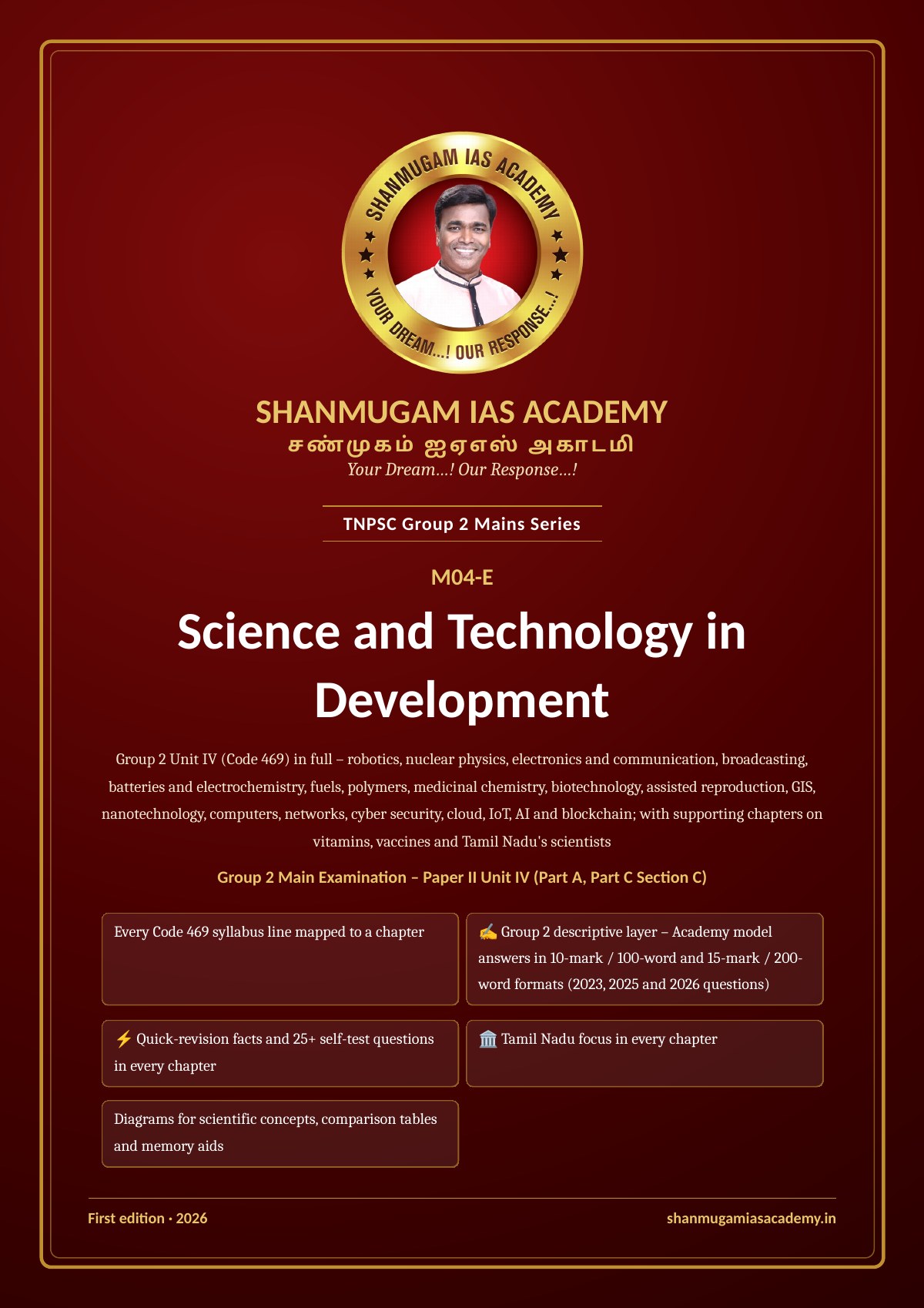 M04-E · Science & Technology – TNPSC Group 2/2A Mains (English)
₹249
 M06-E · Geography & Environment – TNPSC Group 2/2A Mains (English)
₹249
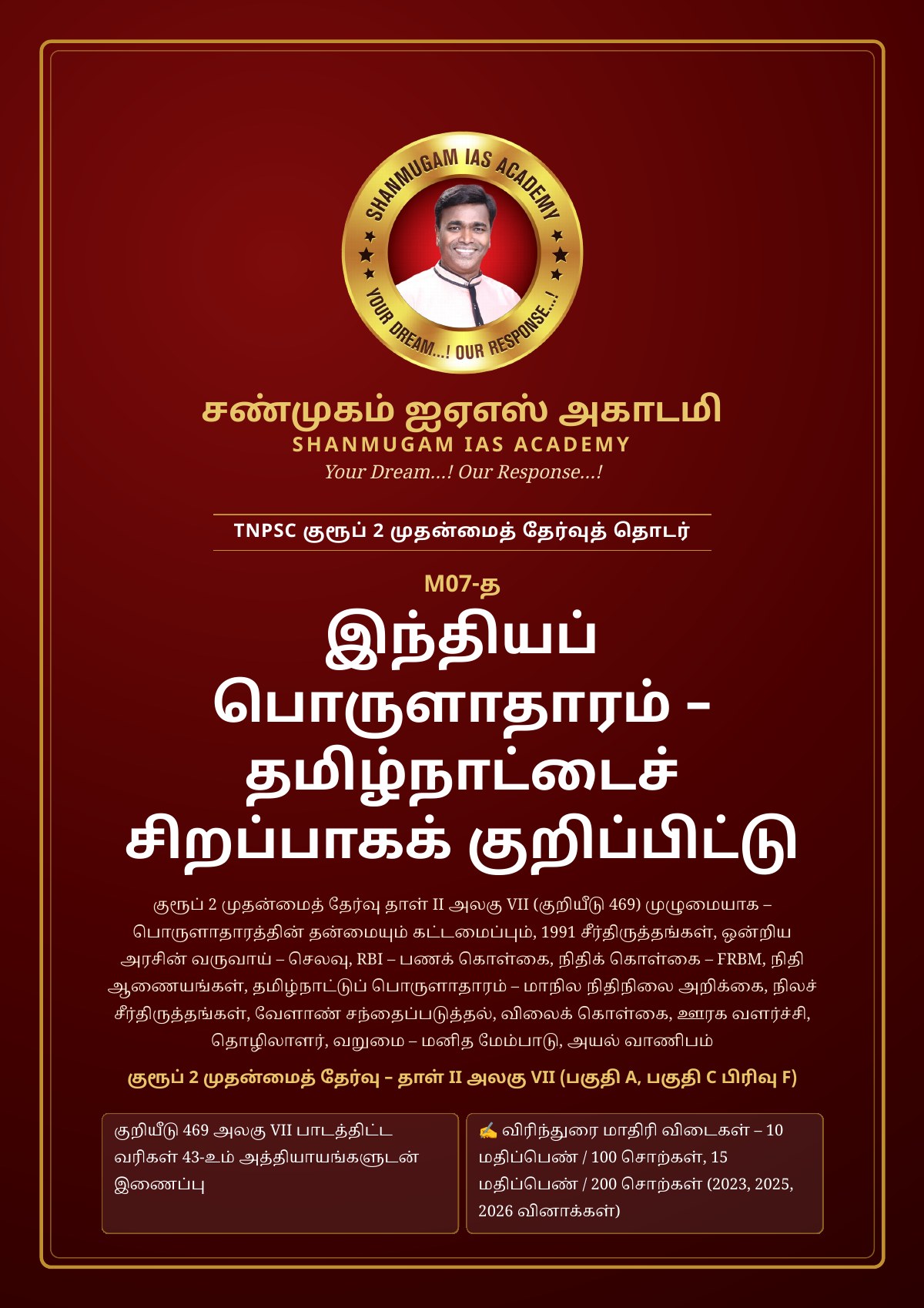 M07-த · இந்தியப் பொருளாதாரம் – TNPSC குரூப் 2/2A Mains (தமிழ்)
₹249
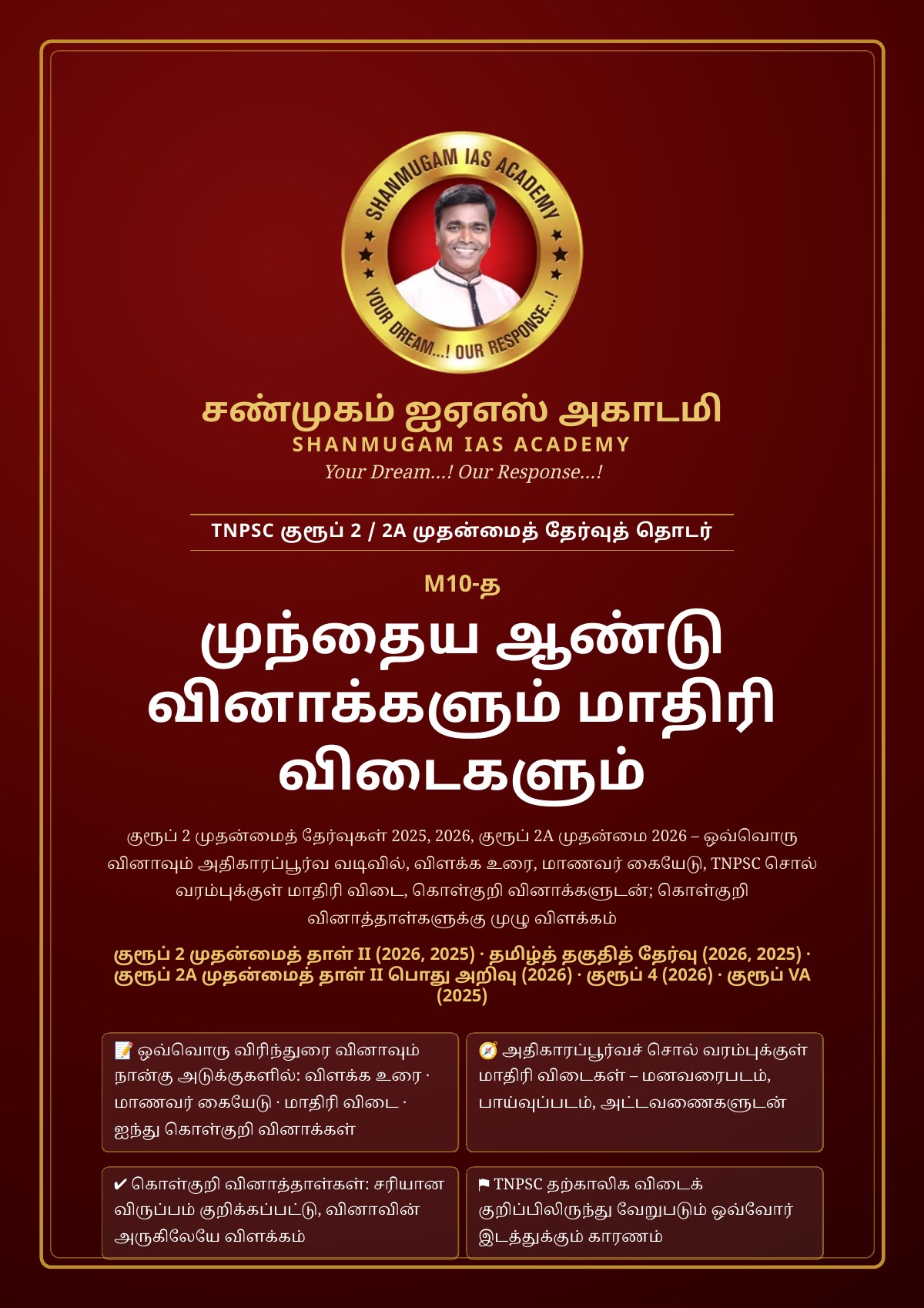 M10-த · குரூப் 2/2A Mains முந்தைய வினா & மாதிரி விடை (தமிழ்)
₹249
TNPSC குரூப் 1, 2/2A, 4 – நேரடி வகுப்புகள் · கோவை & மதுரை
2006 முதல் சண்முகம் IAS அகாடமி · Classroom & online coaching in Coimbatore and Madurai
