

Group 2/2A Mains M06-E Ch.14: Management of Solid Waste,… (25 MCQs)
Group 2/2A Mains M06-E Ch.14: Management of Solid Waste,… (25 MCQs) – 20 வினாக்கள், பாடம்: சுற்றுச்சூழல். ஒவ்வொரு வினாவுக்கும் சரியான விடையும் இரண்டு வரி விளக்கமும் உண்டு; "Show Answer" அழுத்திப் பாருங்கள். TNPSC குரூப் 1, 2, 2A, 4, SI, TET தேர்வுகளுக்கான இலவசப் பயிற்சி – சண்முகம் ஐ.ஏ.எஸ். அகாடமி, கோயம்புத்தூர்.
உங்கள் இணையதளம் / Blog-இல் இணைக்க (HTML code)
Correct Answer: D [Biodegradable, non-biodegradable, domestic hazardous waste]
விளக்கம்:
The Solid Waste Management Rules 2016 require waste generators to segregate waste at source into three streams: biodegradable, non-biodegradable and domestic hazardous waste. Source segregation makes composting and recycling easier and reduces the waste going to landfills.
Correct Answer: A [White – translucent, puncture-proof container]
விளக்கம்:
Under the Bio-Medical Waste Management Rules 2016, sharps such as needles and scalpels go into white translucent, puncture-proof containers so that they cannot pierce through and injure handlers. Yellow bags are for anatomical waste and red bags for recyclable contaminated plastics.
Correct Answer: B [Biomethanation]
விளக்கம்:
Biomethanation breaks down organic waste in the absence of air (anaerobic digestion) and produces biogas, mainly methane. Composting, in contrast, decomposes waste with air and produces compost but no biogas.
Correct Answer: C [Disposal in a landfill]
விளக்கம்:
கழிவு மேலாண்மைப் படிநிலையில் (Waste Hierarchy) குப்பைக் கிடங்கில் புதைத்தல் (Landfill) கடைசி, மிகக் குறைவாக விரும்பப்படும் வழி ஆகும். படிநிலையில் முதலிடம் குறைத்தல் (Reduce), அடுத்து மறுபயன்பாடு (Reuse), பின்னர் மறுசுழற்சி (Recycle) ஆகும்.
Correct Answer: A [1 July 2022]
விளக்கம்:
India's nationwide ban on identified single-use plastic items took effect on 1 July 2022 under the Plastic Waste Management Amendment Rules 2021. The banned items include plastic cutlery, earbuds with plastic sticks, plastic flags and polystyrene decoration items.
Correct Answer: D [Leachate]
விளக்கம்:
Leachate is the toxic liquid that seeps out of dumped waste as rainwater passes through it, carrying heavy metals and organic pollutants that can contaminate groundwater. Sanitary landfills have liners and leachate collection systems to prevent this.
Correct Answer: A [Bio-mining]
விளக்கம்:
Bio-mining digs out old waste from legacy dump yards and separates it into soil-like material, recyclables and combustible fractions so that the land can be reclaimed. Chennai's Perungudi and Kodungaiyur dump yards are being cleared this way.
Correct Answer: B [Red bag]
விளக்கம்:
Under the bio-medical waste rules, recyclable contaminated plastics such as tubing, bottles and syringes without needles go into the red bag. Red-category waste is disinfected by autoclaving or microwaving and then sent for recycling, not incineration.
Correct Answer: C [1 and 3 only]
விளக்கம்:
Statements 1 and 3 are correct: the Solid Waste Management Rules 2016 replaced the Municipal Solid Wastes Rules 2000 and provide for integrating waste pickers into the formal system. Statement 2 is wrong because the 2016 Rules also apply beyond municipal areas, to census towns, industrial townships, railways, airports and similar areas.
Correct Answer: A [1, 2 and 3]
விளக்கம்:
All three statements are correct: less than a quarter of the world's e-waste (about 22%) was formally recycled in 2022, gold and copper can be recovered from it, and the E-Waste (Management) Rules 2022 set EPR targets for producers. India is among the largest generators of e-waste after China and the USA.
Correct Answer: D [1, 2 and 3]
விளக்கம்:
All three statements are correct: bio-medical waste bags are tracked through bar codes, chlorinated plastic bags are being phased out, and treatment is done at common bio-medical waste treatment facilities. These provisions come from the Bio-Medical Waste Management Rules 2016.
Correct Answer: B [A-2, B-4, C-1, D-3]
விளக்கம்:
Under the Bio-Medical Waste Management Rules 2016, yellow bags are for anatomical waste, red for recyclable contaminated plastics, white translucent containers for sharps and blue boxes for glassware, giving A-2, B-4, C-1, D-3. Yellow-category waste is usually treated by incineration.
Correct Answer: C [A-2, B-1, C-4, D-3]
விளக்கம்:
Composting is microbial decomposition with air, biomethanation is decomposition without air, RDF (refuse-derived fuel) is fuel made from combustible waste, and a sanitary landfill has a liner and leachate collection, giving A-2, B-1, C-4, D-3. Biomethanation also produces biogas, which can be used for cooking or power.
Correct Answer: A [1, 2, 3, 4]
விளக்கம்:
முதல் நகராட்சித் திடக்கழிவு விதிகள் 2000, தூய்மை இந்தியா இயக்கம் 2014, திருத்தப்பட்ட திடக்கழிவு மேலாண்மை விதிகள் 2016, தூய்மை இந்தியா (நகர்ப்புறம்) 2.0 2021 என்பதால் வரிசை 1, 2, 3, 4 ஆகும். 2016 விதிகள் மூலத்திலேயே கழிவுகளைப் பிரித்தலை (Source Segregation) கட்டாயமாக்கின.
Correct Answer: D [4, 2, 3, 1]
விளக்கம்:
நெகிழிக் கழிவு மேலாண்மை விதிகள் 2016, தமிழ்நாட்டின் ஒருமுறைப் பயன்பாட்டு நெகிழித் தடை 1 ஜனவரி 2019, மீண்டும் மஞ்சப்பை இயக்கம் டிசம்பர் 2021, தேசியத் தடை ஜூலை 2022 என்பதால் வரிசை 4, 2, 3, 1 ஆகும். தேசிய அளவிலான தடைக்கு முன்பே தமிழ்நாடு இத்தடையை அமல்படுத்தியது.
Correct Answer: C [2, 4, 3, 1]
விளக்கம்:
பாசெல் உடன்படிக்கை 1989, உயிரி மருத்துவக் கழிவு மேலாண்மை விதிகள் 2016, கோவிட்-19 உயிரி மருத்துவக் கழிவு குறித்த CPCB வழிகாட்டுதல்கள் 2020, மின்னணுக் கழிவு விதிகள் 2022 நடைமுறைக்கு வந்தது 2023 என்பதால் வரிசை 2, 4, 3, 1 ஆகும். பாசெல் உடன்படிக்கை அபாயகரக் கழிவுகளின் எல்லை தாண்டிய நகர்வைக் கட்டுப்படுத்துகிறது.
Correct Answer: A [Both A and R are true, and R is the correct explanation of A]
விளக்கம்:
Both A and R are true and R explains A: biodegradable wet waste forms a large share of Indian municipal waste, roughly half, which makes composting and biomethanation well suited to Indian cities. Such wet waste has high moisture and low calorific value, so it is not suitable for incineration.
Correct Answer: B [Both A and R are true, but R is not the correct explanation of A]
விளக்கம்:
திறந்தவெளிக் குப்பைக் கிடங்குகளில் கரிமக் கழிவுகள் சிதைவதால் வெளியாகும் மீத்தேன் (Methane) பசுமைக்குடில் வாயு என்பதால் கூற்று சரி. கொசு, ஈ பெருக்கத்தால் தொற்றுநோய் பரவுவதும் உண்மை; ஆனால் அது காலநிலை மாற்றத்தை விளக்காததால் காரணம் கூற்றுக்குச் சரியான விளக்கம் அல்ல.
Correct Answer: C [Perungudi]
விளக்கம்:
The Perungudi dump yard beside the Pallikaranai marsh in Chennai is being cleared through bio-mining to reclaim the land. Pallikaranai is one of the last natural wetlands of Chennai and a Ramsar site, so removing legacy waste helps protect it.
Correct Answer: D [Smokeless Bhogi]
விளக்கம்:
The Smokeless Bhogi campaign urges people not to burn tyres, plastics and other articles during Bhogi, to cut smog.
➤ Full book – complete notes, model answers and all MCQs: M06-E Geography & Environment (₹249): www.shanmugamiasacademy.in/study-materials/tnpsc-group-2-mains-geography-environment-english
Today Current Affairs in Tamil | 23 நவம்பர் 2026 | TNPSC Group 4 முக்கிய வினாக்கள்
📚 TNPSC குரூப் 2 / 2A Mains – மாதிரி விடைகளுடன் நூல்கள்
PDF நூல்கள் · ₹149 முதல் · ஒவ்வொன்றுக்கும் 50 பக்க இலவச மாதிரி · UPI-இல் பணம் செலுத்தியதும் உடனே பதிவிறக்கம்
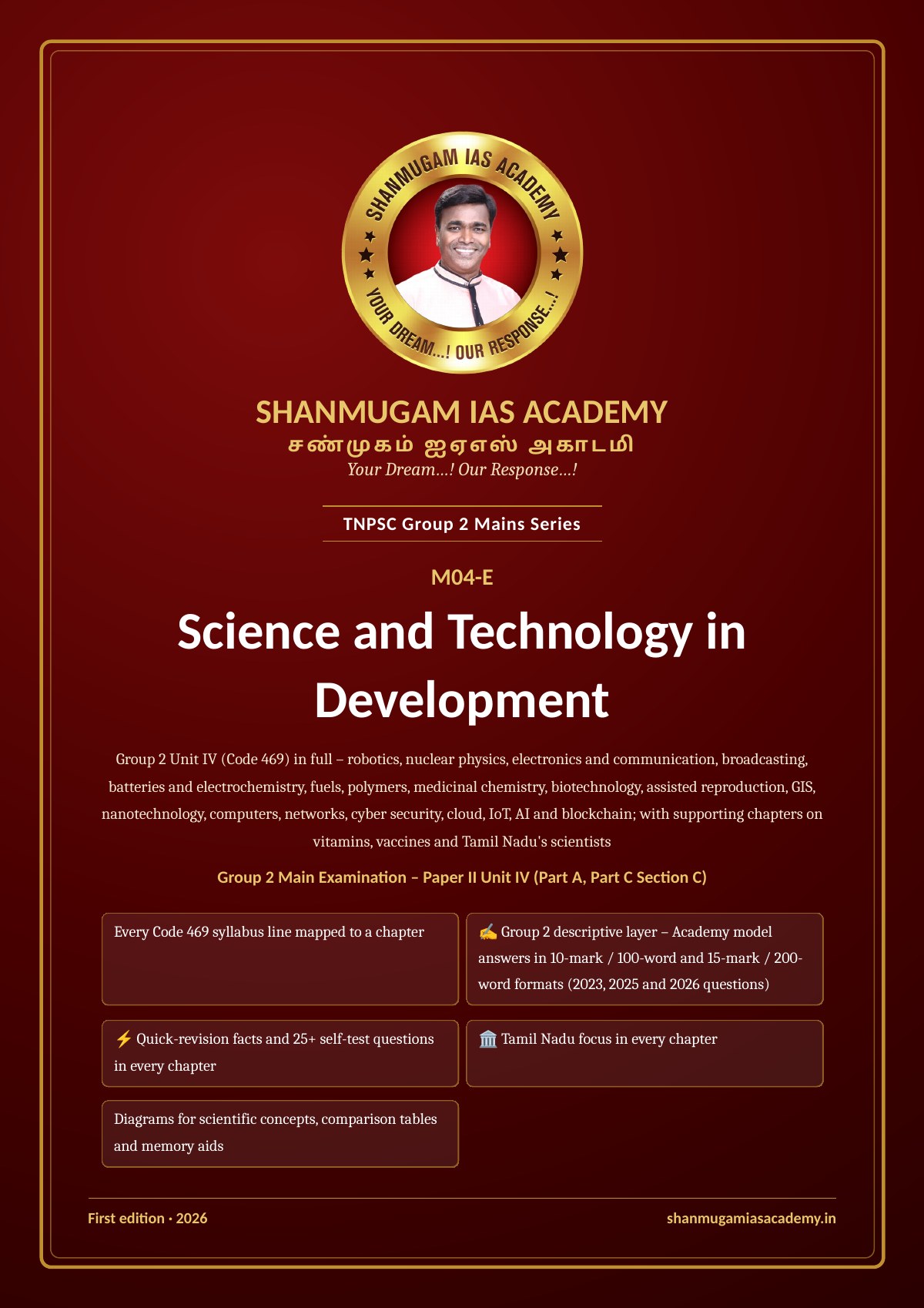 M04-E · Science & Technology – TNPSC Group 2/2A Mains (English)
₹249
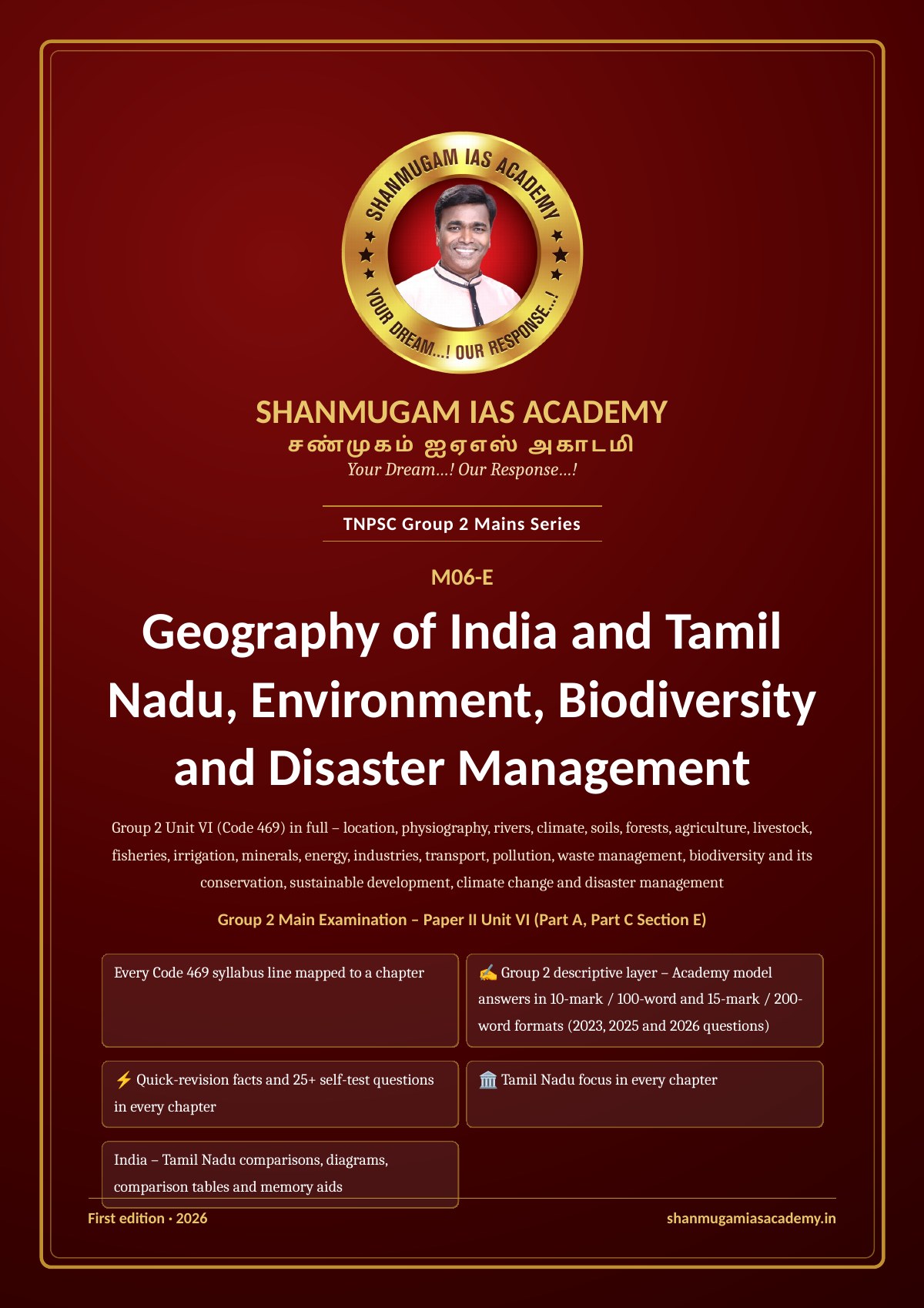 M06-E · Geography & Environment – TNPSC Group 2/2A Mains (English)
₹249
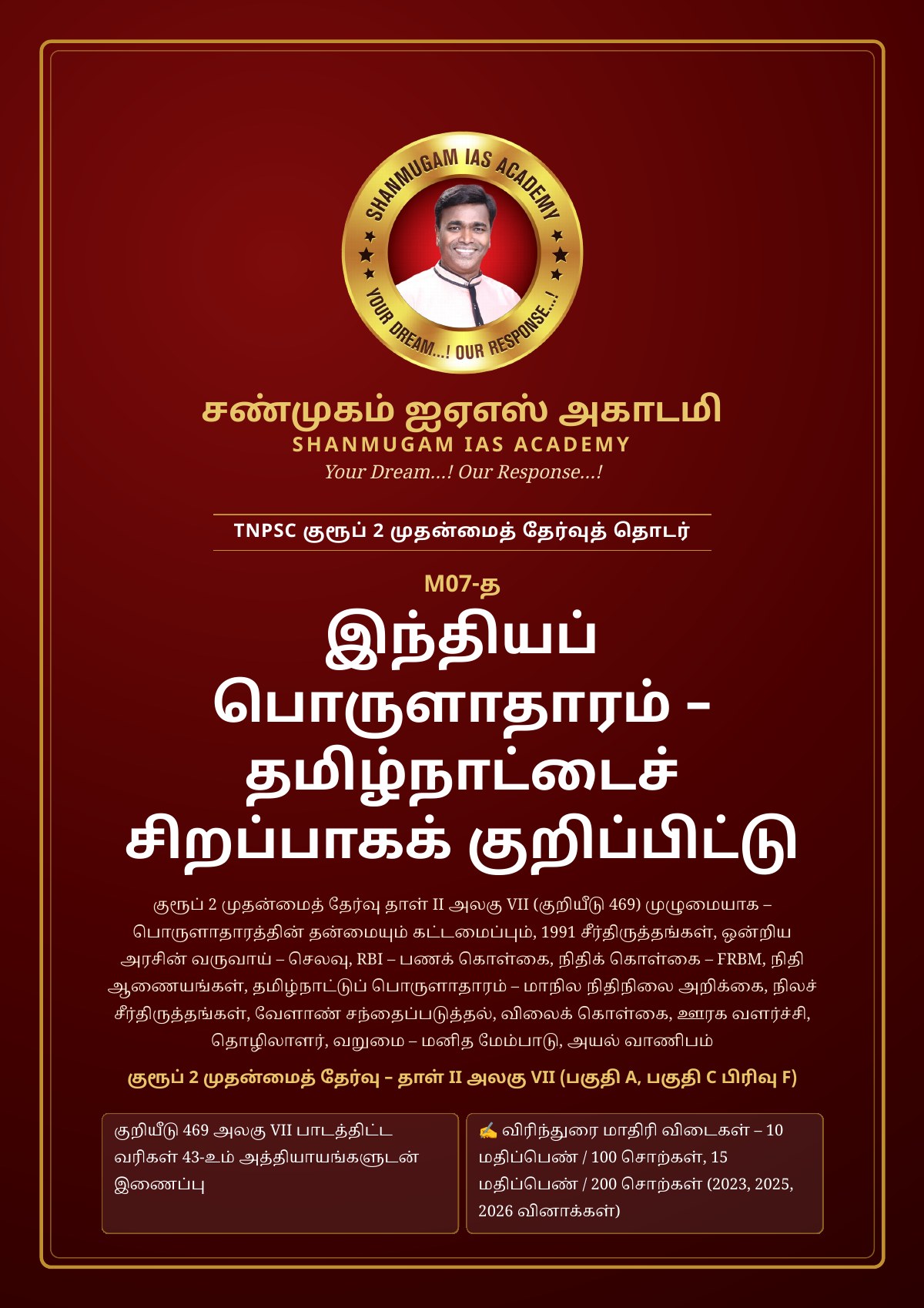 M07-த · இந்தியப் பொருளாதாரம் – TNPSC குரூப் 2/2A Mains (தமிழ்)
₹249
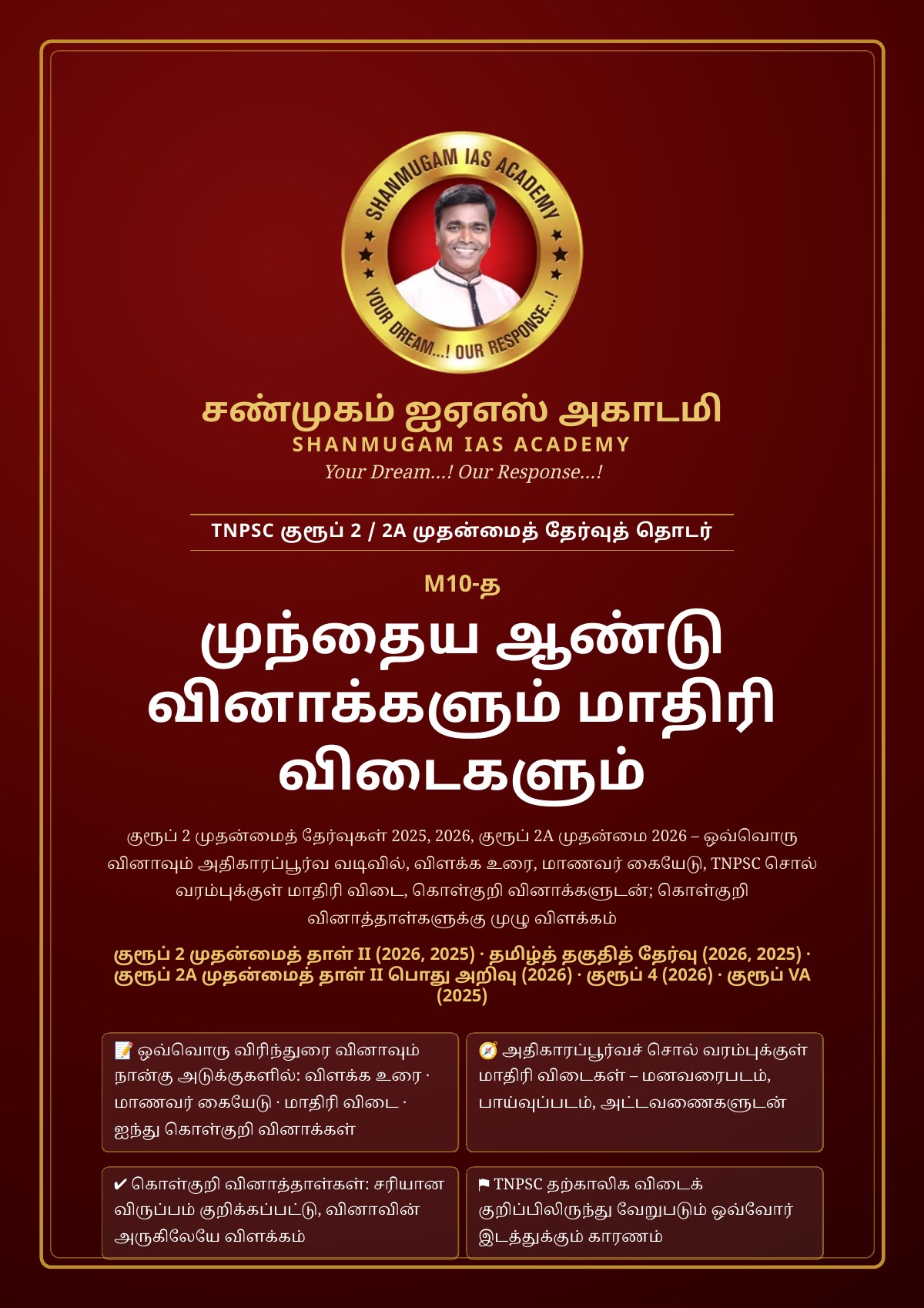 M10-த · குரூப் 2/2A Mains முந்தைய வினா & மாதிரி விடை (தமிழ்)
₹249
TNPSC குரூப் 1, 2/2A, 4 – நேரடி வகுப்புகள் · கோவை & மதுரை
2006 முதல் சண்முகம் IAS அகாடமி · Classroom & online coaching in Coimbatore and Madurai
