

Group 2/2A Mains M06-E Ch.3: Climate of India and Tamil Nadu (25 MCQs)
Group 2/2A Mains M06-E Ch.3: Climate of India and Tamil Nadu (25 MCQs) – 25 வினாக்கள், பாடம்: புவியியல். ஒவ்வொரு வினாவுக்கும் சரியான விடையும் இரண்டு வரி விளக்கமும் உண்டு; "Show Answer" அழுத்திப் பாருங்கள். TNPSC குரூப் 1, 2, 2A, 4, SI, TET தேர்வுகளுக்கான இலவசப் பயிற்சி – சண்முகம் ஐ.ஏ.எஸ். அகாடமி, கோயம்புத்தூர்.
உங்கள் இணையதளம் / Blog-இல் இணைக்க (HTML code)
Correct Answer: A [Arabic]
விளக்கம்:
'மான்சூன்' (Monsoon) என்ற சொல் 'பருவம்' எனப் பொருள்படும் 'மௌசிம்' (Mausim) என்ற அரபுச் சொல்லிலிருந்து வந்தது. பருவத்திற்கேற்ப காற்றின் திசை மாறுவதையே இச்சொல் குறிக்கிறது.
Correct Answer: B [1 June]
விளக்கம்:
According to the IMD, the normal date of onset of the south-west monsoon over Keralam is 1 June, with a margin of about seven days. The monsoon normally covers the whole country by 8 July.
Correct Answer: C [87 cm]
விளக்கம்:
On the 1971–2020 base, the Long Period Average of India's south-west monsoon rainfall (June to September) is about 87 cm. The earlier 1961–2010 LPA was about 88 cm.
Correct Answer: D [western disturbances]
விளக்கம்:
வடமேற்கு இந்தியாவில் குளிர்கால மழையை மத்தியதரைக் கடல் பகுதியிலிருந்து வரும் மேற்கத்தியக் கலக்கங்கள் (Western Disturbances) கொண்டுவருகின்றன; இந்த மழை கோதுமை போன்ற ராபி பயிர்களுக்கு நன்மை தருகிறது. கால்பைசாகி மேற்கு வங்காளத்தின் கோடைகால இடிமழை; 'லூ' வட இந்தியாவின் கோடைகால வெப்பக் காற்று.
Correct Answer: A [kalbaisakhi]
விளக்கம்:
The pre-monsoon kalbaisakhi thunderstorms are called tea showers in Assam because they help the growth of tea leaves. In Keralam pre-monsoon showers are called mango showers, and in Karnataka blossom showers help coffee flowering.
Correct Answer: B [Mawsynram]
விளக்கம்:
NCERT-இன்படி உலகிலேயே அதிகச் சராசரி மழை பெறும் இடம் மேகாலயாவின் காசி மலையில் உள்ள மௌசின்ராம் (Mawsynram) ஆகும். அருகிலுள்ள சிரபுஞ்சி முன்பு இந்தச் சிறப்பைப் பெற்றிருந்தது.
Correct Answer: C [As]
விளக்கம்:
கோப்பன் (Köppen) வகைப்பாட்டில் தமிழ்நாட்டின் சோழமண்டலக் கடற்கரை 'As' வகை, அதாவது கோடைக்காலம் வறண்டும் குளிர்காலத்தில் மழை பெறும் வெப்பமண்டலக் காலநிலை ஆகும். வடகிழக்குப் பருவக்காற்று அக்டோபர் – டிசம்பரில் மழை தருவதே இதற்குக் காரணம்.
Correct Answer: D [Dfc]
விளக்கம்:
In Koeppen's scheme, Arunachal Pradesh has the Dfc type, a cold humid winter climate with a short summer. Type E marks the very cold high mountains, and Cwg the Ganga plains.
Correct Answer: A [October – December]
விளக்கம்:
Tamil Nadu receives its north-east monsoon rainfall from October to December, which gives the State nearly half of its annual rain. June to September is the south-west monsoon season, when most of Tamil Nadu lies in the rain shadow.
Correct Answer: B [the rain shadow]
விளக்கம்:
தென்மேற்குப் பருவக்காற்று மேற்குத் தொடர்ச்சி மலையின் மேற்குச் சரிவில் மழை பொழிந்துவிடுவதால், மலையின் கிழக்கே உள்ள தமிழ்நாட்டின் பெரும்பகுதி மழைமறைவுப் பகுதியாக (Rain Shadow) இருந்து குறைந்த மழை பெறுகிறது. எனவே தமிழ்நாட்டின் முதன்மை மழைக்காலம் வடகிழக்குப் பருவமழை ஆகும்.
Correct Answer: C [the Coriolis force]
விளக்கம்:
The south-east trade winds turn to the right after crossing the Equator because of the Coriolis force produced by the Earth's rotation. Deflected this way, they reach India as the south-west monsoon winds.
Correct Answer: D [Ladakh]
விளக்கம்:
Ladakh, lying in the rain shadow of the Himalaya, is a cold desert that receives very low rainfall, generally below 50 cm and in places under 10 cm. Kachchh and western Rajasthan, by contrast, are hot deserts.
Correct Answer: B [1 and 2 only]
விளக்கம்:
Statements 1 and 2 are correct: about three-quarters of India's annual rainfall comes from the south-west monsoon, and rainfall of 96 to 104 percent of the Long Period Average is called normal. Statement 3 is wrong because El Nino years usually bring a weaker monsoon.
Correct Answer: D [1, 2 and 3]
விளக்கம்:
All three statements are correct: Tamil Nadu lies wholly south of the Tropic of Cancer, gets nearly half its annual rain from the north-east monsoon, and Kanniyakumari receives both monsoons. Most of Tamil Nadu lies in the rain shadow of the Western Ghats during the south-west monsoon.
Correct Answer: C [1 and 2 only]
விளக்கம்:
Statements 1 and 2 are correct: the sub-tropical westerly jet stream lies south of the Himalaya in winter, and a tropical easterly jet stream forms over the peninsula in summer. Statement 3 is wrong because jet streams blow in the upper troposphere, about 9 to 13 km high, not at ground level.
Correct Answer: A [A-2, B-4, C-1, D-3]
விளக்கம்:
The loo blows over the north Indian plains, kalbaisakhi strikes West Bengal and Assam, mango showers fall in Keralam and western disturbances bring winter rain to north-west India, giving A-2, B-4, C-1, D-3. Mango showers help early ripening of mangoes.
Correct Answer: B [A-2, B-1, C-4, D-3]
விளக்கம்:
In Koeppen's scheme, BWhw covers extreme western Rajasthan, Cwg the Ganga plains, Amw the west coast south of Goa and E the high mountains such as Ladakh, giving A-2, B-1, C-4, D-3. The letter E stands for polar or very cold climates.
Correct Answer: D [2, 4, 1, 3]
விளக்கம்:
Heating of north India first creates a low-pressure area, then trade winds from the southern hemisphere cross the Equator, are deflected to the right by the Coriolis force, and finally bring rain to the Keralam coast, giving 2, 4, 1, 3. After deflection they blow as south-westerly winds.
Correct Answer: A [2, 3, 4, 1]
விளக்கம்:
Under IMD normal dates, the south-west monsoon sets in over Keralam on 1 June, covers the whole country by 8 July, begins to retreat from north-west India around 17 September, and the north-east monsoon sets in over Tamil Nadu around 20 October, giving 2, 3, 4, 1. The NE monsoon gives Tamil Nadu its main rain.
Correct Answer: B [3, 2, 1, 4]
விளக்கம்:
From January, Tamil Nadu's seasons run as winter (January–February), summer (March–May), south-west monsoon (June–September) and north-east monsoon (October–December), giving 3, 2, 1, 4. Tamil Nadu gets about half its annual rain from the north-east monsoon.
Correct Answer: A [Both A and R are true, and R is the correct explanation of A]
விளக்கம்:
Both statements are true and R explains A: north-east monsoon rain in Tamil Nadu depends largely on depressions and cyclones in the Bay of Bengal, whose number and paths vary greatly each year. So some years bring floods and others drought.
Correct Answer: C [A is true, but R is false]
விளக்கம்:
Assertion is true: inland towns have hotter summers and colder winters than coastal towns. Reason is false, because the main cause is distance from the sea, which removes the sea's moderating effect, not altitude.
Correct Answer: C [January – February]
விளக்கம்:
The India Meteorological Department (IMD) treats January and February as the winter season for Tamil Nadu, because December falls within the north-east monsoon season of October to December. Summer follows from March to May.
Correct Answer: D [the Nilgiris]
விளக்கம்:
மேற்குத் தொடர்ச்சி மலைப் பகுதியில் அமைந்துள்ளதால் நீலகிரி மாவட்டம் தென்மேற்குப் பருவமழைக் காலத்திலும் ஒப்பீட்டளவில் அதிக மழை பெறுகிறது. ராமநாதபுரம், தூத்துக்குடி, சென்னை ஆகியவை பெரும்பாலும் வடகிழக்குப் பருவமழையையே நம்பியுள்ளன.
Correct Answer: B [third week of October]
விளக்கம்:
The north-east monsoon normally sets in over Tamil Nadu around the third week of October.
➤ Full book – complete notes, model answers and all MCQs: M06-E Geography & Environment (₹249): www.shanmugamiasacademy.in/study-materials/tnpsc-group-2-mains-geography-environment-english
Today Current Affairs in Tamil | 23 நவம்பர் 2026 | TNPSC Group 4 முக்கிய வினாக்கள்
📚 TNPSC குரூப் 2 / 2A Mains – மாதிரி விடைகளுடன் நூல்கள்
PDF நூல்கள் · ₹149 முதல் · ஒவ்வொன்றுக்கும் 50 பக்க இலவச மாதிரி · UPI-இல் பணம் செலுத்தியதும் உடனே பதிவிறக்கம்
 M04-E · Science & Technology – TNPSC Group 2/2A Mains (English)
₹249
 M06-E · Geography & Environment – TNPSC Group 2/2A Mains (English)
₹249
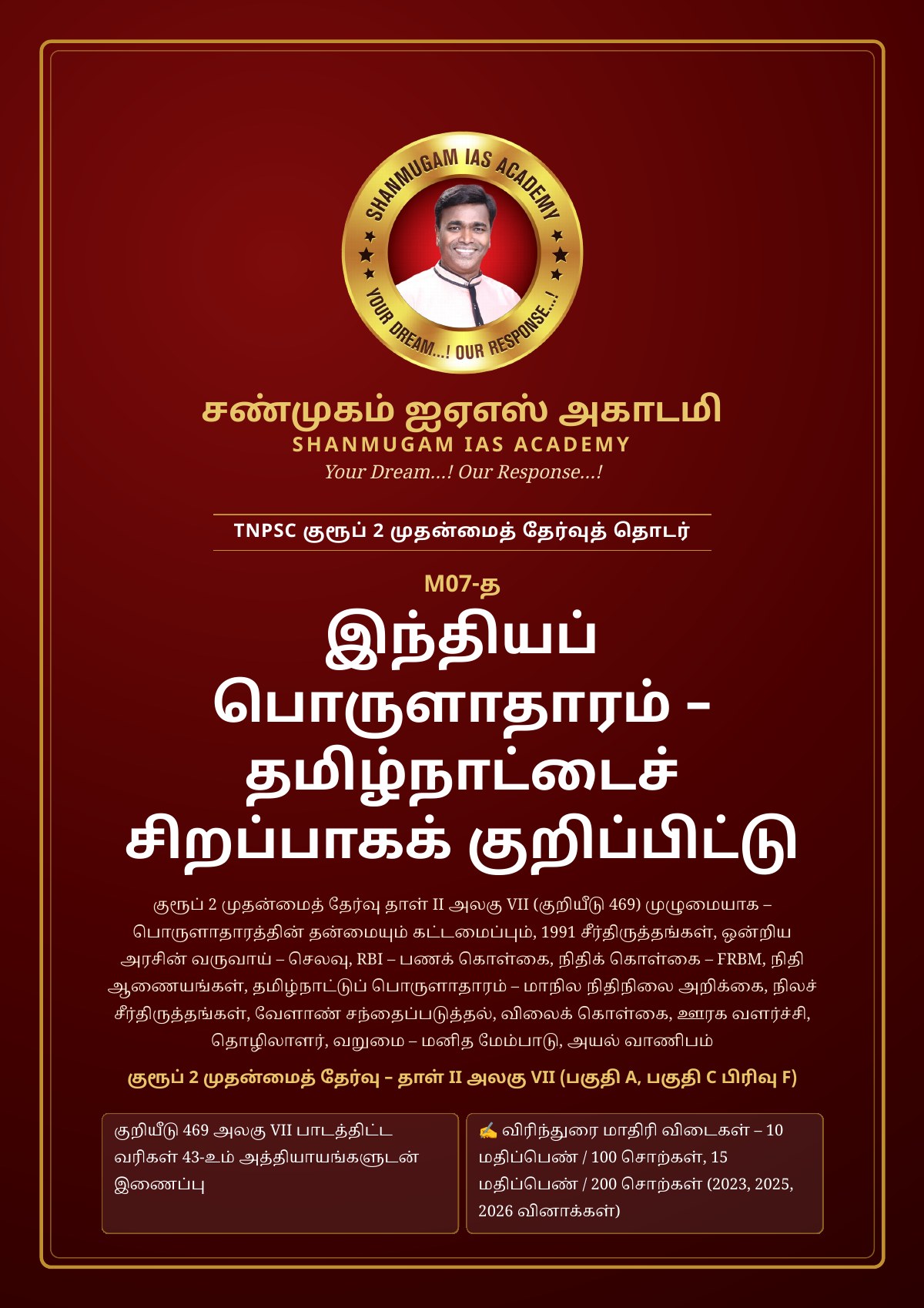 M07-த · இந்தியப் பொருளாதாரம் – TNPSC குரூப் 2/2A Mains (தமிழ்)
₹249
 M10-த · குரூப் 2/2A Mains முந்தைய வினா & மாதிரி விடை (தமிழ்)
₹249
TNPSC குரூப் 1, 2/2A, 4 – நேரடி வகுப்புகள் · கோவை & மதுரை
2006 முதல் சண்முகம் IAS அகாடமி · Classroom & online coaching in Coimbatore and Madurai
