

UPSC Atlas and Maps – Chapter 10: India – Biosphere Reserves, Elephant Reserves and Natural Heritage (16 MCQs)
UPSC Atlas and Maps – Chapter 10: India – Biosphere Reserves, Elephant Reserves and Natural Heritage (16 MCQs) – 16 questions, subject: Atlas and Maps. Every question has the correct answer with a two-line explanation; tap "Show Answer". Free practice for TNPSC, UPSC, SSC, Bank and RRB exams – Shanmugam IAS Academy, Coimbatore.
Link to this page from your website / blog (HTML code)
Correct Answer: A [Seshachalam]
Explanation:
Seshachalam is on India's national list of biosphere reserves but is not part of UNESCO's World Network of Biosphere Reserves. Pachmarhi and Simlipal joined the network in 2009 and Panna in 2020.
Correct Answer: C [Only three]
Explanation:
Dehang-Dibang is in Arunachal Pradesh, Dibru-Saikhowa in Assam and Achanakmar-Amarkantak in Madhya Pradesh and Chhattisgarh, so three pairs are correct. Seshachalam Biosphere Reserve is in Andhra Pradesh (Tirupati hills), not Telangana.
Correct Answer: B [Satpura]
Explanation:
The Pachmarhi Biosphere Reserve lies in the Satpura range of Madhya Pradesh, with Dhupgarh as its highest point. It includes Satpura National Park and the Bori and Pachmarhi sanctuaries, and joined UNESCO's network in 2009.
Correct Answer: A [3-2-4-1]
Explanation:
The notification order is Nilgiri (1986), Simlipal (1994), Kachchh (2008) and Panna (2011), giving 3-2-4-1. Nilgiri was India's first biosphere reserve, while Panna became a UNESCO biosphere reserve only in 2020.
Correct Answer: D [Madhya Pradesh]
Explanation:
Madhya Pradesh has three biosphere reserves: Pachmarhi, Panna and part of Achanakmar-Amarkantak, which it shares with Chhattisgarh. Keralam and Assam have only two each, and Arunachal Pradesh has one (Dehang-Dibang).
Correct Answer: D [Singhbhum]
Explanation:
Singhbhum Elephant Reserve in Jharkhand, notified in 2001, was India's first elephant reserve under Project Elephant. Project Elephant itself was launched in 1992 to protect elephants, their habitats and migration corridors.
Correct Answer: C [Only three]
Explanation:
Lemru is in Chhattisgarh, Mayurjharna in West Bengal and Rayala in Andhra Pradesh, so three pairs are correct. Intanki Elephant Reserve is in Nagaland, not Manipur, so pair 4 is wrong.
Correct Answer: A [Uttar Pradesh]
Explanation:
The Terai Elephant Reserve, notified in 2022, lies in Uttar Pradesh and covers the Dudhwa and Pilibhit forests along the Nepal border. It was the first elephant reserve of Uttar Pradesh and protects elephants that move across the Indo-Nepal Terai.
Correct Answer: D [Arunachal Pradesh]
Explanation:
The Kameng Elephant Reserve lies in Arunachal Pradesh, north of the Brahmaputra plains, and covers the Pakke and Eaglenest forests. Arunachal Pradesh also has the South Arunachal Elephant Reserve, while Assam's reserves include Kaziranga-Karbi Anglong and Chirang-Ripu.
Correct Answer: D [1971]
Explanation:
UNESCO launched the Man and the Biosphere (MAB) Programme in 1971 to balance conservation with human use, and biosphere reserves grew out of it. India set up its own biosphere reserve scheme in 1986, with Nilgiri as the first reserve.
Correct Answer: B [2-4-1-3]
Explanation:
Nilgiri joined UNESCO's World Network of Biosphere Reserves in 2000, Great Nicobar in 2013, Agasthyamalai in 2016 and Khangchendzonga in 2018. Hence the order is 2-4-1-3.
Correct Answer: A [1 and 2 only]
Explanation:
The Nilgiri biosphere reserve spreads over Tamil Nadu, Keralam and Karnataka, and Agasthyamalai over Keralam and Tamil Nadu, so statements 1 and 2 are correct. The Gulf of Mannar biosphere reserve lies off the Tamil Nadu coast, not Keralam.
Correct Answer: D [Southern]
Explanation:
The southern region, covering the Western Ghats and Eastern Ghats, holds the largest share of India's wild elephants, with Karnataka the leading State. The north-eastern region, with Assam, holds the second-largest population.
Correct Answer: B [Brahmaputra]
Explanation:
The Dibru-Saikhowa biosphere reserve lies in the Brahmaputra valley of upper Assam, near Tinsukia, bounded by the Brahmaputra and Lohit rivers. It is known for feral horses and the white-winged wood duck.
Correct Answer: C [Kachchh]
Explanation:
The Kachchh biosphere reserve in Gujarat, about 12,454 sq km, is India's largest biosphere reserve by area. It is followed by the Gulf of Mannar (about 10,500 sq km) and the Sundarbans (about 9,630 sq km).
Correct Answer: B [Khangchendzonga]
Explanation:
Khangchendzonga, in Sikkim, is the Himalayan biosphere reserve among the options.
➤ Map plates, gazetteer tables, map drills, Prelims MCQs with explanations and Mains sketch-map practice with model-answer outlines – U31 · Atlas and Maps (UPSC book, ₹249): www.shanmugamiasacademy.in/study-materials/upsc-atlas-maps
Today Current Affairs in Tamil | 23 நவம்பர் 2026 | TNPSC Group 4 முக்கிய வினாக்கள்
📚 UPSC Civil Services Books (Prelims & Mains)
PDF நூல்கள் · ₹149 முதல் · ஒவ்வொன்றுக்கும் 50 பக்க இலவச மாதிரி · UPI-இல் பணம் செலுத்தியதும் உடனே பதிவிறக்கம்
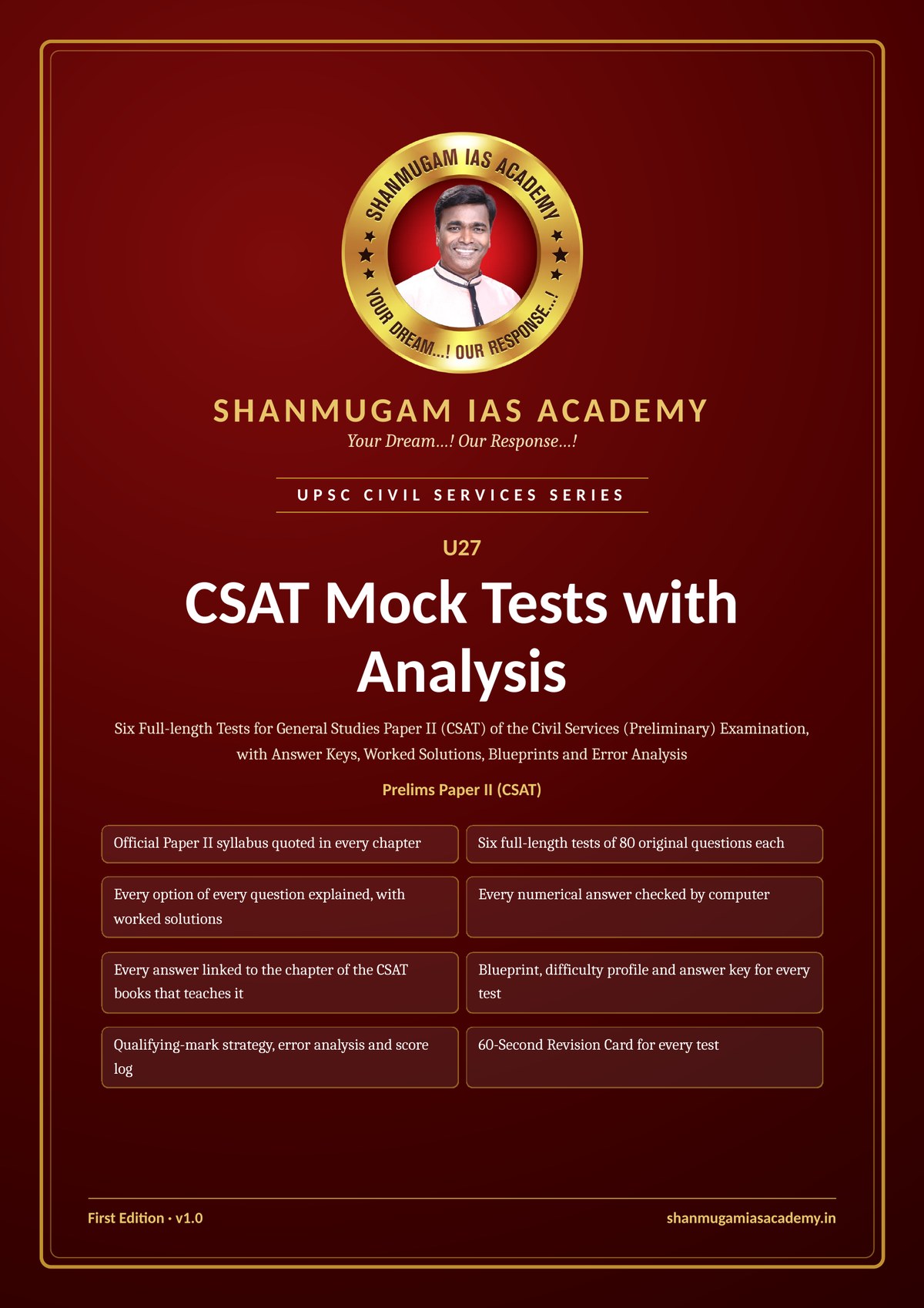 U27 · CSAT Mock Tests with Analysis – UPSC Civil Services (Prelims Paper II – CSAT)
₹249
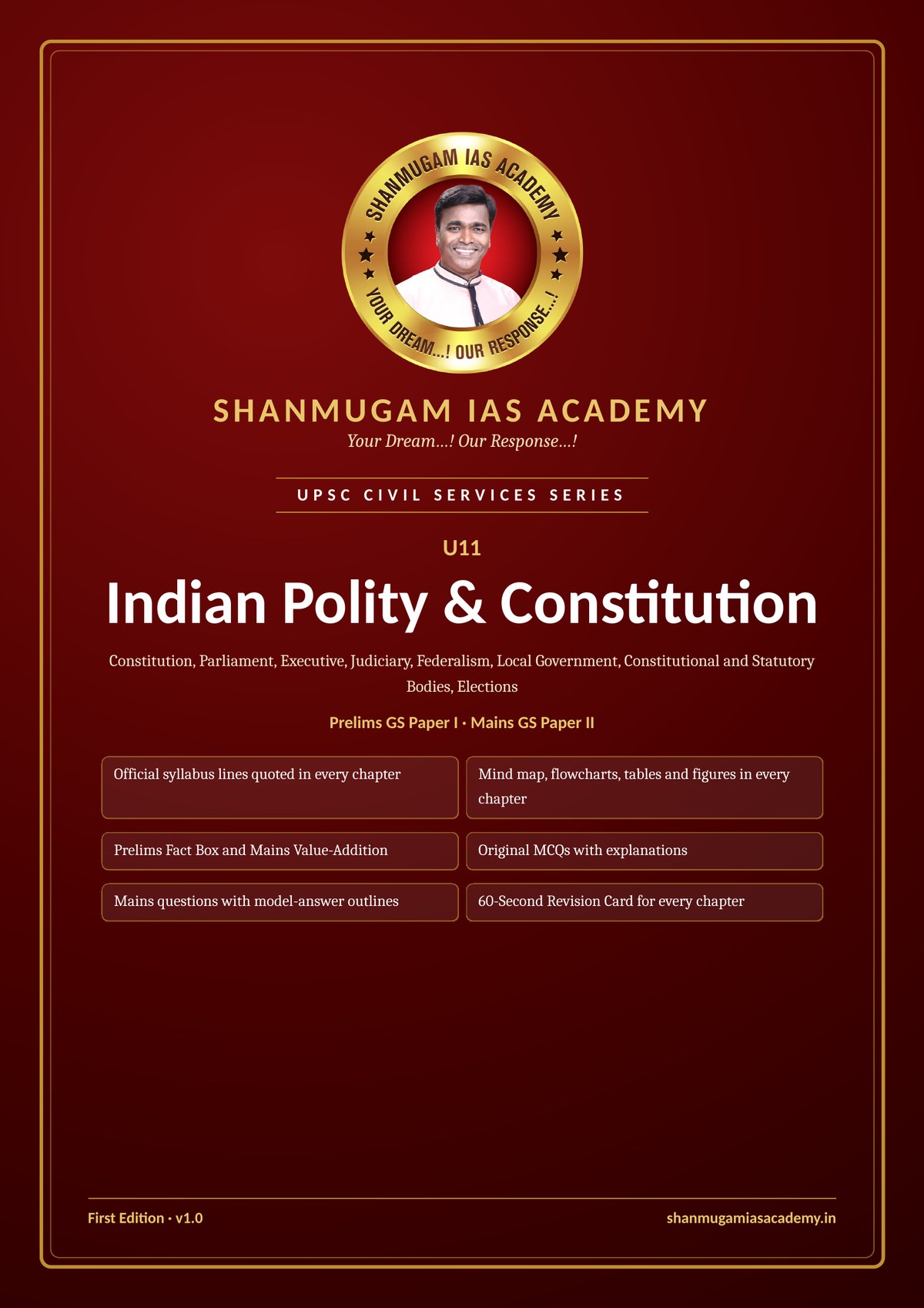 U11 · Indian Polity & Constitution – UPSC Civil Services (Prelims & Mains)
₹249
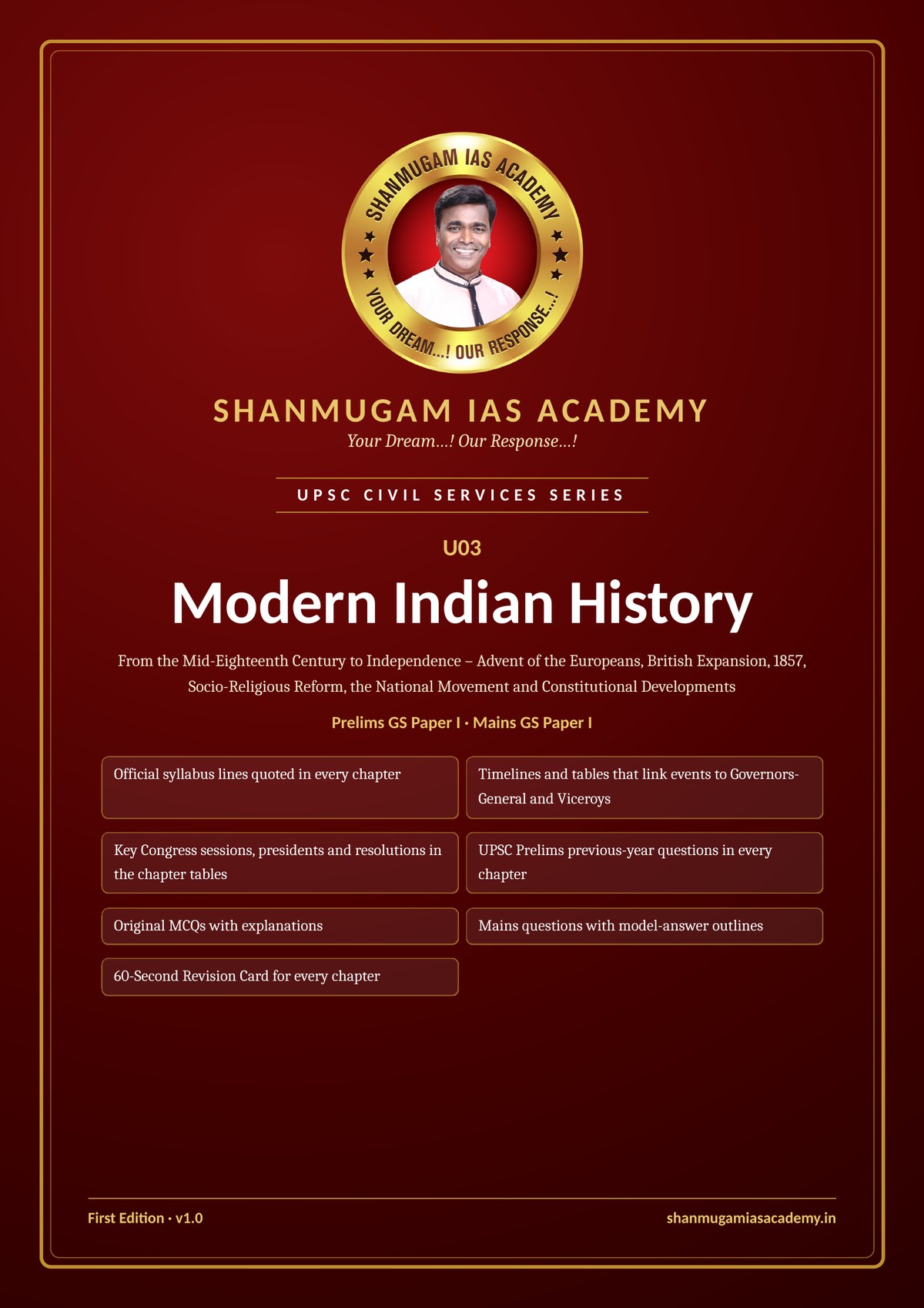 U03 · Modern Indian History – UPSC Civil Services (Prelims & Mains)
₹249
 U15 · Indian Economy – UPSC Civil Services (Prelims & Mains)
₹249
TNPSC குரூப் 1, 2/2A, 4 – நேரடி வகுப்புகள் · கோவை & மதுரை
2006 முதல் சண்முகம் IAS அகாடமி · Classroom & online coaching in Coimbatore and Madurai
