

UPSC English Paper-B – Chapter 3: Articles, Prepositions, Conjunctions and Modifiers (20 MCQs)
UPSC English Paper-B – Chapter 3: Articles, Prepositions, Conjunctions and Modifiers (20 MCQs) – 20 questions, subject: English Paper-B. Every question has the correct answer with a two-line explanation; tap "Show Answer". Free practice for TNPSC, UPSC, SSC, Bank and RRB exams – Shanmugam IAS Academy, Coimbatore.
Link to this page from your website / blog (HTML code)
Correct Answer: C [An]
Explanation:
The "h" in "hour" is silent, so the word begins with a vowel sound and takes "an": "an hour ago". The same rule gives "an honest man" and "an heir".
Correct Answer: A [a university]
Explanation:
The article depends on the first sound, not the letter: "university" begins with the consonant sound /ju:/ ("yoo"), so it takes "a". The same rule gives "a European" and "a one-day match".
Correct Answer: C [Himalayas]
Explanation:
Mountain ranges take "the", as in "the Himalayas" and "the Western Ghats". Single peaks, cities and most lakes take no article: Mount Everest, Delhi, Lake Chilika.
Correct Answer: B [the]
Explanation:
Musical instruments take "the" after "play": "She plays the veena." Games and sports take no article, as in "She plays chess."
Correct Answer: A [at]
Explanation:
Clock times take 'at': 'at 10 a.m.', 'at noon'.
Correct Answer: D [on]
Explanation:
Dates and days take "on", so "Independence Day is celebrated on 15 August." Months and years take "in" (in August, in 1947), and clock times take "at".
Correct Answer: B [He is senior to me.]
Explanation:
Latin comparatives such as "senior", "junior", "superior" and "inferior" take "to", not "than". So "He is senior to me" is correct.
Correct Answer: D [I prefer tea to coffee.]
Explanation:
"Prefer A to B" is the standard pattern: "I prefer tea to coffee." "Prefer … than" is a common error, though "rather than" is correct before a verb, as in "I prefer to walk rather than drive."
Correct Answer: C [than]
Explanation:
"No sooner" is a comparative expression and is always followed by "than": "No sooner had he arrived than it began to rain." "When" is used with "hardly" and "scarcely".
Correct Answer: B [1 and 3 only]
Explanation:
"Interested in" and "different from" use the correct fixed prepositions, so sentences 1 and 3 are correct. Sentence 2 is wrong because "insist" takes "on": "He insisted on paying the bill."
Correct Answer: A [Both A and R are true, and R is the correct explanation of A]
Explanation:
Both statements are true, and R explains A: the shell cannot walk, so the opening phrase dangles because the main clause lacks the real doer. A correct form is "Walking along the beach, I found a shell."
Correct Answer: B [when]
Explanation:
"Hardly" pairs with "when": "Hardly had I sat down when the bell rang." "Than" is used with "no sooner", as in "No sooner had I sat down than the bell rang."
Correct Answer: D [the]
Explanation:
"The" + adjective names a whole group of people, so "the injured" means injured people. Other examples are "the poor", "the old" and "the rich".
Correct Answer: D [from]
Explanation:
"Abstain" takes the fixed preposition "from": "Several members abstained from voting." The same preposition follows "refrain", as in "refrain from smoking".
Correct Answer: C [on]
Explanation:
"Congratulate" takes "on": "We congratulated her on her success." "Congratulate for" is a common error, though one may thank or praise someone "for" something.
Correct Answer: C [He lost not only his bag but also his phone.]
Explanation:
"Not only" and "but also" should stand before matching parts, here the nouns "his bag" and "his phone". In option (a), "not only" stands before the verb while "but also" stands before a noun.
Correct Answer: D [___ Sanskrit (as a language)]
Explanation:
Names of languages take no article, as in "Sanskrit is an ancient language." Oceans and island groups take "the" (the Indian Ocean, the Andamans), and a superlative takes "the" (the best student).
Correct Answer: C [the film]
Explanation:
"Only" limits the words it stands next to, so in "I saw only the film" it limits "the film": nothing else was seen. Moving "only" changes the meaning, as in "Only I saw the film."
Correct Answer: A [preferable]
Explanation:
"Preferable" takes "to", not "than": "Walking is preferable to driving." Words such as "better", "more useful" and "greater" are ordinary comparatives that take "than".
Correct Answer: A [All firms must comply with the rules.]
Explanation:
'Comply' takes the fixed preposition 'with': 'comply with the rules'.
➤ Comprehension, précis, usage and short-essay practice with keys and model answers for the qualifying English paper – U29 · English Paper-B (UPSC book, ₹249): www.shanmugamiasacademy.in/study-materials/upsc-english-paper-b
Today Current Affairs in Tamil | 23 நவம்பர் 2026 | TNPSC Group 4 முக்கிய வினாக்கள்
📚 UPSC Civil Services Books (Prelims & Mains)
PDF நூல்கள் · ₹149 முதல் · ஒவ்வொன்றுக்கும் 50 பக்க இலவச மாதிரி · UPI-இல் பணம் செலுத்தியதும் உடனே பதிவிறக்கம்
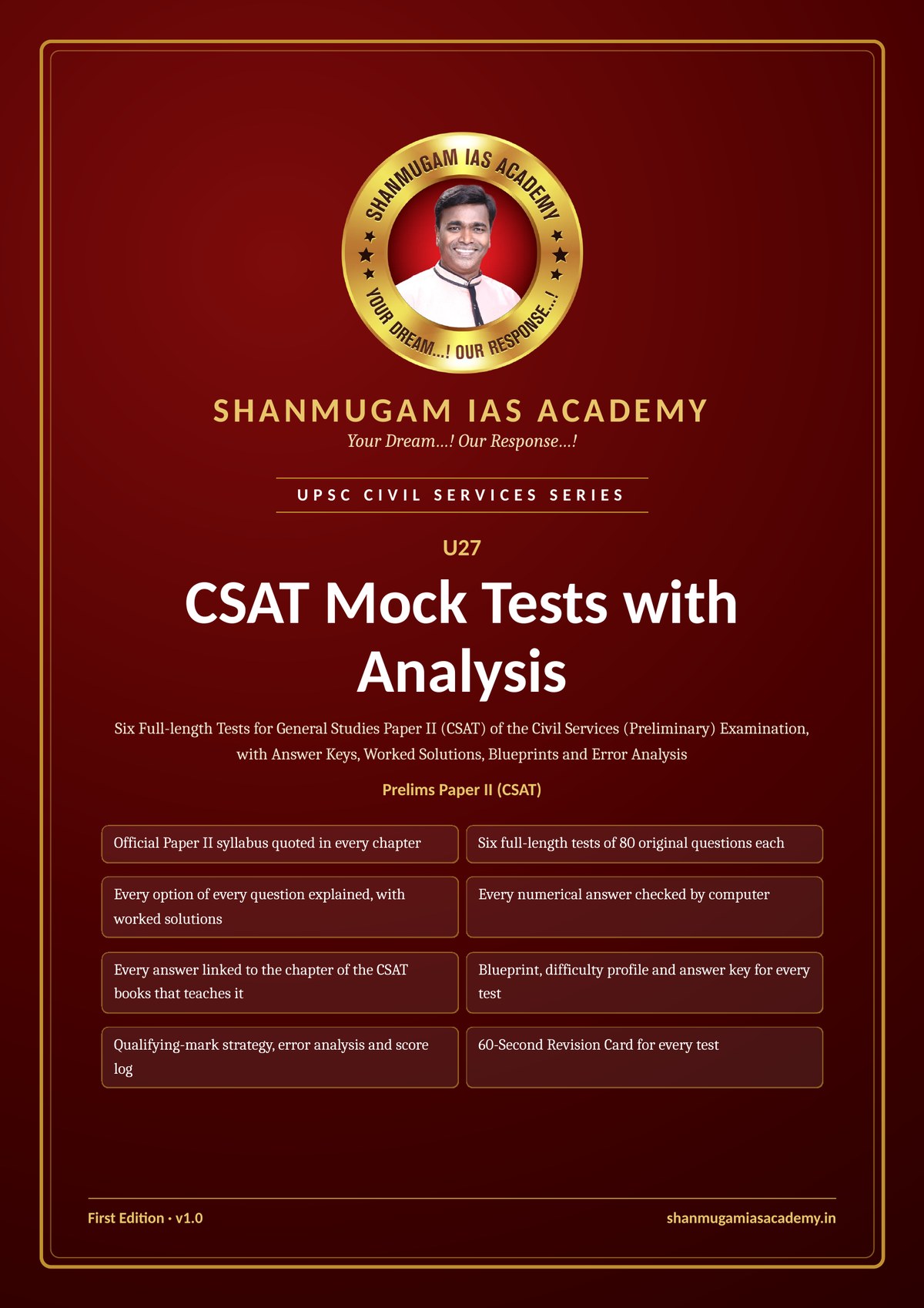 U27 · CSAT Mock Tests with Analysis – UPSC Civil Services (Prelims Paper II – CSAT)
₹249
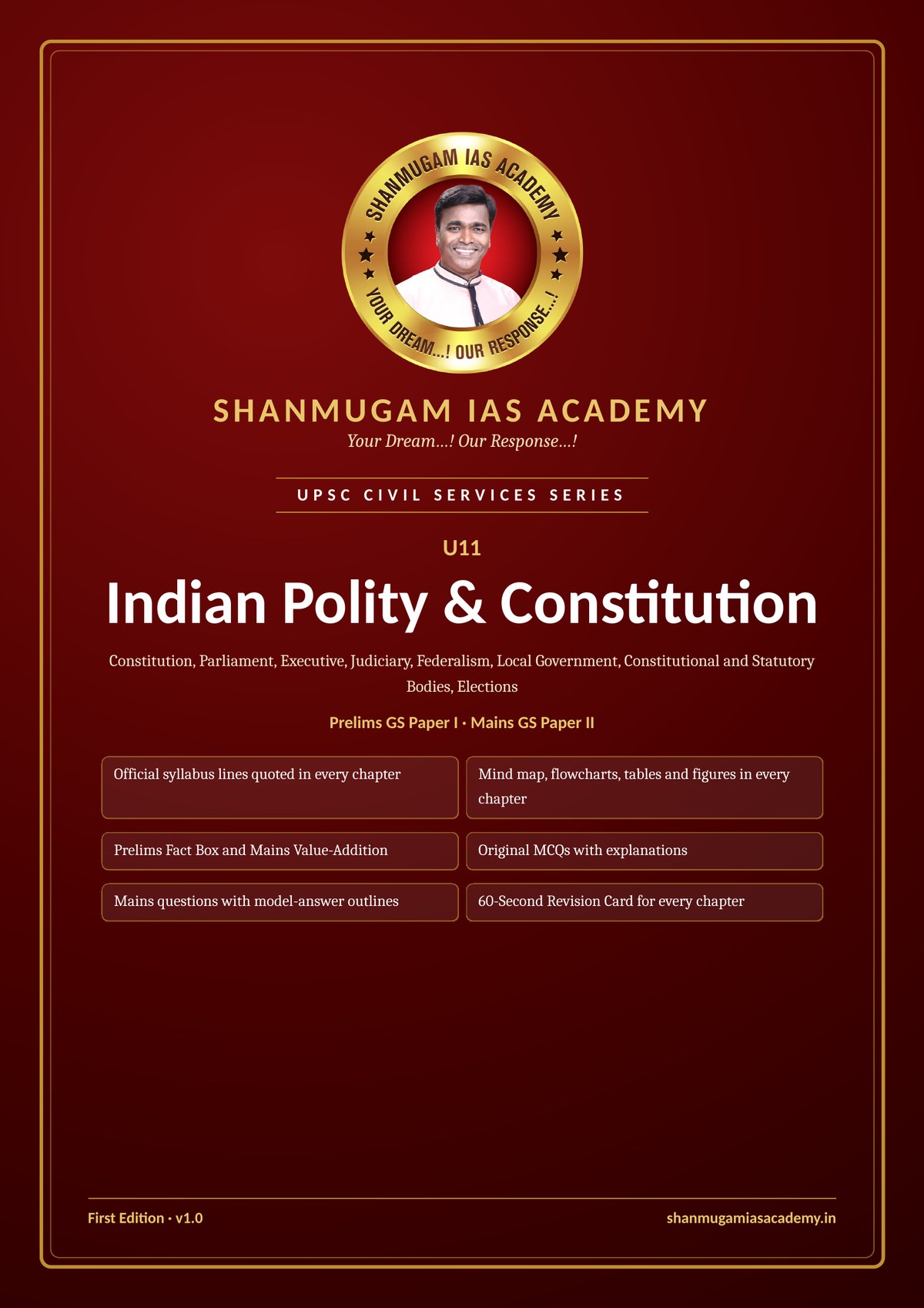 U11 · Indian Polity & Constitution – UPSC Civil Services (Prelims & Mains)
₹249
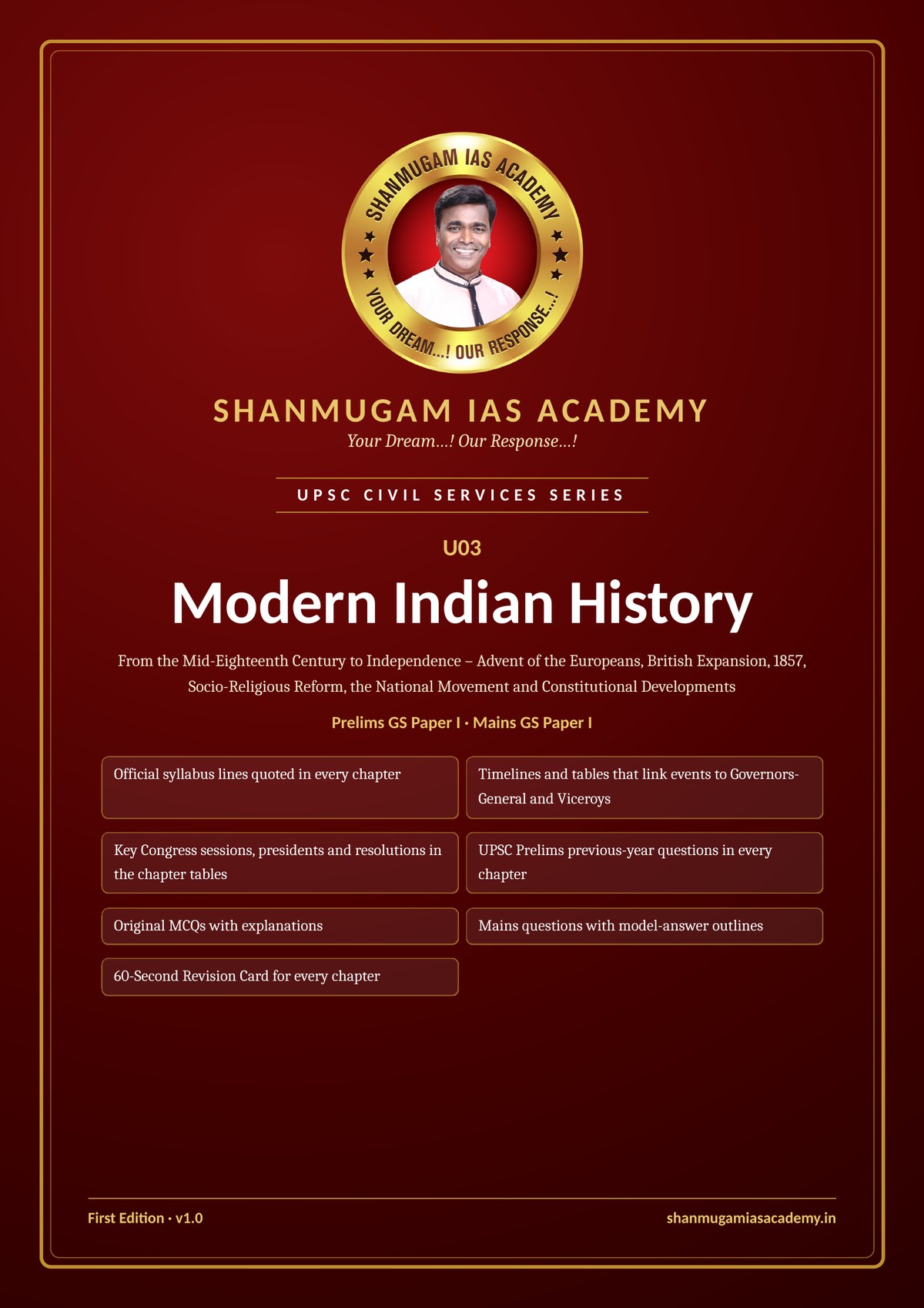 U03 · Modern Indian History – UPSC Civil Services (Prelims & Mains)
₹249
 U15 · Indian Economy – UPSC Civil Services (Prelims & Mains)
₹249
TNPSC குரூப் 1, 2/2A, 4 – நேரடி வகுப்புகள் · கோவை & மதுரை
2006 முதல் சண்முகம் IAS அகாடமி · Classroom & online coaching in Coimbatore and Madurai
