

UPSC English Paper-B – Chapter 8: Reading Comprehension – Method (20 MCQs)
UPSC English Paper-B – Chapter 8: Reading Comprehension – Method (20 MCQs) – 19 questions, subject: English Paper-B. Every question has the correct answer with a two-line explanation; tap "Show Answer". Free practice for TNPSC, UPSC, SSC, Bank and RRB exams – Shanmugam IAS Academy, Coimbatore.
Link to this page from your website / blog (HTML code)
Correct Answer: A [written out in sentences]
Explanation:
Paper-B is a conventional (descriptive) paper, so comprehension answers are written out in clear, correct and concise sentences. There are no options to choose from, and answers are expected in the candidate's own words.
Correct Answer: C [inference]
Explanation:
"Imply" asks what the passage suggests without saying it directly, so it is an inference question. A factual question, by contrast, asks for what the passage states.
Correct Answer: D [Comment on the author's view that a city good for walking is good for everyone.]
Explanation:
"Comment on" asks for the candidate's own view, supported by points from the passage. The other options ask for a list (enumerate), a meaning, or a reason given in the passage.
Correct Answer: B [knows what to look for while reading]
Explanation:
Reading the questions first tells the reader what to look for, so the relevant lines are noticed during careful reading. It does not allow parts of the passage to be skipped or answers to be copied.
Correct Answer: B [what follows from the passage]
Explanation:
An inference question is answered from what follows logically from the passage, even if it is not stated directly. Outside knowledge and copied lines do not answer an inference question.
Correct Answer: C [copying sentences from the passage]
Explanation:
"Lifting" means copying sentences word for word from the passage. Lifted answers lose marks because they do not show that the candidate has understood the passage.
Correct Answer: A [technical terms and names]
Explanation:
Technical terms and proper names, such as "wetland" or "Parliament", may be kept unchanged in an own-words answer because they have no simple substitute. Whole sentences, every adjective and the author's metaphors should be restated.
Correct Answer: D [The farmer's harvest depends on whether the rains come on time.]
Explanation:
Option (d) keeps the idea of dependence, that the harvest depends on timely rain, in fresh words. Option (a) copies the line, while (b) and (c) change its meaning.
Correct Answer: B [1 and 3 only]
Explanation:
A factual answer restates the line that holds the answer, and an explanation answer may join points from several lines. Statement 2 is wrong because an inference states what follows from the passage, not its exact words.
Correct Answer: A [Both A and R are true, and R is the correct explanation of A]
Explanation:
Both statements are true, and R explains A: a question in the plural, such as "What are the reasons", expects every item the passage gives. Giving one reason out of three leaves the answer incomplete.
Correct Answer: B [Fewer people are watching it.]
Explanation:
The sentence says a street without walkers loses the "eyes" that watched it, so it feels unsafe because fewer people are watching it. Wider roads, faster cars and closed shops are not mentioned in the line.
Correct Answer: C [unbroken]
Explanation:
"Continuous" means going on without a break, so continuous footpaths are unbroken, with no gaps. This differs from "continual", which means repeated with breaks.
Correct Answer: D [A habit grows a little stronger every day until it becomes too strong to give up.]
Explanation:
Option (d) keeps the meaning of the metaphor (a habit grows a little stronger each day until it cannot be broken) in new words. Option (a) copies the original, and (c) reverses its meaning.
Correct Answer: C [the candidate's view in one line – agree, disagree or partly agree – then points from the passage]
Explanation:
A "comment" question asks for the candidate's own view, so a strong answer states it in one line (agree, disagree or partly agree) and then supports it with points from the passage. Copying the first sentence or using only outside facts misses the task.
Correct Answer: B [A flyover does less to keep a neighbourhood alive than simple features for walkers.]
Explanation:
The writer says simple features for walkers do more than a new flyover to keep a neighbourhood alive, so a flyover does less. The line does not call for pulling flyovers down or say they make walking easy.
Correct Answer: C [rebuilt in a new form]
Explanation:
"Reshaped" means given a new shape or form, so the cities were rebuilt in a new form to suit the motor car. The prefix "re-" means again, and "shape" means form.
Correct Answer: A [vocabulary in context]
Explanation:
"Give the meaning of … as used in the passage" tests vocabulary in context, so the meaning must fit the word's use in that line. A general dictionary meaning that does not fit the context earns little credit.
Correct Answer: B [list the points one by one]
Explanation:
To enumerate is to name items one by one, so the answer must list every point the passage gives. Giving only one example would leave the answer incomplete.
Correct Answer: D [clear, correct and concise language]
Explanation:
The instruction asks for answers in clear, correct and concise language.
➤ Comprehension, précis, usage and short-essay practice with keys and model answers for the qualifying English paper – U29 · English Paper-B (UPSC book, ₹249): www.shanmugamiasacademy.in/study-materials/upsc-english-paper-b
Today Current Affairs in Tamil | 23 நவம்பர் 2026 | TNPSC Group 4 முக்கிய வினாக்கள்
📚 UPSC Civil Services Books (Prelims & Mains)
PDF நூல்கள் · ₹149 முதல் · ஒவ்வொன்றுக்கும் 50 பக்க இலவச மாதிரி · UPI-இல் பணம் செலுத்தியதும் உடனே பதிவிறக்கம்
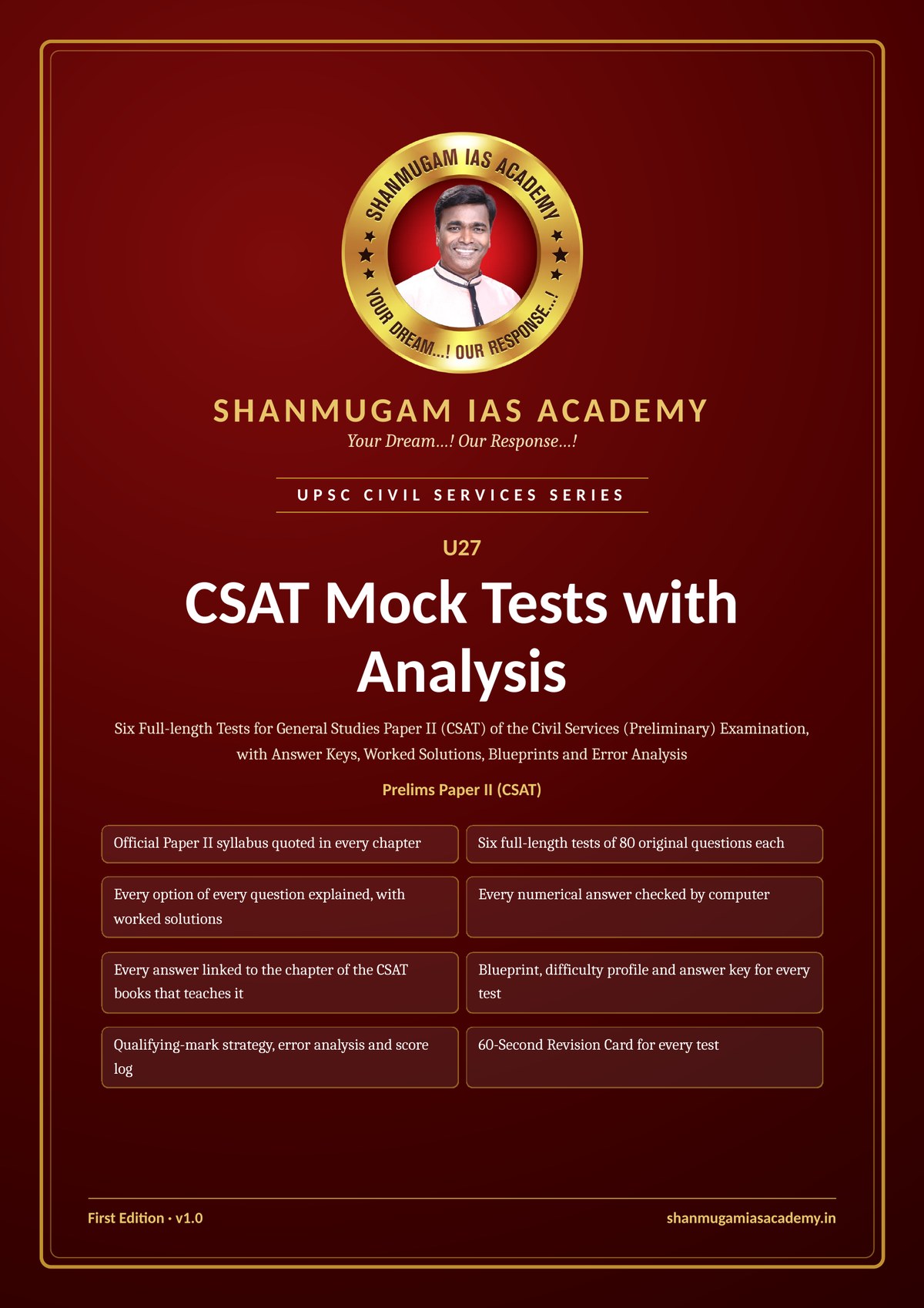 U27 · CSAT Mock Tests with Analysis – UPSC Civil Services (Prelims Paper II – CSAT)
₹249
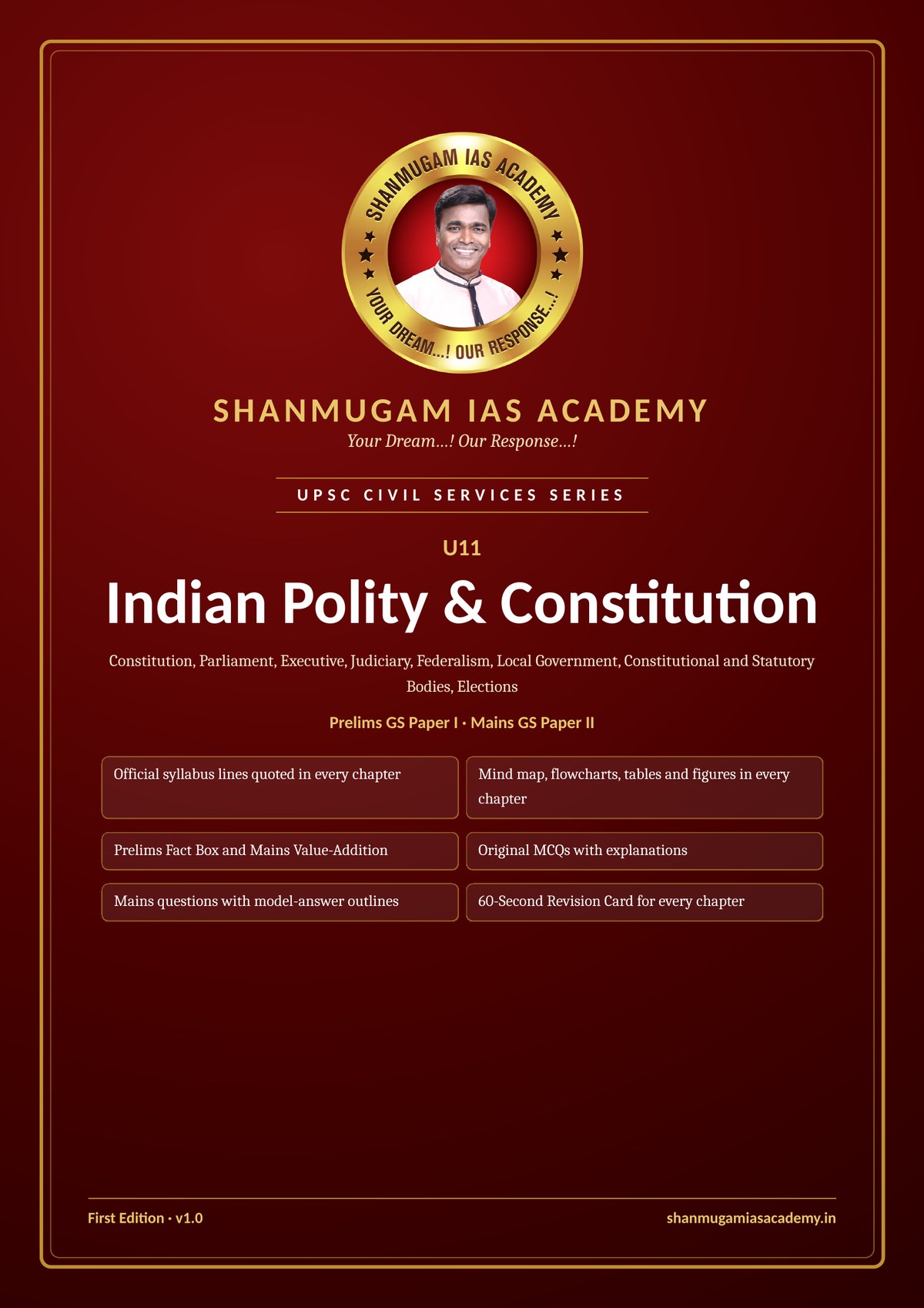 U11 · Indian Polity & Constitution – UPSC Civil Services (Prelims & Mains)
₹249
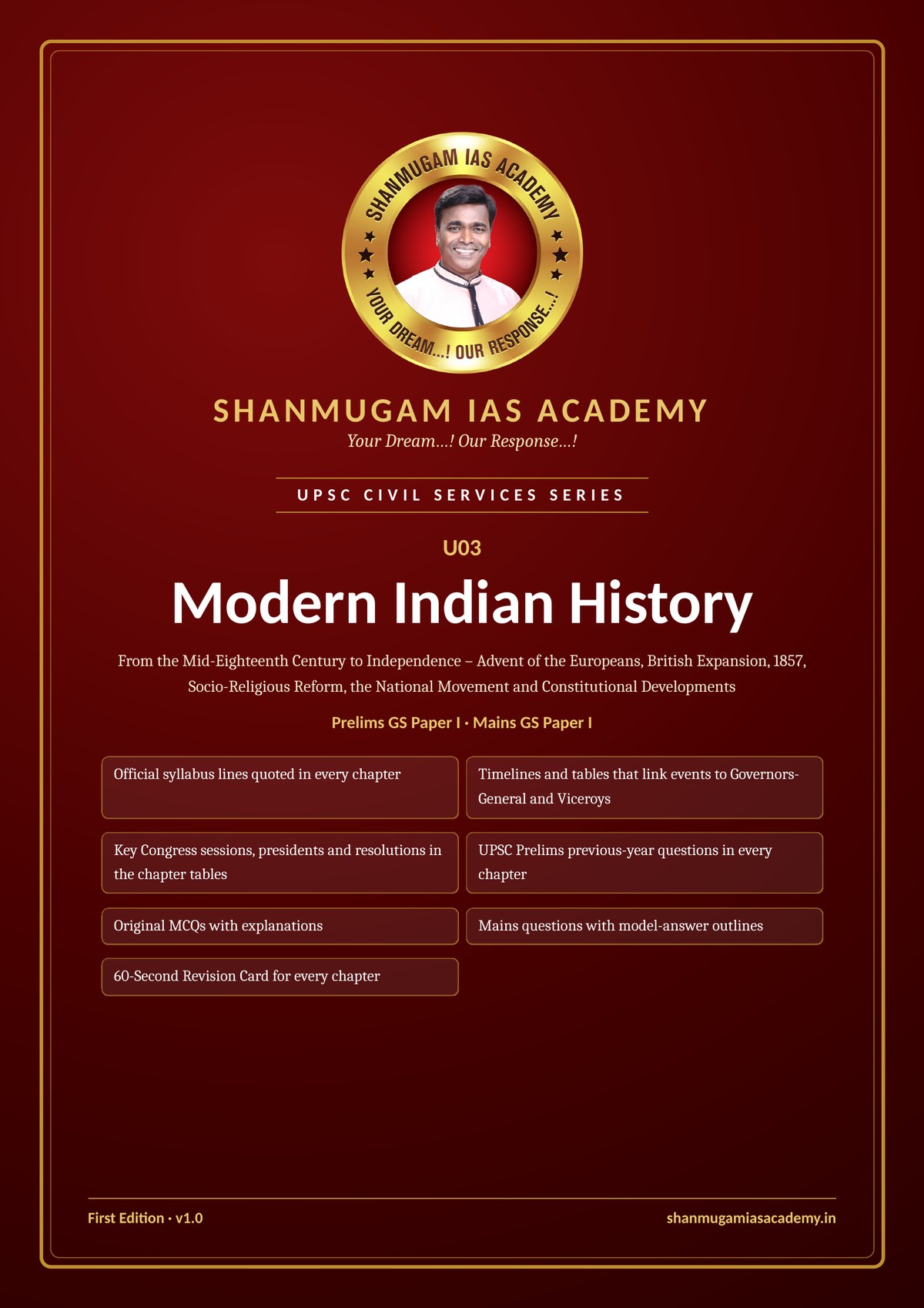 U03 · Modern Indian History – UPSC Civil Services (Prelims & Mains)
₹249
 U15 · Indian Economy – UPSC Civil Services (Prelims & Mains)
₹249
TNPSC குரூப் 1, 2/2A, 4 – நேரடி வகுப்புகள் · கோவை & மதுரை
2006 முதல் சண்முகம் IAS அகாடமி · Classroom & online coaching in Coimbatore and Madurai
