

UPSC Geography Optional Paper I – Chapter 28: Rural–Urban Fringe, Satellite Towns, Urbanisation – Problems and Remedies, and Sustainable Cities (18 MCQs)
UPSC Geography Optional Paper I – Chapter 28: Rural–Urban Fringe, Satellite Towns, Urbanisation – Problems and Remedies, and Sustainable Cities (18 MCQs) – 15 questions, subject: Geography Optional Paper I. Every question has the correct answer with a two-line explanation; tap "Show Answer". Free practice for TNPSC, UPSC, SSC, Bank and RRB exams – Shanmugam IAS Academy, Coimbatore.
Link to this page from your website / blog (HTML code)
Correct Answer: B [a zone of transition between city and countryside]
Explanation:
The rural-urban fringe is a transition zone between city and countryside, where urban and rural land uses and people mix. It is marked by rapid land-use change and rising land values.
Correct Answer: D [an inner urban fringe and an outer rural fringe]
Explanation:
Pryor (1968) divided the rural-urban fringe into an inner urban fringe and an outer rural fringe. Beyond the fringe lies the urban shadow, where urban influence is weaker.
Correct Answer: A [McGee]
Explanation:
T. G. McGee used the term desakota (Indonesian for village-town) for intermixed rural-urban regions of Asia. Such regions combine intensive farming with industry and services along transport corridors.
Correct Answer: D [Ebenezer Howard]
Explanation:
Ebenezer Howard proposed the garden city in 1898 in his book To-morrow: A Peaceful Path to Real Reform. Letchworth (1903) and Welwyn (1920) were built on his ideas.
Correct Answer: D [Stevenage]
Explanation:
Stevenage was designated in November 1946 as the first new town under the UK New Towns Act of 1946. Letchworth and Welwyn were earlier garden cities, and Milton Keynes was designated in 1967.
Correct Answer: B [the city turned inside out, with new centres growing at the outer edge]
Explanation:
Edward Soja's exopolis is the city turned inside out, with offices, malls and new centres growing at the outer edge rather than the old core. A self-contained town ringed by a green belt is Howard's garden city idea.
Correct Answer: C [D. A. Rondinelli]
Explanation:
D. A. Rondinelli wrote Secondary Cities in Developing Countries (1983), arguing that secondary cities could spread urbanisation and development more evenly. Such cities can relieve pressure on primate cities.
Correct Answer: C [edge city]
Explanation:
Joel Garreau's Edge City (1991) described new suburban centres of offices and malls at the edge of older cities. Megalopolis, by contrast, is Gottmann's term for a chain of merged metropolitan areas.
Correct Answer: A [2007]
Explanation:
The UN reports that the world's urban population first exceeded half of the total population around 2007. It projects that about two-thirds of humanity will live in urban areas by 2050.
Correct Answer: C [B. J. L. Berry]
Explanation:
B. J. L. Berry (1976) described counter-urbanisation for the USA of the 1970s, when population moved away from big cities to smaller towns and rural areas. Northam's urbanisation curve describes the three stages of urban growth.
Correct Answer: B [acceleration stage]
Explanation:
In the urbanisation curve, the acceleration stage is marked by rapid rural-urban migration driven by industrialisation. In the terminal stage urban growth slows as the urban share exceeds about 70-80 per cent.
Correct Answer: D [Brazil]
Explanation:
Favelas are the slums or squatter settlements of Brazilian cities such as Rio de Janeiro. Similar settlements are called barriadas or pueblos jovenes in Peru and bustees in India.
Correct Answer: A [prefer central locations near jobs]
Explanation:
Turner's 'bridgeheaders' are new migrants who prefer central locations close to jobs, often in cheap rented rooms. As they become 'consolidators', they move to peripheral squatter settlements to build their own homes.
Correct Answer: C [Quito, 2016]
Explanation:
Habitat III, held at Quito in October 2016, adopted the New Urban Agenda for sustainable urbanisation. Habitat I was held at Vancouver in 1976 and Habitat II at Istanbul in 1996.
Correct Answer: A [sustainable cities and communities]
Explanation:
SDG 11 is 'Sustainable cities and communities'.
➤ Models, theories, diagrams, PYQs and Mains answer-writing practice for Geography Optional Paper I – U32 · Geography Optional Paper I (UPSC book, ₹349): www.shanmugamiasacademy.in/study-materials/upsc-geography-optional-paper-1
Today Current Affairs in Tamil | 23 நவம்பர் 2026 | TNPSC Group 4 முக்கிய வினாக்கள்
📚 TNPSC குரூப் 4 / 2 / 2A – பொதுத்தமிழ், பொது அறிவு நூல்கள்
PDF நூல்கள் · ₹149 முதல் · ஒவ்வொன்றுக்கும் 50 பக்க இலவச மாதிரி · UPI-இல் பணம் செலுத்தியதும் உடனே பதிவிறக்கம்
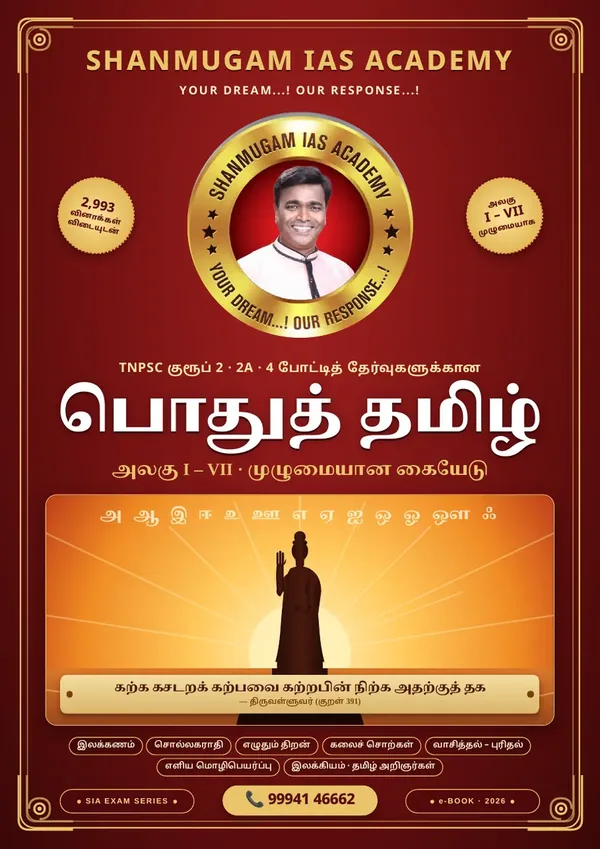 பொதுத் தமிழ் — முழுமையான கையேடு (TNPSC குரூப் 2 · 2A · 4)
₹199
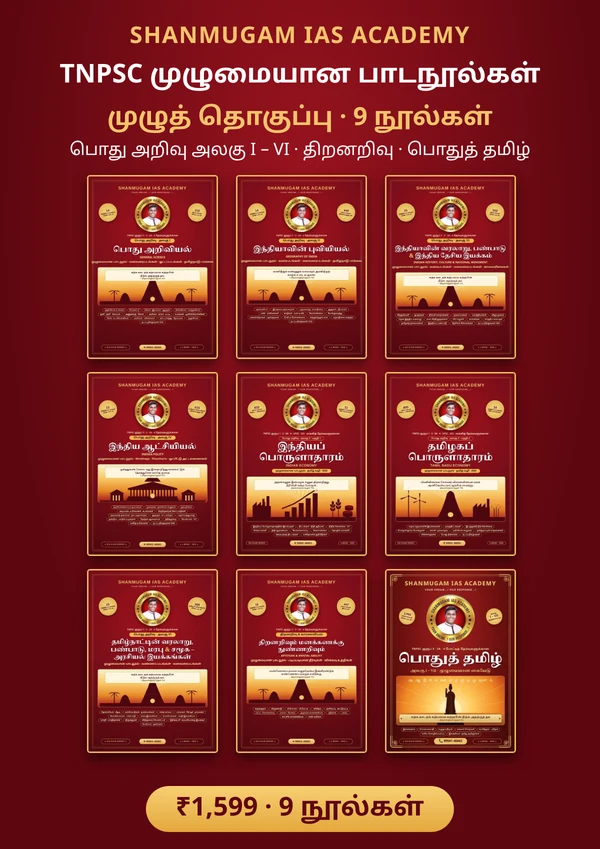 TNPSC முழுமையான பாடநூல்கள் – முழுத் தொகுப்பு (9 நூல்கள்)
₹1599
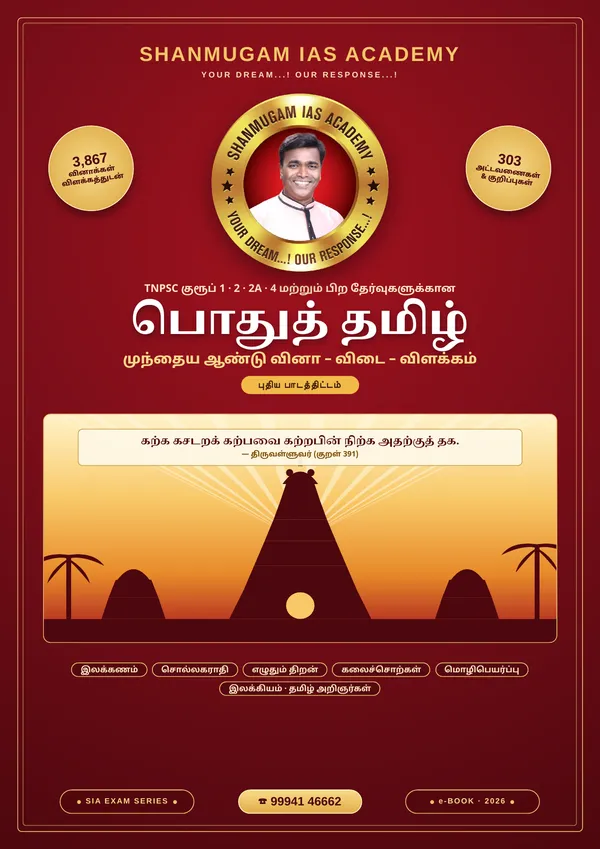 பொதுத் தமிழ் — முந்தைய ஆண்டு வினா – விடை – விளக்கம் (புதிய பாடத்திட்டம்)
₹199
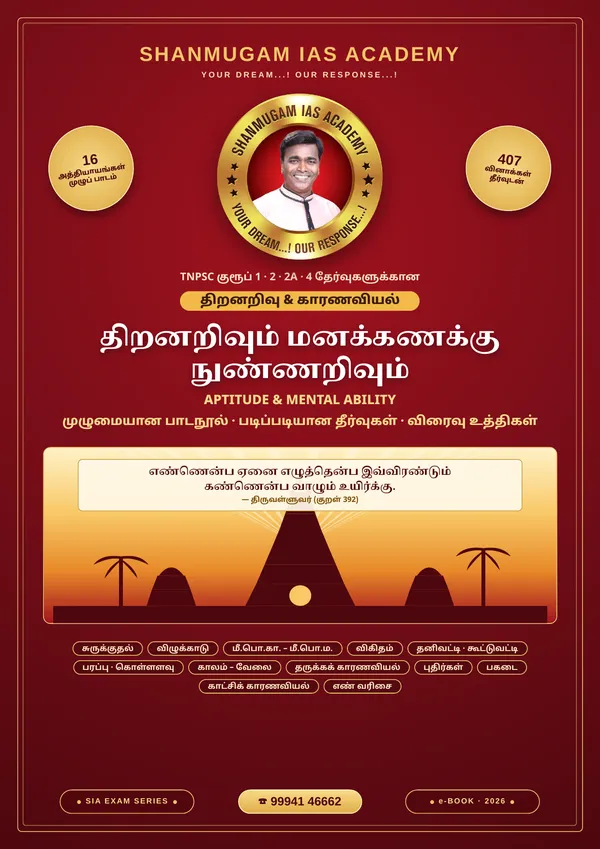 TNPSC திறனறிவும் மனக்கணக்கு நுண்ணறிவும் (Aptitude & Mental Ability) – முழுமையான பாடநூல்
₹199
TNPSC குரூப் 1, 2/2A, 4 – நேரடி வகுப்புகள் · கோவை & மதுரை
2006 முதல் சண்முகம் IAS அகாடமி · Classroom & online coaching in Coimbatore and Madurai
