

UPSC Ethics, Integrity and Aptitude – Chapter 17: Probity in Governance – Concept of Public Service and Philosophical Basis (19 MCQs)
UPSC Ethics, Integrity and Aptitude – Chapter 17: Probity in Governance – Concept of Public Service and Philosophical Basis (19 MCQs) – 16 questions, subject: Ethics (GS-IV). Every question has the correct answer with a two-line explanation; tap "Show Answer". Free practice for TNPSC, UPSC, SSC, Bank and RRB exams – Shanmugam IAS Academy, Coimbatore.
Link to this page from your website / blog (HTML code)
Correct Answer: A [James Perry and Lois Wise]
Explanation:
James Perry and Lois Wise described public service motivation in 1990 as a person's drive to serve the public interest through public institutions. Their article 'The Motivational Bases of Public Service' appeared in the Public Administration Review.
Correct Answer: C [M. C. Mehta v. Kamal Nath]
Explanation:
M.C. Mehta v. Kamal Nath (1996) applied the public trust doctrine, holding that the State is a trustee of natural resources like rivers, forests and the seashore. The case arose from a motel built by diverting the course of the Beas river in Himachal Pradesh.
Correct Answer: A [Union of India v. ADR, 2002]
Explanation:
Union of India v. ADR (2002) upheld voters' right to know candidates' criminal records, assets and educational qualifications.
Correct Answer: B [social contract theory]
Explanation:
Social contract theory holds that the State's authority rests on the consent of the people it governs. Thinkers such as Hobbes, Locke and Rousseau developed it, rejecting the older idea of the divine right of kings.
Correct Answer: D [rajadharma]
Explanation:
Rajadharma is the ruler's duty to protect the people and promote their welfare, an idea found in texts such as the Mahabharata and the Arthashastra. Kautilya wrote that the king's happiness lies in the happiness of his subjects.
Correct Answer: D [popular sovereignty]
Explanation:
'We, the People' in the Preamble shows that all authority under the Constitution flows from the people, which is the principle of popular sovereignty. The Preamble also records that the people of India adopted the Constitution on 26 November 1949.
Correct Answer: B [1 and 2 only]
Explanation:
Statements 1 and 2 are correct: integrity is a personal quality while probity is its demonstration in official processes, and the public trust doctrine treats the State as a trustee of natural resources. Statement 3 is wrong because probity rules apply even in emergencies, only through faster, recorded procedures.
Correct Answer: A [Both A and R are true, and R is the correct explanation of A]
Explanation:
Both statements are true and R explains A: undeclared private interests can bias tender evaluation, so committee members must declare conflicts of interest. A member with such an interest should also step away (recuse) from that evaluation.
Correct Answer: D [Self-sacrifice]
Explanation:
Willingly serving in a difficult posting for the public good reflects self-sacrifice, one of the four dimensions of public service motivation described by James Perry. The other three are attraction to policy-making, commitment to the public interest and compassion.
Correct Answer: B [using emergency procurement rules with recorded quotations]
Explanation:
Even in emergencies, probity is maintained by following the emergency procurement rules and recording quotations and reasons for each decision. The General Financial Rules allow faster procedures in urgency, but they never remove the need for written records.
Correct Answer: C [John Locke]
Explanation:
John Locke's Two Treatises of Government (1689) argued that legitimate government rests on the consent of the governed and must protect life, liberty and property. Hobbes wrote Leviathan (1651), Rousseau wrote The Social Contract (1762) and Montesquieu wrote The Spirit of the Laws (1748).
Correct Answer: C [4-1-3-2]
Explanation:
Locke's Two Treatises came in 1689, Perry and Wise described public service motivation in 1990, the Kamal Nath judgment on public trust came in 1996 and the ADR disclosure judgment in 2002, giving 4-1-3-2. In the ADR case the Supreme Court held that voters have a right to know candidates' criminal, financial and educational background.
Correct Answer: A [An officer publishing tender evaluations with reasons]
Explanation:
Publishing tender evaluations with reasons shows probity, because it demonstrates honesty openly in an official process. Privately refusing a gift or believing in honesty shows personal integrity, which is an inner quality rather than a visible procedure.
Correct Answer: A [2007]
Explanation:
The Second Administrative Reforms Commission's fourth report, 'Ethics in Governance', which dealt with probity, was submitted in January 2007. The Commission was set up in 2005 under the chairmanship of Veerappa Moily.
Correct Answer: B [Law, institutions, transparency, people]
Explanation:
Probity is secured through sound laws, strong institutions, transparency and ethical people working together. Secrecy and unchecked discretion breed corruption, while profit and competition are business goals, not the pillars of public probity.
Correct Answer: C [open e-tendering with published criteria and recorded reasons]
Explanation:
Open e-tendering with published criteria and recorded reasons ensures fair competition and leaves an audit trail.
➤ Concepts, thinkers, Indian administrative examples and solved case studies with model-answer outlines for GS Paper IV – U21 · Ethics, Integrity and Aptitude (UPSC book, ₹249): www.shanmugamiasacademy.in/study-materials/upsc-ethics-integrity-aptitude
Today Current Affairs in Tamil | 23 நவம்பர் 2026 | TNPSC Group 4 முக்கிய வினாக்கள்
📚 TNPSC குரூப் 4 / 2 / 2A – பொதுத்தமிழ், பொது அறிவு நூல்கள்
PDF நூல்கள் · ₹149 முதல் · ஒவ்வொன்றுக்கும் 50 பக்க இலவச மாதிரி · UPI-இல் பணம் செலுத்தியதும் உடனே பதிவிறக்கம்
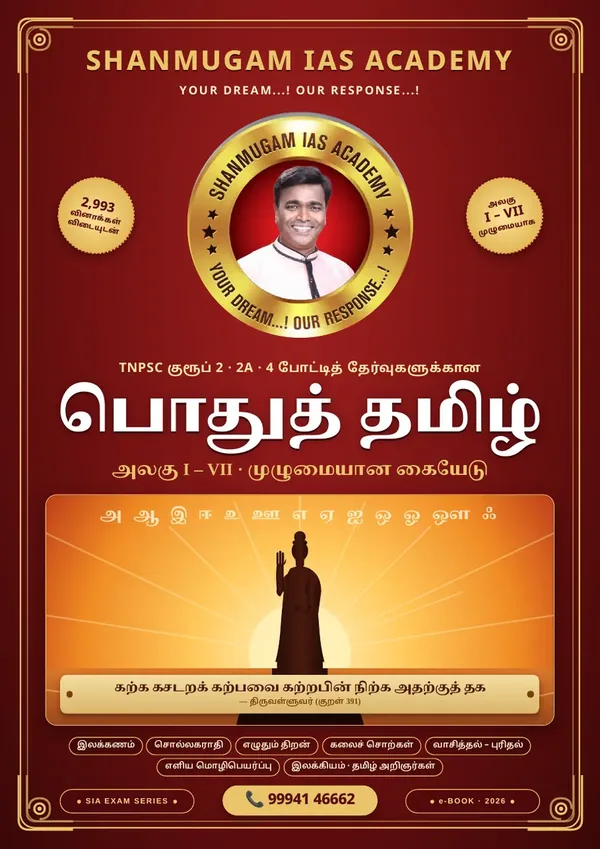 பொதுத் தமிழ் — முழுமையான கையேடு (TNPSC குரூப் 2 · 2A · 4)
₹199
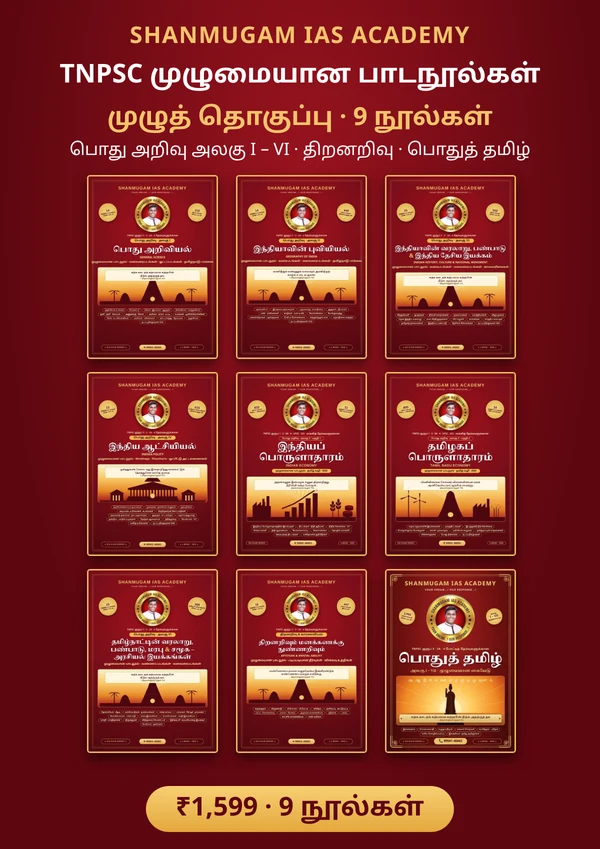 TNPSC முழுமையான பாடநூல்கள் – முழுத் தொகுப்பு (9 நூல்கள்)
₹1599
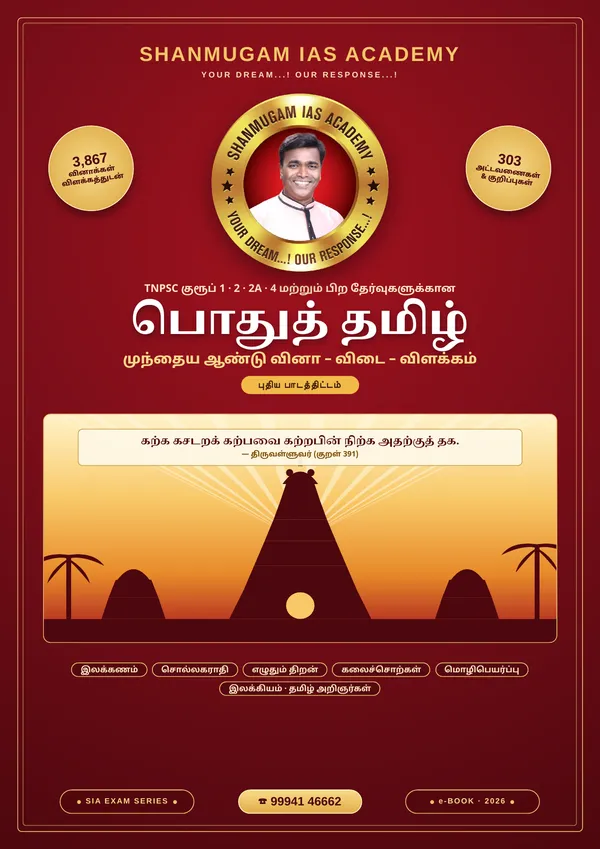 பொதுத் தமிழ் — முந்தைய ஆண்டு வினா – விடை – விளக்கம் (புதிய பாடத்திட்டம்)
₹199
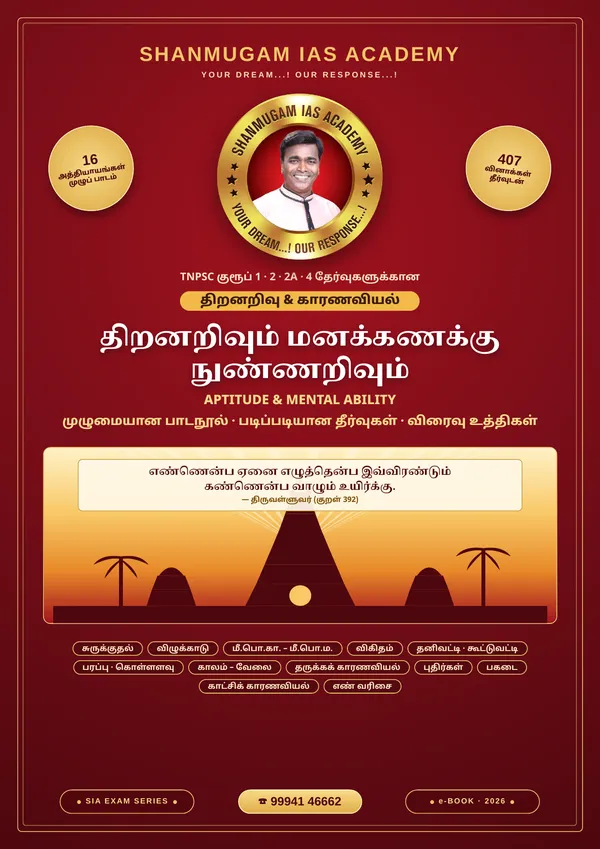 TNPSC திறனறிவும் மனக்கணக்கு நுண்ணறிவும் (Aptitude & Mental Ability) – முழுமையான பாடநூல்
₹199
TNPSC குரூப் 1, 2/2A, 4 – நேரடி வகுப்புகள் · கோவை & மதுரை
2006 முதல் சண்முகம் IAS அகாடமி · Classroom & online coaching in Coimbatore and Madurai
