

History 19 November 2026
Rani Lakshmibai, born 19 November 1828 – Jhansi's queen of 1857
Five key points
- Early life: born Manikarnika Tambe ('Manu') in Varanasi; 19 November 1828 is the generally accepted date, though some historians give 1835. Her father was Moropant Tambe. She was trained in horse-riding and arms.
- Jhansi: in May 1842 she married Gangadhar Rao Newalkar, the Raja of Jhansi, and became Lakshmibai. Their son, born in 1851, died a few months later. A day before his death in November 1853, the Raja adopted a boy, Anand Rao, renamed Damodar Rao.
- Annexation: Governor-General Dalhousie refused to accept the adopted son as heir and annexed Jhansi under the Doctrine of Lapse. In March 1854 the Rani was given a pension of ₹60,000 a year and asked to leave the fort. (Exam lists often give Jhansi as 1853 – the year of the Raja's death; the order took effect in 1854.) Other States taken under the doctrine: Satara (1848), Sambalpur (1849), Nagpur (1854).
- 1857–58: after the sepoys at Jhansi rose in June 1857, the Rani took over the administration. Sir Hugh Rose besieged Jhansi from 23 March 1858; a relief force under Tatya Tope was beaten on 31 March, and the city fell in early April. She escaped with Damodar Rao to Kalpi, then joined Tatya Tope and Rao Saheb in taking Gwalior. She died fighting at Kotah-ki-Serai near Gwalior on 18 June 1858 (some accounts say 17 June). Rose called her 'the most dangerous of all Indian leaders'.
- Legacy: Subhadra Kumari Chauhan's Hindi poem 'Jhansi ki Rani' made her a household name. The Indian National Army's women's unit, the Rani of Jhansi Regiment, was formed in Singapore in 1943 under Captain Lakshmi Swaminathan (later Sahgal). Tamil Nadu parallel: Rani Velu Nachiyar of Sivaganga fought the East India Company and regained Sivaganga in 1780 – about 77 years before 1857.
Try 2 questions
Dalhousie refused to recognise the adopted son, Damodar Rao, as heir and annexed Jhansi under the Doctrine of Lapse; in March 1854 the Rani was given a pension of ₹60,000 a year. Satara (1848) was the first State annexed under the doctrine.
Subhas Chandra Bose reached Singapore on 2 July 1943 and authorised Lakshmi Swaminathan (later Captain Lakshmi Sahgal) to raise the women's regiment there.
Sources: theprint.in · www.deccanherald.com
Frequently asked questions
What is the knowledge nugget?
One short topic a day that is in the news – a place, monument, species, law or concept – explained in five points, with how it is asked in exams and two practice questions.
Is it for UPSC or TNPSC?
Both. The points are written for UPSC Prelims and TNPSC Group 1, 2 and 4, in Tamil and English.
Can I download it?
Yes, each nugget has a free PDF with the points and questions.
Link to this page from your website / blog (HTML code)
Free daily practice
- UPSC Mains answer practice
- Weekly Top 20 current affairs
- Daily subject quiz
- Knowledge nugget
- TNPSC Mains Practice
- All free PDFs
Classroom & online coaching – TNPSC, UPSC – Coimbatore, Madurai.
Courses & fees 99941 46662நடப்பு நிகழ்வுகள் 25 நவம்பர் 2026 | Today Current Affairs in Tamil | TNPSC Group 4 வினா விடை
📚 TNPSC குரூப் 4 / 2 / 2A – பொதுத்தமிழ், பொது அறிவு நூல்கள்
PDF நூல்கள் · ₹149 முதல் · ஒவ்வொன்றுக்கும் 50 பக்க இலவச மாதிரி · UPI-இல் பணம் செலுத்தியதும் உடனே பதிவிறக்கம்
 பொதுத் தமிழ் — முழுமையான கையேடு (TNPSC குரூப் 2 · 2A · 4)
₹199
 TNPSC முழுமையான பாடநூல்கள் – முழுத் தொகுப்பு (9 நூல்கள்)
₹1599
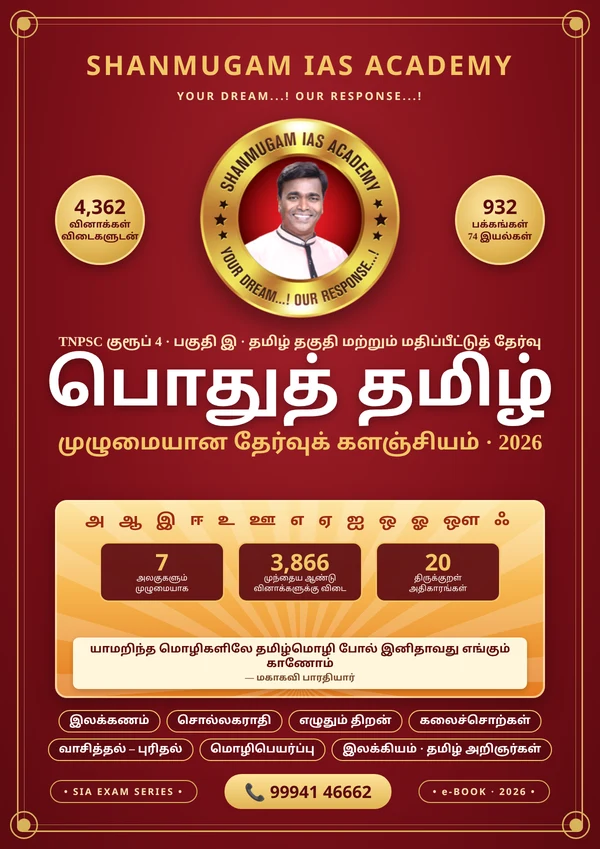 TNPSC குரூப் 4 பொதுத் தமிழ் – முழுமையான தேர்வுக் களஞ்சியம் 2026
₹249
 பொதுத் தமிழ் — முந்தைய ஆண்டு வினா – விடை – விளக்கம் (புதிய பாடத்திட்டம்)
₹199
TNPSC குரூப் 1, 2/2A, 4 – நேரடி வகுப்புகள் · கோவை & மதுரை
2006 முதல் சண்முகம் IAS அகாடமி · Classroom & online coaching in Coimbatore and Madurai
