

UPSC Essay – Chapter 2: Decoding the Topic and Gathering Ideas (20 MCQs)
UPSC Essay – Chapter 2: Decoding the Topic and Gathering Ideas (20 MCQs) – 20 questions, subject: Essay. Every question has the correct answer with a two-line explanation; tap "Show Answer". Free practice for TNPSC, UPSC, SSC, Bank and RRB exams – Shanmugam IAS Academy, Coimbatore.
Link to this page from your website / blog (HTML code)
Correct Answer: C [qualifier]
Explanation:
In 'Only an informed citizen can be a free citizen', the word 'only' is a qualifier because it sets a condition that narrows the claim. A good essay tests whether being informed is truly the only route to freedom.
Correct Answer: D [the topic rewritten as a question to be answered]
Explanation:
The hidden question is the topic rewritten as a question to be answered: is it true, why, when not, and so what. Answering it gives the essay its thesis.
Correct Answer: C [the wider meaning of the image]
Explanation:
When a topic uses an image such as a ship or a river, the essay should be written on the wider meaning of the image. The image itself may be used only to open or close the essay.
Correct Answer: B [The family]
Explanation:
The family is a level, along with the individual, community, nation and world. Economic, ethical and environmental are dimensions, that is, aspects from which a topic is viewed.
Correct Answer: A [issue-based topics]
Explanation:
The 'Five Ws and one H' method (who, what, when, where, why, how) suits issue-based topics, because they name a concrete problem. Abstract topics need interpretation first instead.
Correct Answer: C ["X or Y" or "myth or reality"]
Explanation:
Thesis-antithesis-synthesis suits topics framed as 'X or Y' or 'myth or reality', because they set two positions against each other. The synthesis gives the balanced position the topic asks for.
Correct Answer: D [open and quick, without judging ideas]
Explanation:
Brainstorming should be open and quick, without judging ideas, so that as many ideas as possible appear. Selection comes later, at the outlining stage.
Correct Answer: B [one sentence that answers the hidden question]
Explanation:
A thesis is one sentence that answers the hidden question of the topic. Every paragraph of the essay should support or test this sentence.
Correct Answer: A [Only one or two examples come to mind]
Explanation:
A warning sign while choosing a topic is that only one or two examples come to mind, since the essay will run short of material. Quick dimensions, a possible balanced stand and clear key words are signs of a good choice.
Correct Answer: B [1 and 2 only]
Explanation:
Statements 1 and 2 are correct: checking every dimension prevents a one-sided essay, and each body paragraph needs a specific example. Statement 3 is wrong because the counter-view must be kept to show balance.
Correct Answer: A [Both A and R are true, and R is the correct explanation of A]
Explanation:
Both statements are true, and R explains A: qualifiers such as 'only' or 'best' change the claim, so ignoring them means answering a different topic. A good essay tests whether the qualifier holds.
Correct Answer: B [abstract topics]
Explanation:
The levels ladder suits abstract topics, because an abstract line gains depth when shown at individual, community, national and global levels. Statistical topics instead need data and analysis.
Correct Answer: A [Relation]
Explanation:
KQRH stands for Key words, Qualifier, Relation and Hidden question, so 'R' is Relation. It means the relation between the ideas in the topic, such as cause, contrast or condition.
Correct Answer: D [Edward de Bono]
Explanation:
Edward de Bono set out the Six Thinking Hats method in his 1985 book of that name. Each 'hat' stands for one way of thinking, such as facts, feelings, caution or creativity.
Correct Answer: B [the proposition]
Explanation:
The Nyaya five-step inference begins with pratijna, the proposition to be proved. It is followed by hetu (reason), udaharana (example), upanaya (application) and nigamana (conclusion).
Correct Answer: D [Tony Buzan]
Explanation:
Tony Buzan popularised the mind map, notably through his 1974 book and BBC series Use Your Head. Edward de Bono is linked with Six Thinking Hats and Alex Osborn with brainstorming.
Correct Answer: C [4-2-3-1]
Explanation:
Osborn's Applied Imagination (brainstorming) appeared in 1953, Bloom's Taxonomy in 1956, Buzan's Use Your Head (mind maps) in 1974 and de Bono's Six Thinking Hats in 1985, giving 4-2-3-1. Bloom's Taxonomy ranks thinking skills from remembering to higher levels.
Correct Answer: B [Example bank]
Explanation:
The example bank notes, for each dimension, one example from history, one from current events and one from daily life. This ensures every paragraph has concrete support of different kinds.
Correct Answer: A [About one-fifth]
Explanation:
The chapter suggests about one-fifth of the time per essay, roughly 18 of 90 minutes, for decoding, brainstorming and outlining. Good planning saves time later because the writing flows from a clear outline.
Correct Answer: D [information is not the same as wisdom]
Explanation:
Table 2.4 records the counter-view that information is not wisdom and that overload can confuse.
➤ Essay-writing method, theme-wise idea banks, UPSC essay topics with outlines, model essays and practice topics – U22 · Essay (UPSC book, ₹249): www.shanmugamiasacademy.in/study-materials/upsc-essay
Today Current Affairs in Tamil | 23 நவம்பர் 2026 | TNPSC Group 4 முக்கிய வினாக்கள்
📚 UPSC Civil Services Books (Prelims & Mains)
PDF நூல்கள் · ₹149 முதல் · ஒவ்வொன்றுக்கும் 50 பக்க இலவச மாதிரி · UPI-இல் பணம் செலுத்தியதும் உடனே பதிவிறக்கம்
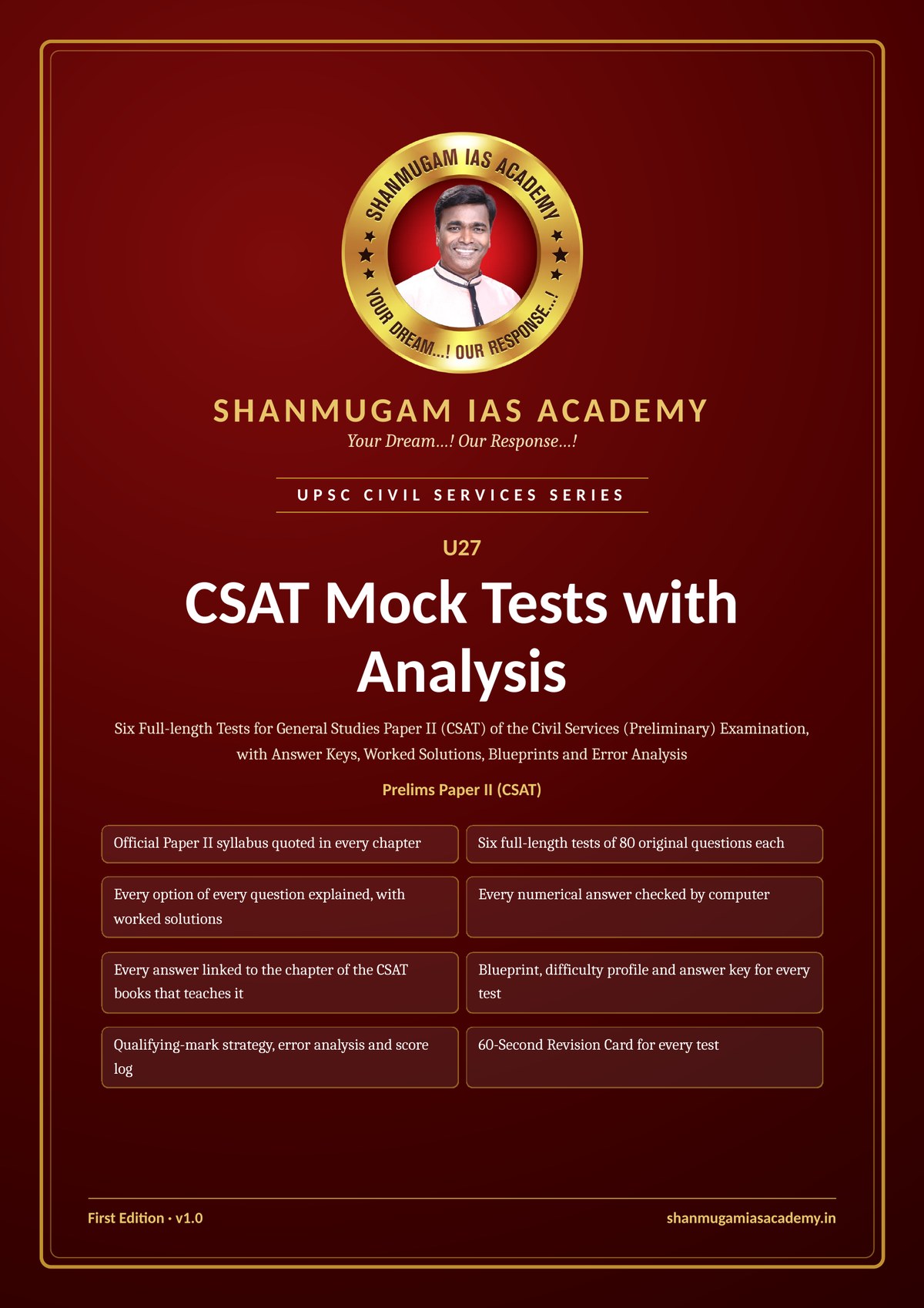 U27 · CSAT Mock Tests with Analysis – UPSC Civil Services (Prelims Paper II – CSAT)
₹249
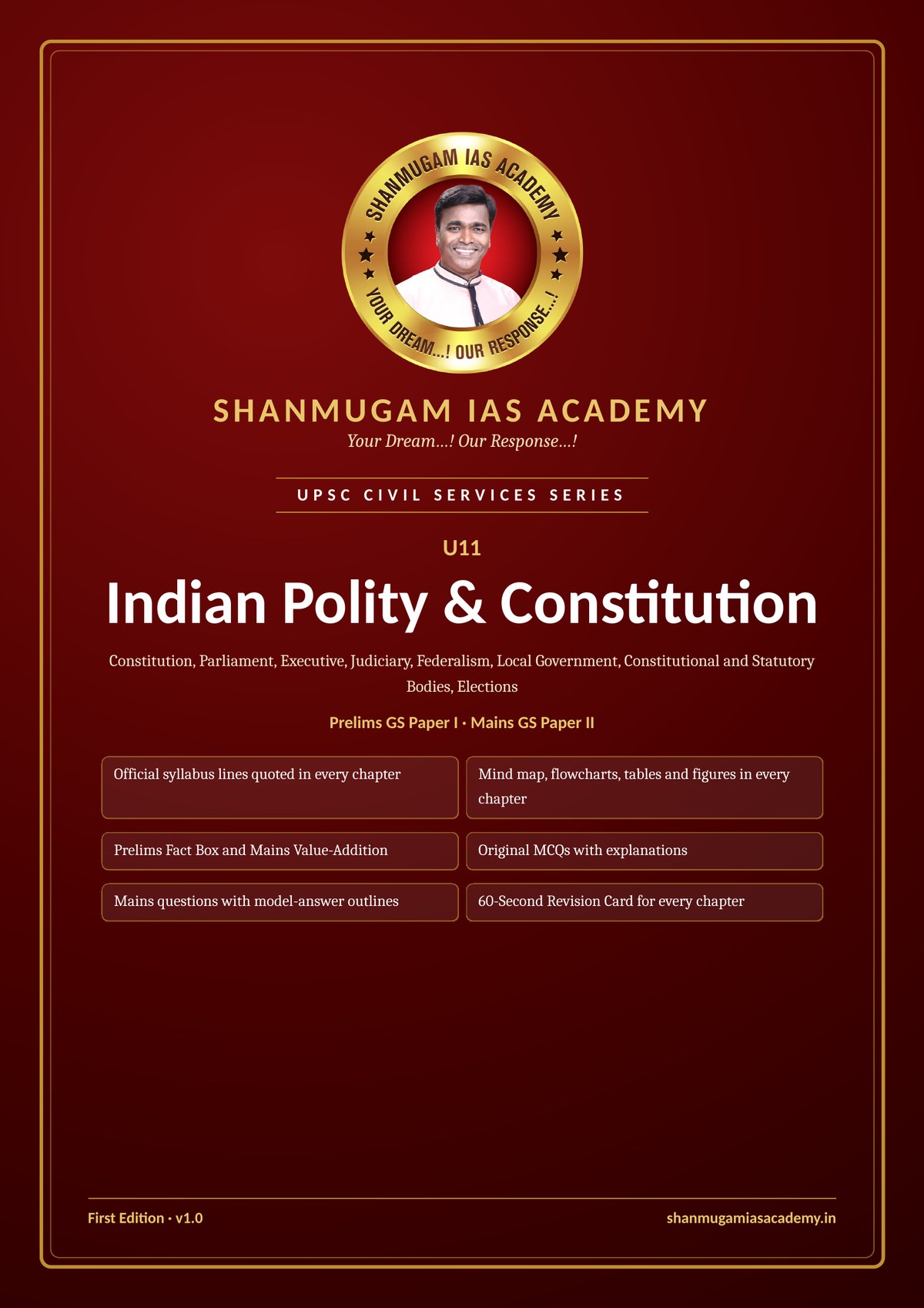 U11 · Indian Polity & Constitution – UPSC Civil Services (Prelims & Mains)
₹249
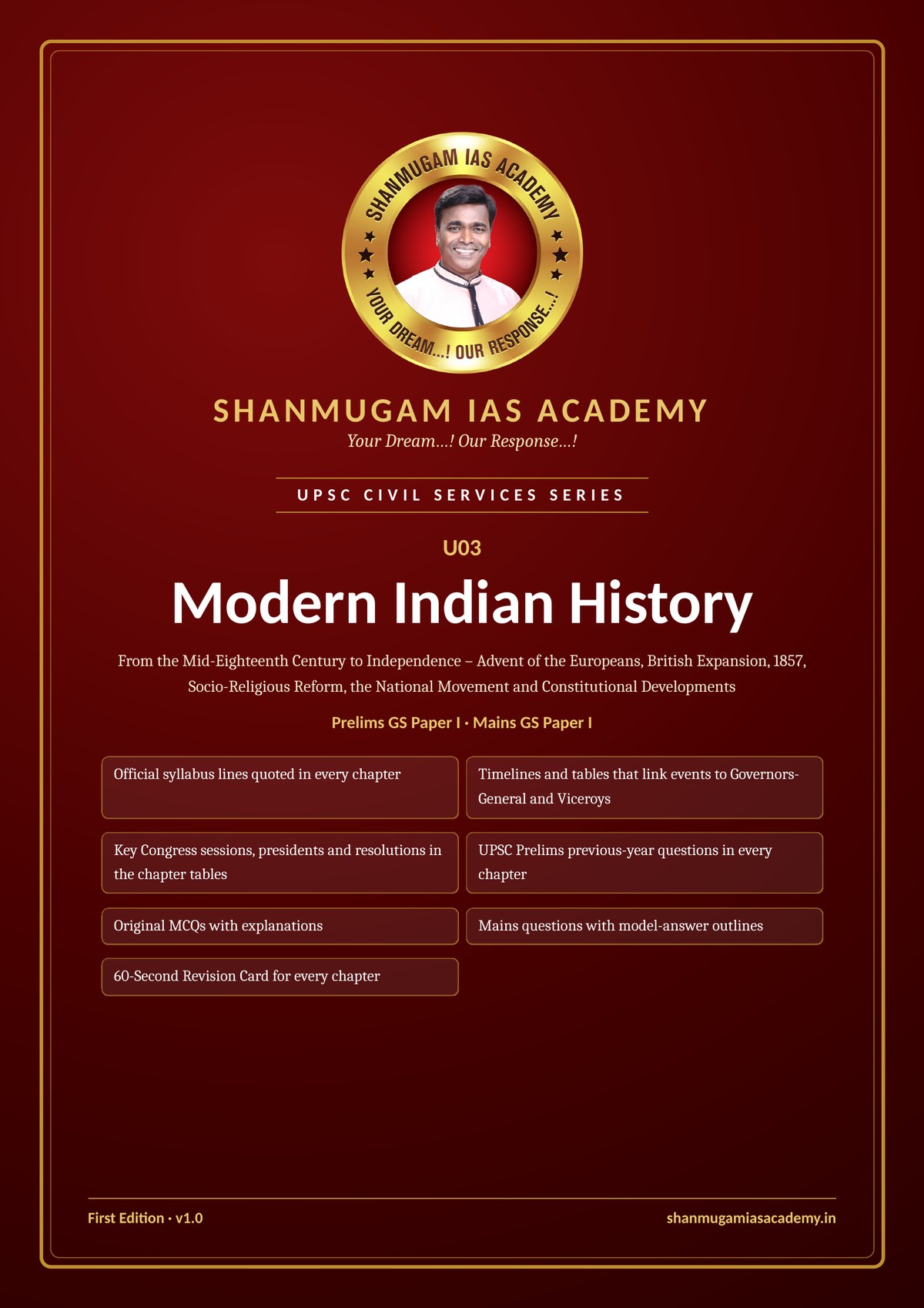 U03 · Modern Indian History – UPSC Civil Services (Prelims & Mains)
₹249
 U15 · Indian Economy – UPSC Civil Services (Prelims & Mains)
₹249
TNPSC குரூப் 1, 2/2A, 4 – நேரடி வகுப்புகள் · கோவை & மதுரை
2006 முதல் சண்முகம் IAS அகாடமி · Classroom & online coaching in Coimbatore and Madurai
