

UPSC Essay – Chapter 3: Structuring the Essay – Introduction, Body and Conclusion (20 MCQs)
UPSC Essay – Chapter 3: Structuring the Essay – Introduction, Body and Conclusion (20 MCQs) – 18 questions, subject: Essay. Every question has the correct answer with a two-line explanation; tap "Show Answer". Free practice for TNPSC, UPSC, SSC, Bank and RRB exams – Shanmugam IAS Academy, Coimbatore.
Link to this page from your website / blog (HTML code)
Correct Answer: A [thesis]
Explanation:
The last line of a good introduction usually states the thesis, telling the reader what the essay will argue. The way forward belongs in the conclusion.
Correct Answer: B [three-quarters of the words]
Explanation:
As a working guide, the body takes about three-quarters of the words of the essay. The remaining quarter is shared between the introduction and the conclusion.
Correct Answer: C [Explanation]
Explanation:
PEEL stands for Point, Evidence, Explanation, Link, so the second 'E' is Explanation. The explanation shows how the evidence supports the point.
Correct Answer: C [Dialectic]
Explanation:
An 'X or Y?' topic suits a dialectic body: the case for, the case against, and then a synthesis. This shows balance before judging between the two alternatives.
Correct Answer: B [Meaning, then level-wise, then counter-view]
Explanation:
An abstract quotation is best handled by explaining its meaning, then giving level-wise examples, then a counter-view. Problem-cause-solution suits issue-based topics instead.
Correct Answer: A [bring in a new argument]
Explanation:
A good conclusion should not bring in a new argument, because a fresh line of debate belongs in the body. The conclusion should answer the topic, suggest a way forward and may echo the opening.
Correct Answer: C [ten to fourteen paragraphs]
Explanation:
An essay of about 1,000-1,200 words usually has ten to fourteen paragraphs. Ten to fourteen paragraphs of 80-120 words each add up to roughly that length.
Correct Answer: D [Montaigne]
Explanation:
Michel de Montaigne called his 1580 writings Essais, meaning 'attempts', and the form took its name from them. Francis Bacon later brought the term into English with his Essays of 1597.
Correct Answer: B [1 and 2 only]
Explanation:
Statements 1 and 2 are correct: each body paragraph should carry one main idea, and transitions signal how paragraphs relate. Statement 3 is wrong because an introduction needs only one or two paragraphs.
Correct Answer: A [Both A and R are true, and R is the correct explanation of A]
Explanation:
Both statements are true, and R explains A: writing topic sentences on the planning page is useful because together they should read like a summary of the argument. This makes gaps in the plan visible before writing begins.
Correct Answer: D [Quotation]
Explanation:
A quotation introduction must be accurate and correctly attributed, so it carries the caution 'never invent or misattribute'. A wrong quotation in the very first line damages the examiner's trust.
Correct Answer: D [change, history or progress]
Explanation:
A time-wise structure (past, present, future) shows how an idea has moved, so it suits topics on change, history or progress. A single scheme or a definition does not need a time frame.
Correct Answer: A [Echo the opening]
Explanation:
AWE stands for Answer the topic, Way forward, Echo the opening, so 'E' is Echo the opening. Echoing the opening gives the essay a sense of completeness.
Correct Answer: C [1711]
Explanation:
The Spectator of Joseph Addison and Richard Steele first appeared on 1 March 1711. Its short essays helped make the periodical essay popular in English.
Correct Answer: C [3-1-2-4]
Explanation:
Montaigne's Essais appeared in 1580, Bacon's Essays in 1597, The Spectator in 1711 and Lamb's Essays of Elia in 1823, giving 3-1-2-4. Montaigne is regarded as the father of the modern essay.
Correct Answer: B [Fifteen]
Explanation:
Kautilya's Arthashastra is arranged in fifteen books called adhikaranas. It is an ancient Indian treatise on statecraft, economics and administration.
Correct Answer: A [the first lines alone tell the argument]
Explanation:
The topic-sentence test checks whether the first sentences of the paragraphs alone tell the argument. If they do, the structure of the essay is sound.
Correct Answer: D [show balance by answering the strongest objection]
Explanation:
Stating and answering the strongest objection shows balance and makes the essay's judgement more credible.
➤ Essay-writing method, theme-wise idea banks, UPSC essay topics with outlines, model essays and practice topics – U22 · Essay (UPSC book, ₹249): www.shanmugamiasacademy.in/study-materials/upsc-essay
Today Current Affairs in Tamil | 23 நவம்பர் 2026 | TNPSC Group 4 முக்கிய வினாக்கள்
📚 UPSC Civil Services Books (Prelims & Mains)
PDF நூல்கள் · ₹149 முதல் · ஒவ்வொன்றுக்கும் 50 பக்க இலவச மாதிரி · UPI-இல் பணம் செலுத்தியதும் உடனே பதிவிறக்கம்
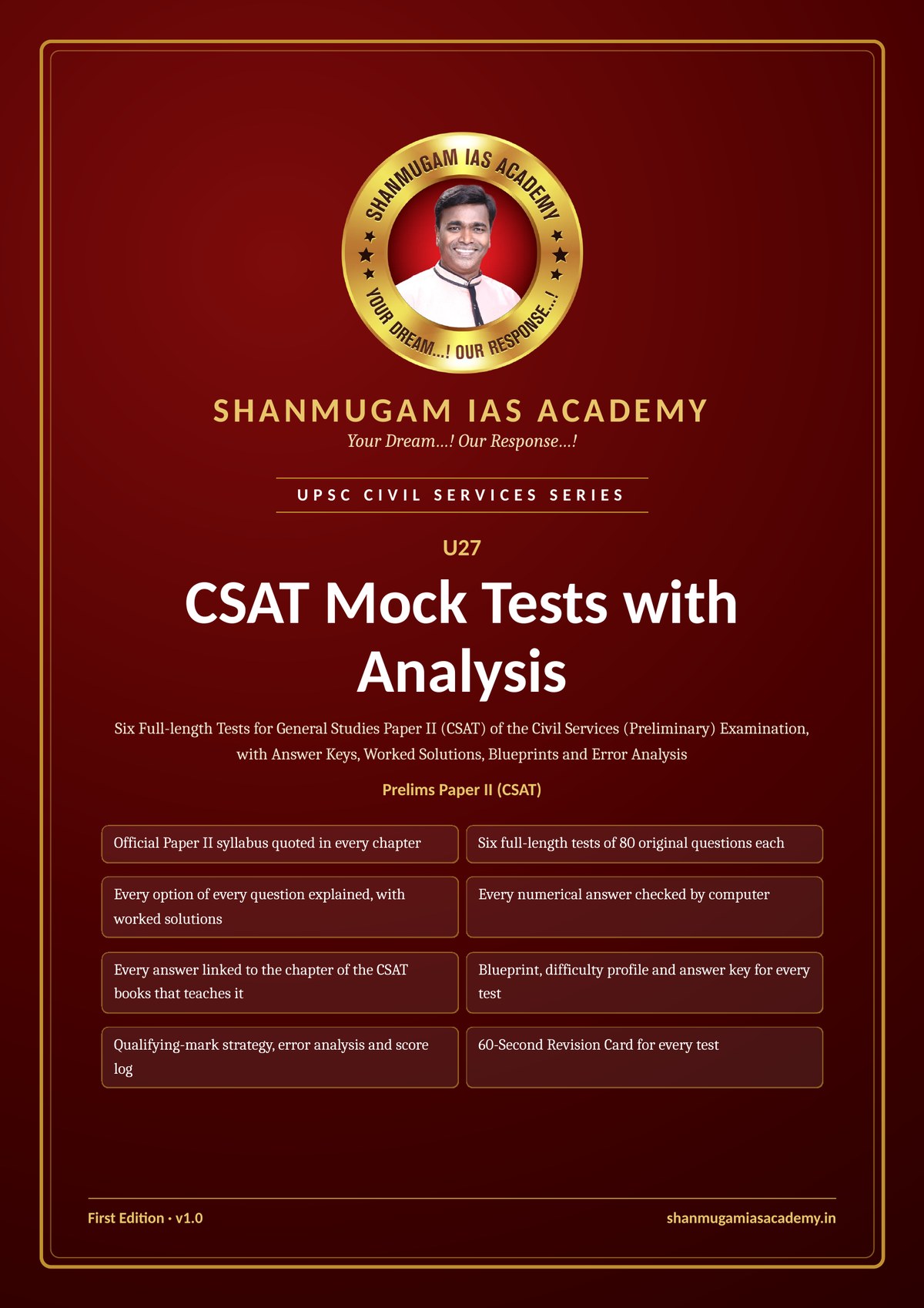 U27 · CSAT Mock Tests with Analysis – UPSC Civil Services (Prelims Paper II – CSAT)
₹249
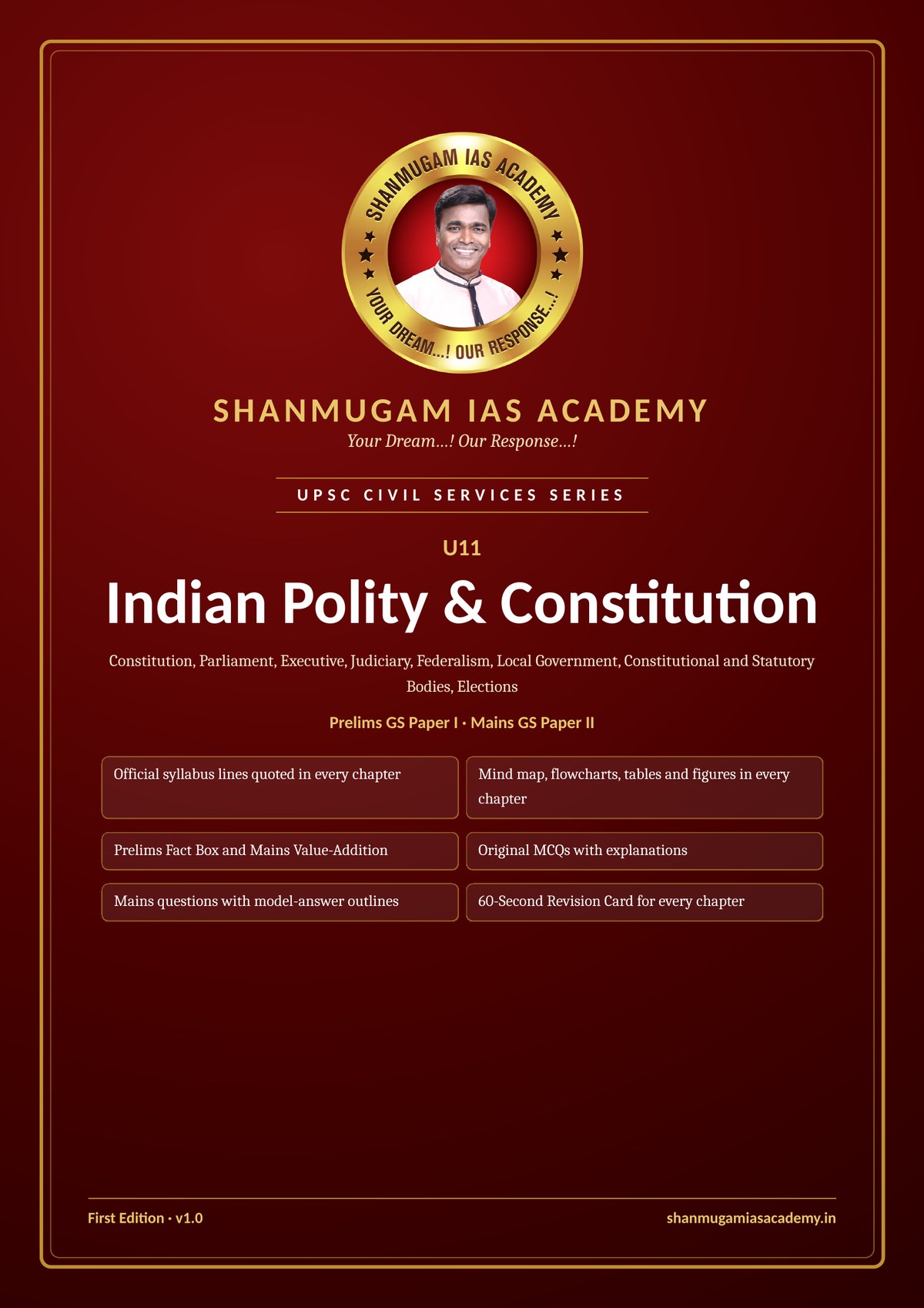 U11 · Indian Polity & Constitution – UPSC Civil Services (Prelims & Mains)
₹249
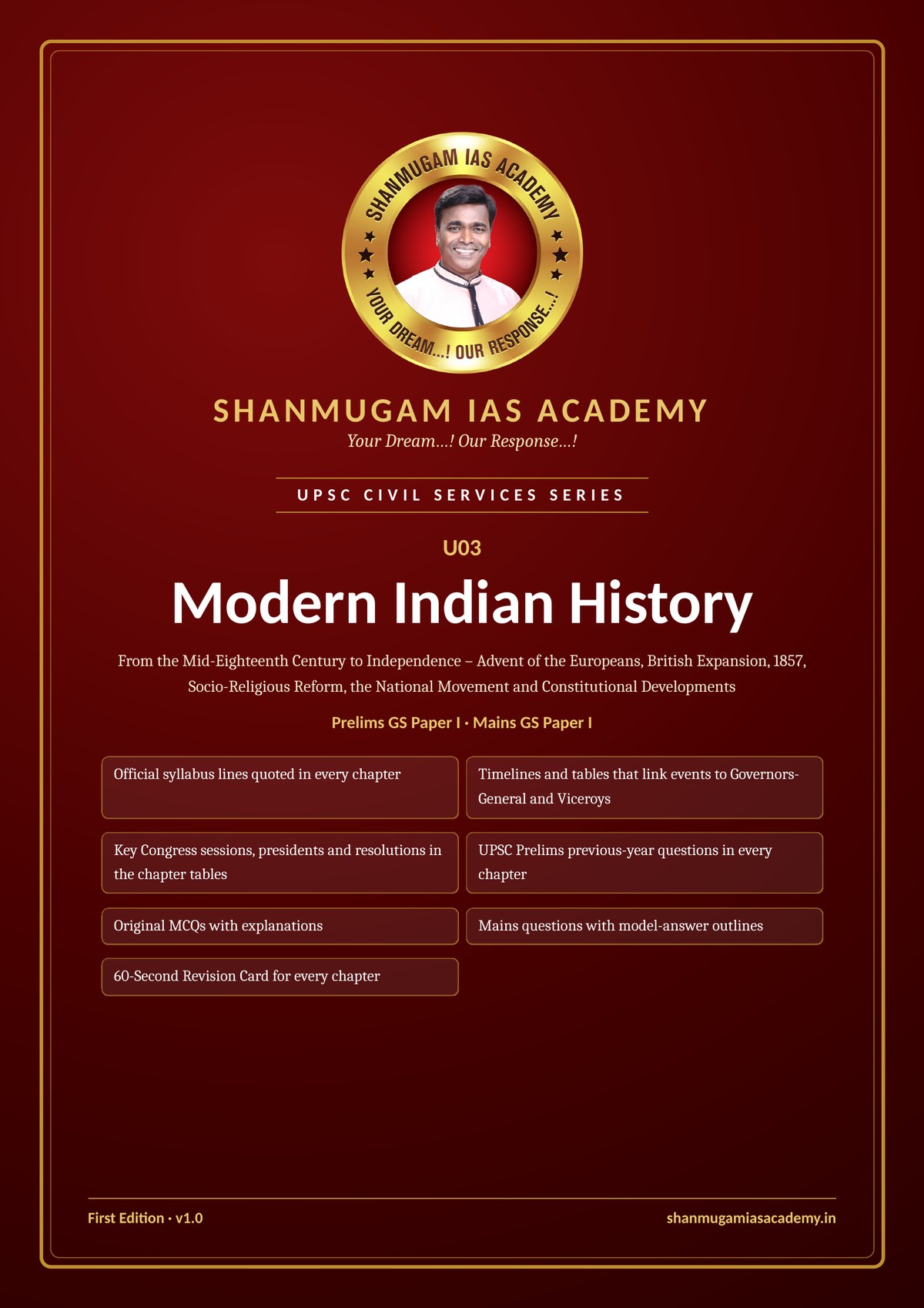 U03 · Modern Indian History – UPSC Civil Services (Prelims & Mains)
₹249
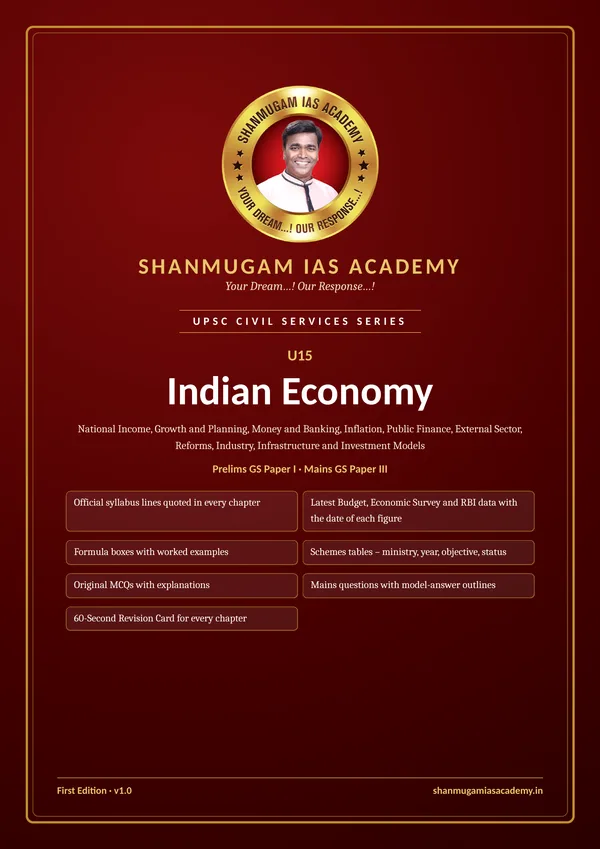 U15 · Indian Economy – UPSC Civil Services (Prelims & Mains)
₹249
TNPSC குரூப் 1, 2/2A, 4 – நேரடி வகுப்புகள் · கோவை & மதுரை
2006 முதல் சண்முகம் IAS அகாடமி · Classroom & online coaching in Coimbatore and Madurai
