

UPSC Ethics, Integrity and Aptitude – Chapter 14: Ethical Dilemmas and Sources of Ethical Guidance – Laws, Rules, Regulations and Conscience (20 MCQs)
UPSC Ethics, Integrity and Aptitude – Chapter 14: Ethical Dilemmas and Sources of Ethical Guidance – Laws, Rules, Regulations and Conscience (20 MCQs) – 20 questions, subject: Ethics (GS-IV). Every question has the correct answer with a two-line explanation; tap "Show Answer". Free practice for TNPSC, UPSC, SSC, Bank and RRB exams – Shanmugam IAS Academy, Coimbatore.
Link to this page from your website / blog (HTML code)
Correct Answer: B [dilemma]
Explanation:
An ethical dilemma arises when every available option is backed by a moral reason, so choosing one means sacrificing another value. A temptation, in contrast, is a choice between right and wrong, where only one option is morally justified.
Correct Answer: A [Rushworth Kidder]
Explanation:
Rushworth Kidder described four right-versus-right paradigms: truth versus loyalty, individual versus community, short term versus long term, and justice versus mercy. He set them out in his book 'How Good People Make Tough Choices' (1995).
Correct Answer: C [25]
Explanation:
Article 25 guarantees freedom of conscience and the right to freely profess, practise and propagate religion, subject to public order, morality and health. Article 19 deals with freedom of speech and other freedoms, and Article 29 protects the cultural rights of minorities.
Correct Answer: B [a test of integrity, not a true dilemma]
Explanation:
Bribe versus honesty is a choice between right and wrong, so it is a test of integrity or a temptation, not a true dilemma between two rights. A true ethical dilemma, by contrast, is a right-versus-right choice where each option is backed by a moral reason.
Correct Answer: B [Henry David Thoreau]
Explanation:
Henry David Thoreau wrote 'Resistance to Civil Government' (1849), later called 'Civil Disobedience', after refusing to pay a tax that supported slavery and war. The essay influenced Gandhi and Martin Luther King Jr.
Correct Answer: D [students who did not sing the national anthem on grounds of faith]
Explanation:
Bijoe Emmanuel v. State of Kerala (1986) protected Jehovah's Witness students who stood respectfully but did not sing the national anthem on grounds of faith. The Supreme Court held that their expulsion violated Articles 19(1)(a) and 25, as no law compels anyone to sing the anthem.
Correct Answer: D [National Highways Authority of India]
Explanation:
Satyendra Dubey, an engineer with the National Highways Authority of India (NHAI), was killed in 2003 after reporting corruption in the Golden Quadrilateral highway project. His death led to the Public Interest Disclosure and Protection of Informers (PIDPI) Resolution of 2004, a step towards the Whistle Blowers Protection Act, 2014.
Correct Answer: A [regulations]
Explanation:
Standards issued by statutory regulators such as SEBI and RBI are regulations, that is, binding rules made under powers given by laws passed by Parliament. Conduct rules, by contrast, govern the behaviour of government employees.
Correct Answer: B [justice versus mercy]
Explanation:
Choosing between strict punishment and leniency for a poor first-time offender is the classic justice-versus-mercy dilemma. Indian law allows mercy in such cases, for example through probation under the Probation of Offenders Act, 1958.
Correct Answer: B [1 and 2 only]
Explanation:
Statements 1 and 2 are correct: laws can lag behind new ethical problems, and conscience can be biased or mistaken. Statement 3 is wrong because a serving official should dissent through lawful channels, such as recording objections, and not through civil disobedience.
Correct Answer: A [Both A and R are true, and R is the correct explanation of A]
Explanation:
Both statements are true and R explains A: officials remain morally and legally responsible for their own acts, so 'following orders' cannot excuse clearly unlawful acts. The Nuremberg trials after the Second World War firmly rejected the defence of superior orders.
Correct Answer: C [truth versus loyalty]
Explanation:
Reporting a close senior's wrongdoing pits honesty against personal ties, which is the truth-versus-loyalty dilemma. Loyalty in public service is owed first to the Constitution and the public, not to individuals.
Correct Answer: C [Resignation]
Explanation:
Recording dissent, seeking written orders and referring the matter upward come first, so resignation is the last resort in a severe crisis of conscience. Resigning too early also removes an honest official from the system where they could correct wrongs.
Correct Answer: D [2014]
Explanation:
The Whistle Blowers Protection Act was enacted in 2014 to protect people who expose corruption by public servants. The RTI Act dates from 2005 and the Lokpal and Lokayuktas Act from 2013.
Correct Answer: C [shareholders and wider stakeholders]
Explanation:
In private firms, the key loyalty conflict is between profit for shareholders and duties to wider stakeholders such as employees, consumers and society. Conflicts between ministers and civil servants or between the Centre and the States belong to the public sector, not private institutions.
Correct Answer: B [individual versus community]
Explanation:
Taking one family's land for a hospital that serves many people is the individual-versus-community dilemma. Fair compensation and rehabilitation under the Right to Fair Compensation (LARR) Act, 2013 help balance the family's loss against the public need.
Correct Answer: C [3-4-1-2]
Explanation:
Thoreau's essay Civil Disobedience appeared in 1849, the Bijoe Emmanuel judgment in 1986, the Public Interest Disclosure and Protection of Informers (PIDPI) Resolution in 2004 and the Whistle Blowers Protection Act in 2014, giving 3-4-1-2. In Bijoe Emmanuel the Supreme Court protected students who stood respectfully but did not sing the national anthem on grounds of faith.
Correct Answer: D [Recognising the dilemma and the values in conflict]
Explanation:
Resolving an ethical dilemma starts with recognising that a dilemma exists and naming the values in conflict. Only then can one gather facts, weigh options and choose; deciding in haste or simply following a senior's wish skips this reasoning.
Correct Answer: D [capture by the industry being regulated]
Explanation:
Regulations carry the risk of regulatory capture, where the regulator ends up serving the industry it regulates instead of the public. The idea was developed by economist George Stigler, and it is countered by transparency, cooling-off periods and independent regulators.
Correct Answer: A [minimum standards that can be enforced]
Explanation:
Laws set enforceable minimum standards; ethics often demands more, and laws may lag behind new moral problems.
➤ Concepts, thinkers, Indian administrative examples and solved case studies with model-answer outlines for GS Paper IV – U21 · Ethics, Integrity and Aptitude (UPSC book, ₹249): www.shanmugamiasacademy.in/study-materials/upsc-ethics-integrity-aptitude
Today Current Affairs in Tamil | 23 நவம்பர் 2026 | TNPSC Group 4 முக்கிய வினாக்கள்
📚 UPSC Civil Services Books (Prelims & Mains)
PDF நூல்கள் · ₹149 முதல் · ஒவ்வொன்றுக்கும் 50 பக்க இலவச மாதிரி · UPI-இல் பணம் செலுத்தியதும் உடனே பதிவிறக்கம்
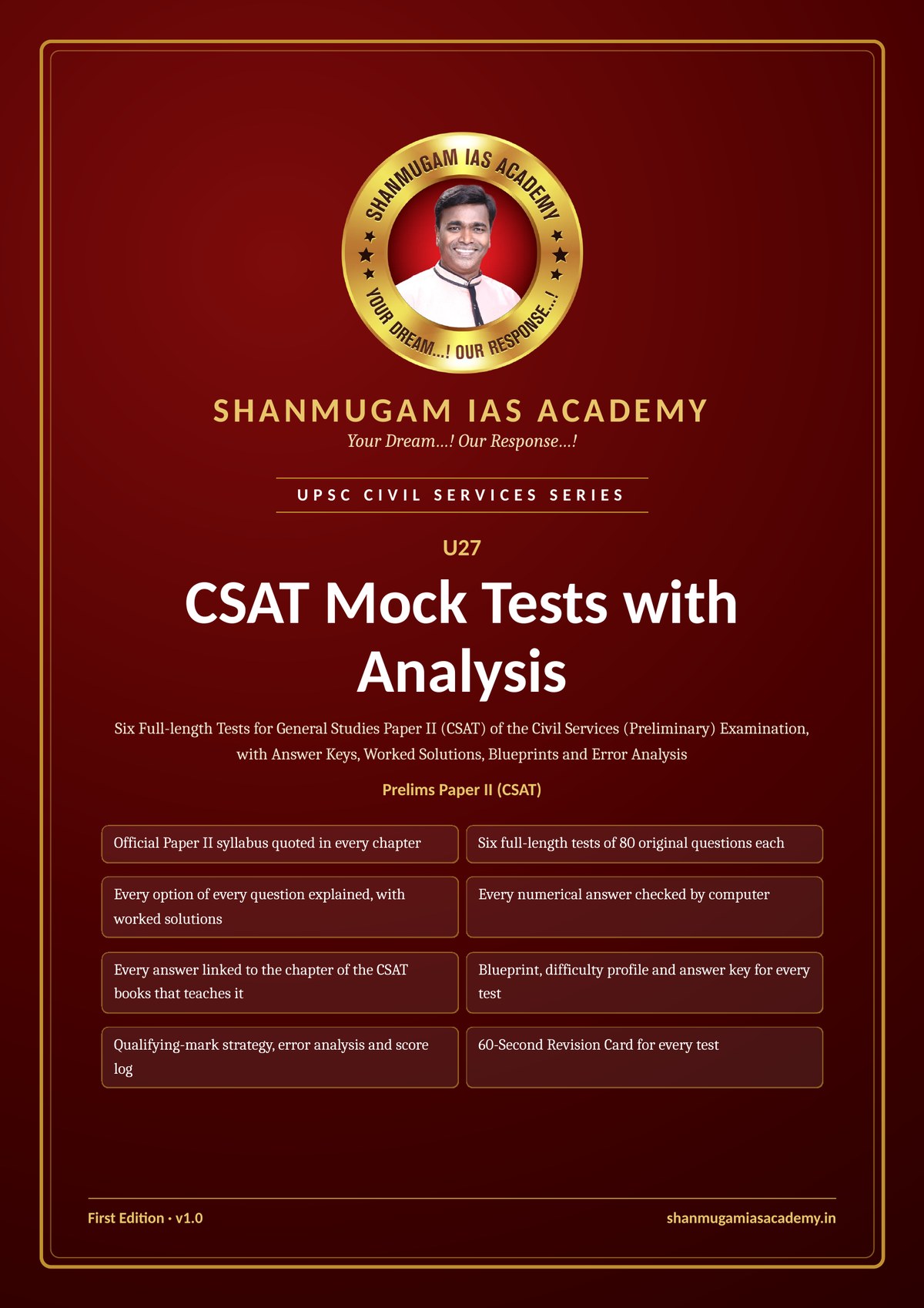 U27 · CSAT Mock Tests with Analysis – UPSC Civil Services (Prelims Paper II – CSAT)
₹249
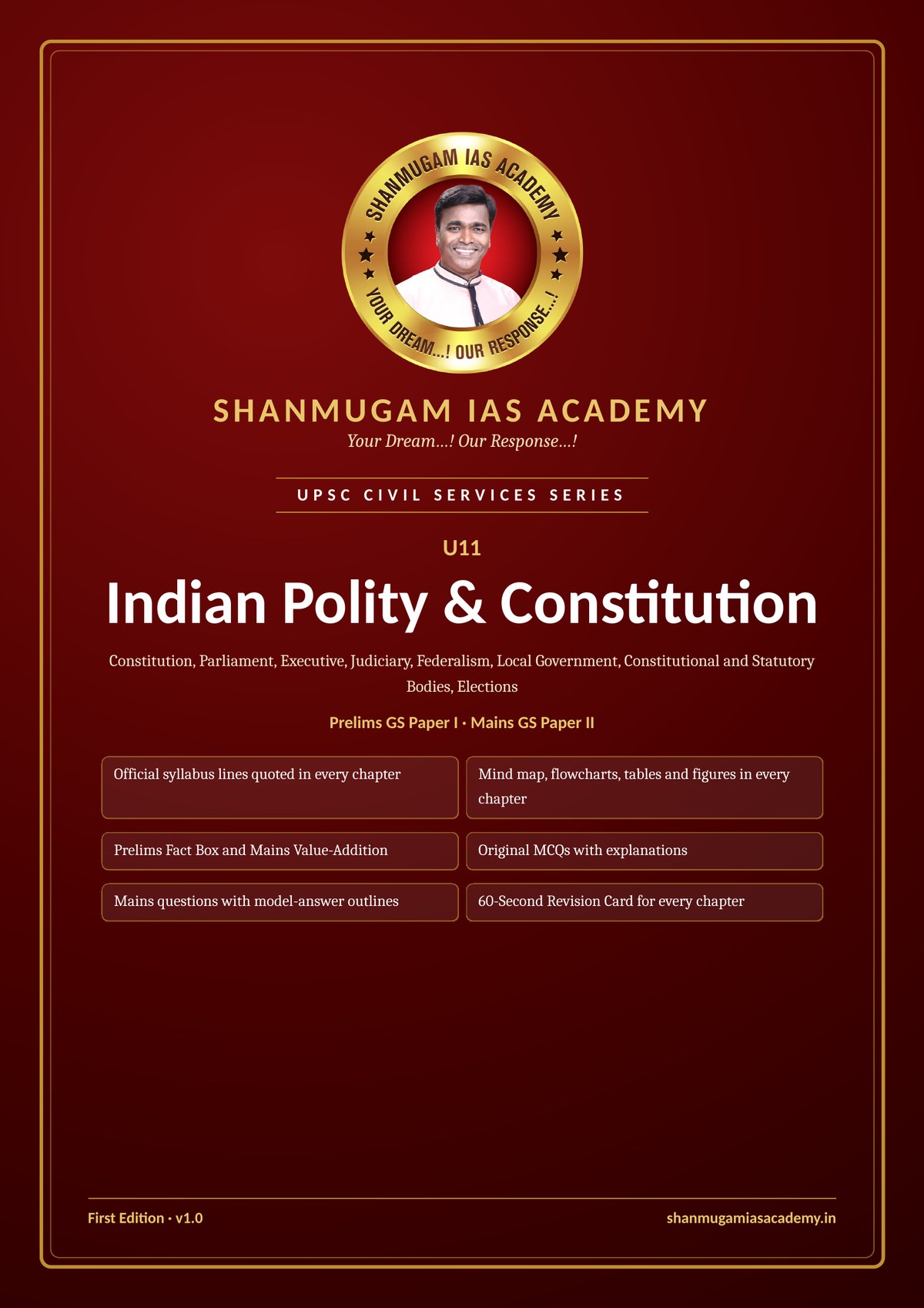 U11 · Indian Polity & Constitution – UPSC Civil Services (Prelims & Mains)
₹249
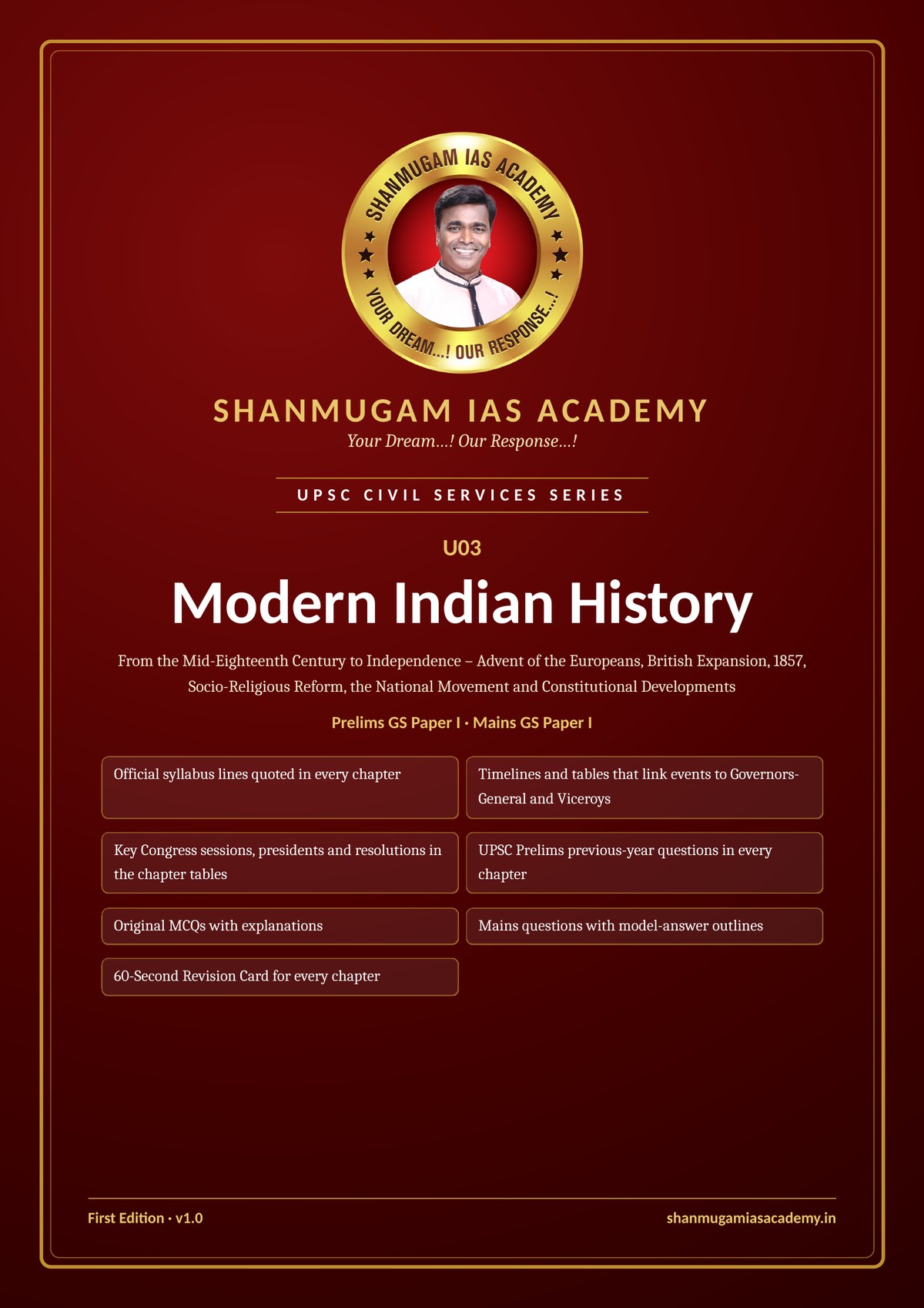 U03 · Modern Indian History – UPSC Civil Services (Prelims & Mains)
₹249
 U15 · Indian Economy – UPSC Civil Services (Prelims & Mains)
₹249
TNPSC குரூப் 1, 2/2A, 4 – நேரடி வகுப்புகள் · கோவை & மதுரை
2006 முதல் சண்முகம் IAS அகாடமி · Classroom & online coaching in Coimbatore and Madurai
