

UPSC Ethics, Integrity and Aptitude – Chapter 15: Accountability, Ethical Governance and Strengthening Ethical Values in Governance (20 MCQs)
UPSC Ethics, Integrity and Aptitude – Chapter 15: Accountability, Ethical Governance and Strengthening Ethical Values in Governance (20 MCQs) – 18 questions, subject: Ethics (GS-IV). Every question has the correct answer with a two-line explanation; tap "Show Answer". Free practice for TNPSC, UPSC, SSC, Bank and RRB exams – Shanmugam IAS Academy, Coimbatore.
Link to this page from your website / blog (HTML code)
Correct Answer: C [answerability plus enforceability]
Explanation:
Accountability means being answerable for one's actions and facing enforceable consequences, that is, answerability plus enforceability. The duty to perform a task is responsibility, and mere obedience to superiors is not accountability to the public.
Correct Answer: B [148]
Explanation:
Article 148 of the Constitution provides for the Comptroller and Auditor General of India. Article 124 deals with the Supreme Court, Article 280 with the Finance Commission and Article 315 with the Public Service Commissions.
Correct Answer: C [horizontal accountability]
Explanation:
Horizontal accountability is one State institution, such as the courts, the CAG or the Lokpal, checking another, such as the executive. Vertical accountability, by contrast, runs from citizens to rulers through elections and public pressure.
Correct Answer: D [2019]
Explanation:
Justice Pinaki Chandra Ghose was appointed the first Lokpal chairperson in March 2019, though the Lokpal and Lokayuktas Act dates from 2013. The Act came into force on 16 January 2014, but appointments were delayed for years.
Correct Answer: D [Article 75(3)]
Explanation:
Article 75(3) makes the Council of Ministers collectively responsible to the Lok Sabha, so a no-confidence vote brings down the whole ministry. Article 74 deals with the Council of Ministers aiding and advising the President, and Article 78 with the Prime Minister's duty to inform the President.
Correct Answer: D [diagonal accountability]
Explanation:
Diagonal accountability combines citizen action with State support, as when social audits are facilitated by government agencies. It sits between vertical accountability (citizens over rulers) and horizontal accountability (one State institution over another).
Correct Answer: B [OECD]
Explanation:
The OECD described the 'ethics infrastructure' of laws, institutions and practices that support integrity in public service. Its elements include political commitment, a legal framework, codes of conduct, ethics training and accountability mechanisms.
Correct Answer: A [Meghalaya]
Explanation:
Meghalaya's Community Participation and Public Services Social Audit Act, 2017 was the first State law making social audit of government programmes mandatory. Before this, social audit was required only under particular schemes, such as Section 17 of the MGNREGA.
Correct Answer: B [1 and 2 only]
Explanation:
Statements 1 and 2 are correct: responsibility can be delegated but accountability for results stays with the one in charge, and the Committee on Public Undertakings dates from 1964. Statement 3 is wrong because accountability also includes answerability, learning and rewards, not only punishment.
Correct Answer: A [Both A and R are true, and R is the correct explanation of A]
Explanation:
Both statements are true and R explains A: social audit lets beneficiaries themselves check records and works in public forums, which is why it strengthens accountability. It brings out fake muster rolls, ghost works and inflated bills that office audits may miss.
Correct Answer: B [Audit by the CAG]
Explanation:
Audit by the Comptroller and Auditor General is a key instrument of financial accountability over public spending. Question Hour is a tool of political accountability, while writ petitions give legal accountability through the courts.
Correct Answer: B [public procurement]
Explanation:
An integrity pact binds the government buyer and the bidders to avoid bribery in public procurement contracts. The concept was developed by Transparency International, and the CVC recommends it for large purchases, with Independent External Monitors to oversee it.
Correct Answer: D [vertical accountability]
Explanation:
Vertical accountability runs from citizens to rulers, through elections and public pressure via the media and civil society. Horizontal accountability, by contrast, is the check of one state institution on another, such as courts or the CAG checking the executive.
Correct Answer: C [1-4-3-2]
Explanation:
The Public Accounts Committee was set up in 1921, the Committee on Public Undertakings in 1964, the RTI Act came in 2005 and the first Lokpal was appointed in 2019, giving 1-4-3-2. Justice Pinaki Chandra Ghose became the first Lokpal in March 2019 under the Lokpal and Lokayuktas Act, 2013.
Correct Answer: A [learning and revising practice]
Explanation:
Accountability is a cycle of setting standards, reporting, review and finally learning from results and revising practice. Stopping at reporting or review without correction means the same failures keep repeating.
Correct Answer: C [gram sabha]
Explanation:
Section 17 of the MGNREGA requires the gram sabha to conduct regular social audits of all works under the scheme. Andhra Pradesh was a pioneer, setting up an independent social audit unit to support the gram sabhas.
Correct Answer: D [incomplete accountability]
Explanation:
Answerability without the power to impose consequences is incomplete accountability, because the element of enforceability is missing. Full accountability needs both answerability (explaining one's actions) and enforcement (rewards or sanctions).
Correct Answer: A [2013]
Explanation:
The Lokpal and Lokayuktas Act was enacted in 2013; the first Lokpal Bill came in 1968 and the first chairperson in 2019.
➤ Concepts, thinkers, Indian administrative examples and solved case studies with model-answer outlines for GS Paper IV – U21 · Ethics, Integrity and Aptitude (UPSC book, ₹249): www.shanmugamiasacademy.in/study-materials/upsc-ethics-integrity-aptitude
Today Current Affairs in Tamil | 23 நவம்பர் 2026 | TNPSC Group 4 முக்கிய வினாக்கள்
📚 UPSC Civil Services Books (Prelims & Mains)
PDF நூல்கள் · ₹149 முதல் · ஒவ்வொன்றுக்கும் 50 பக்க இலவச மாதிரி · UPI-இல் பணம் செலுத்தியதும் உடனே பதிவிறக்கம்
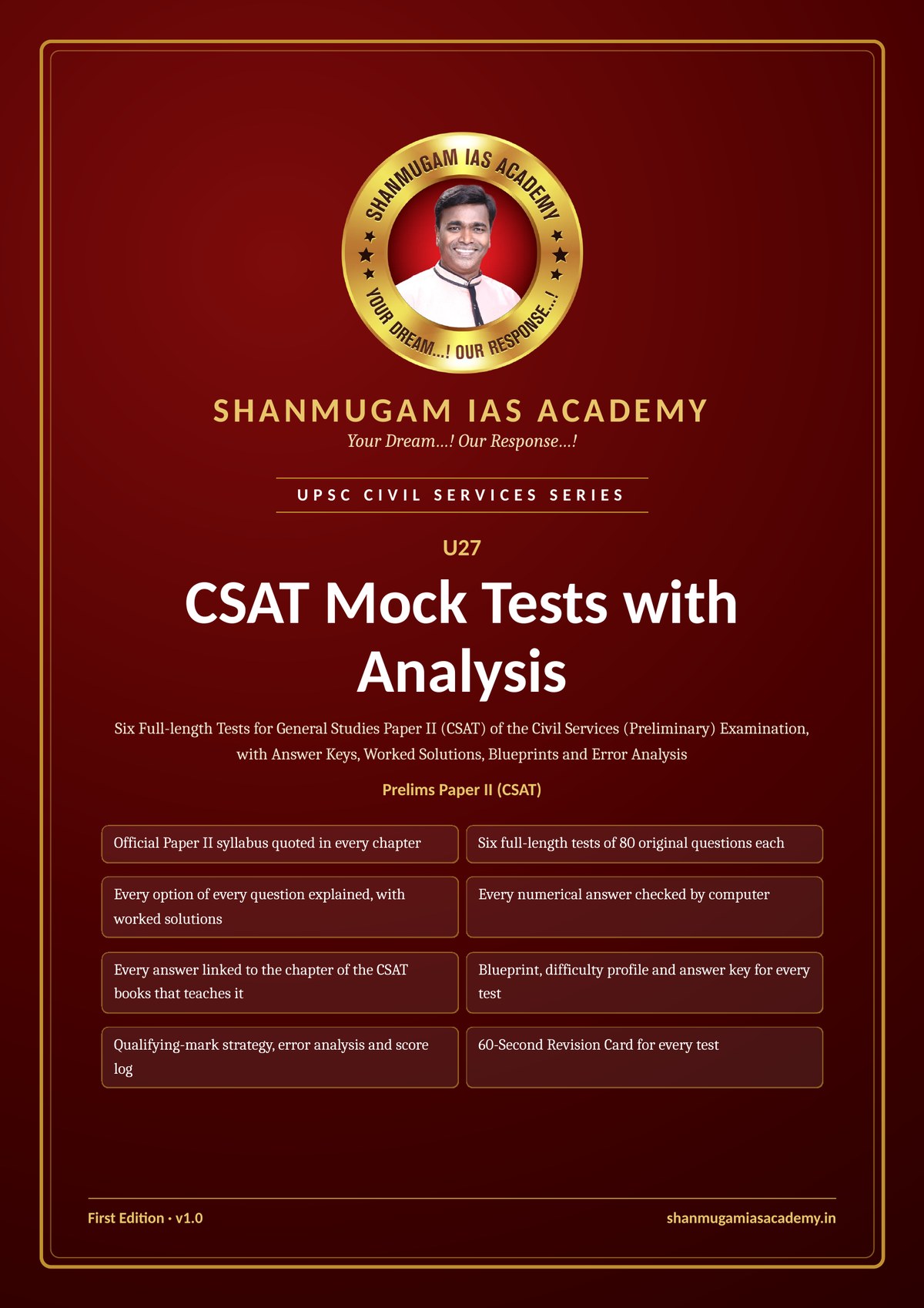 U27 · CSAT Mock Tests with Analysis – UPSC Civil Services (Prelims Paper II – CSAT)
₹249
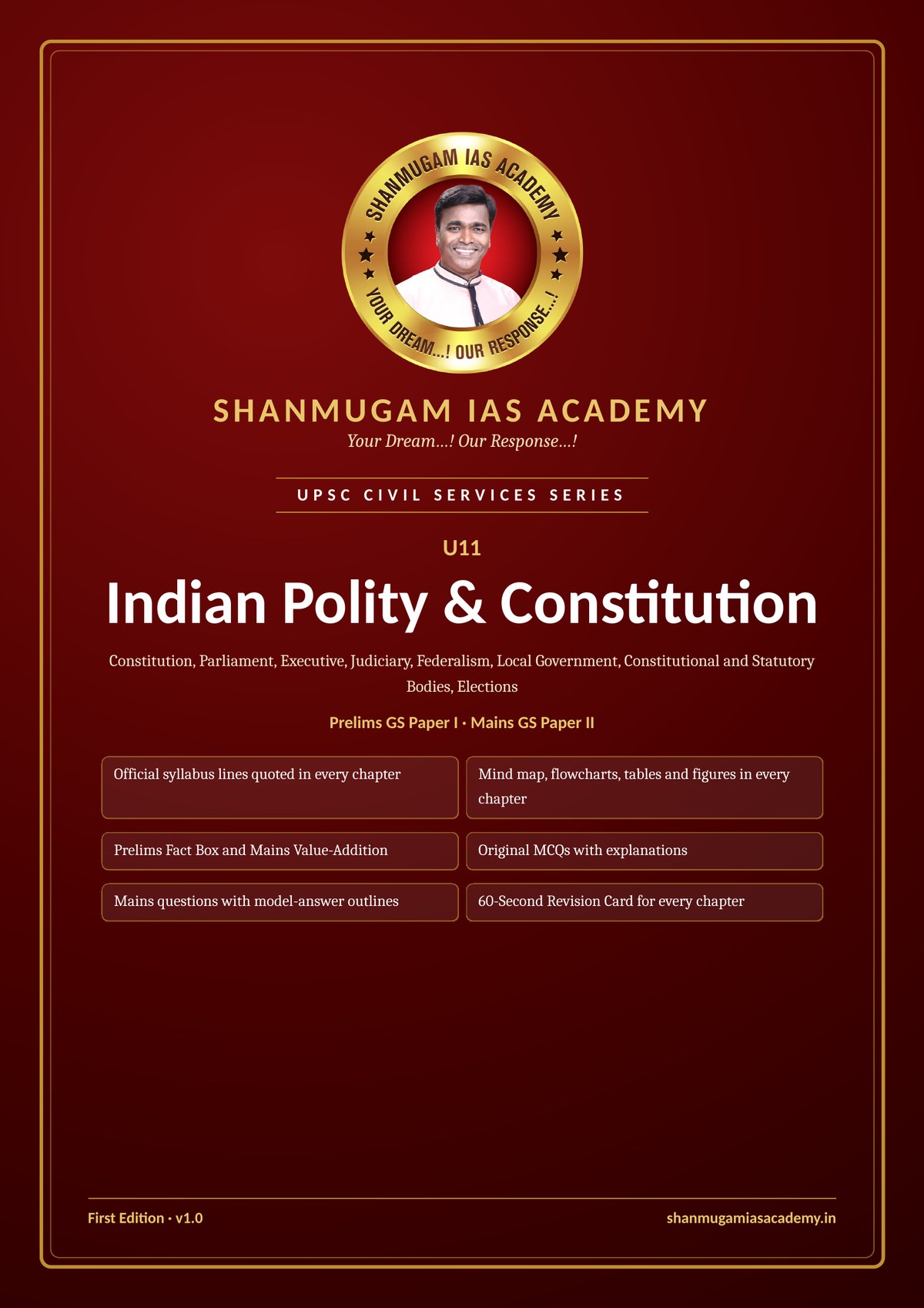 U11 · Indian Polity & Constitution – UPSC Civil Services (Prelims & Mains)
₹249
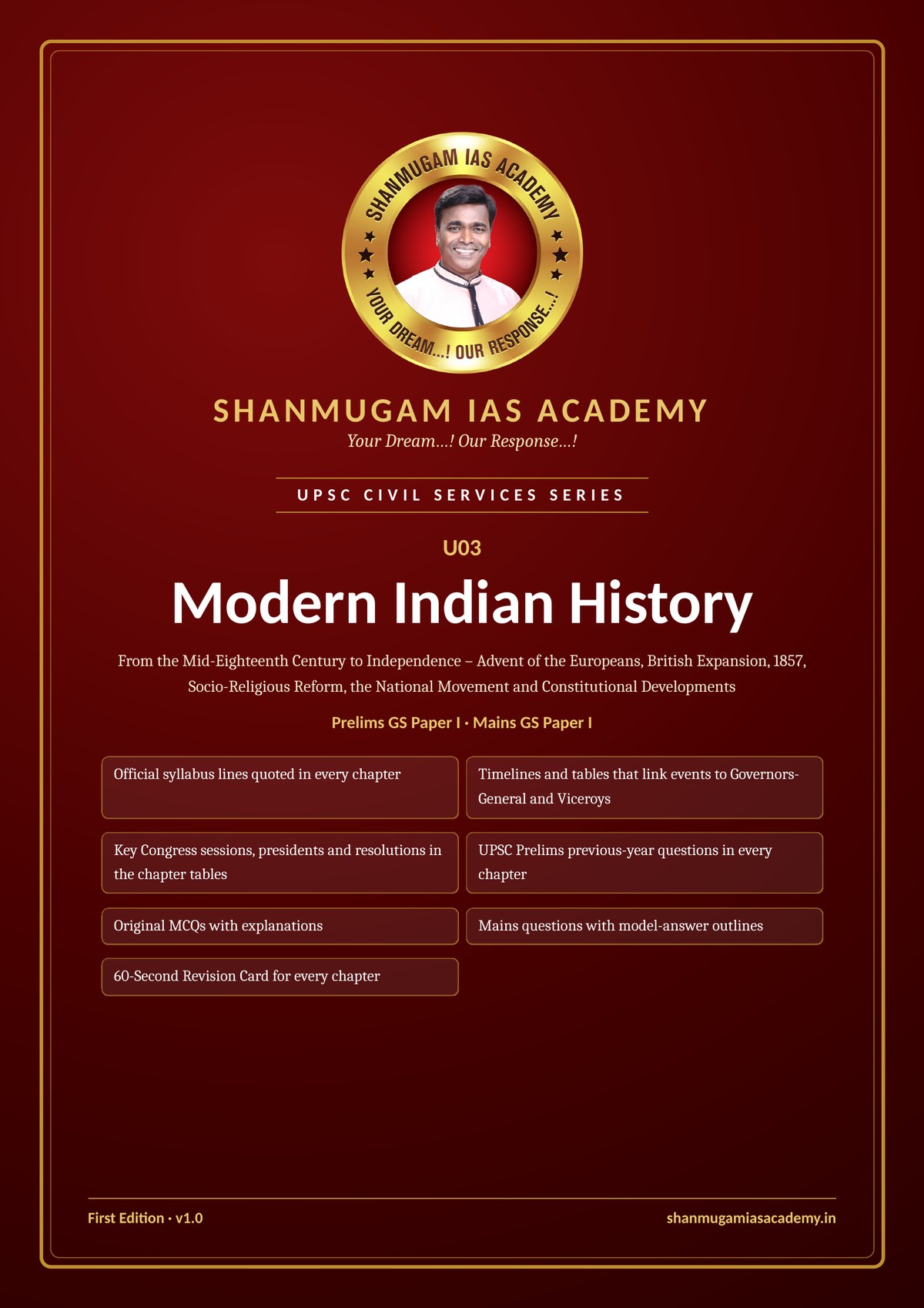 U03 · Modern Indian History – UPSC Civil Services (Prelims & Mains)
₹249
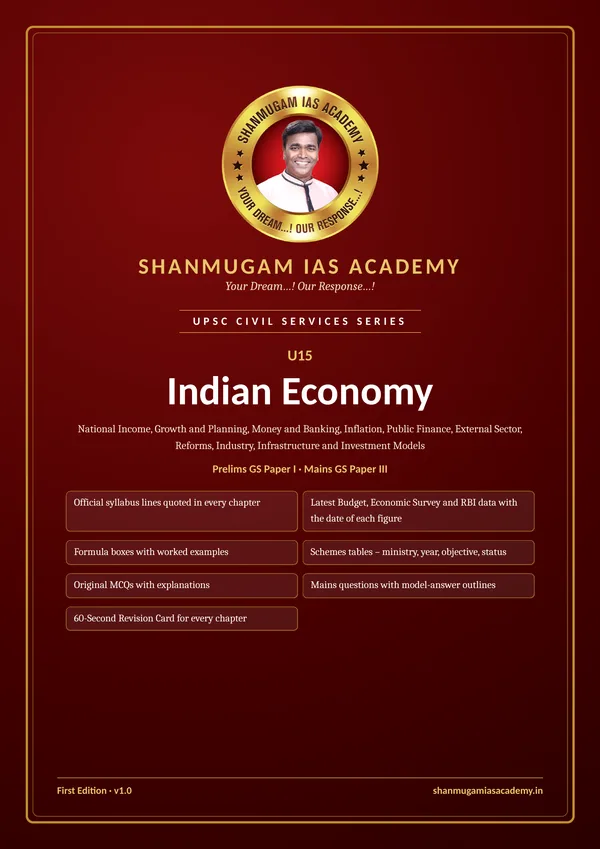 U15 · Indian Economy – UPSC Civil Services (Prelims & Mains)
₹249
TNPSC குரூப் 1, 2/2A, 4 – நேரடி வகுப்புகள் · கோவை & மதுரை
2006 முதல் சண்முகம் IAS அகாடமி · Classroom & online coaching in Coimbatore and Madurai
