

UPSC Geography Optional Paper I – Chapter 17: Distribution of Plants and Animals, Forests, Wildlife and Gene Centres (18 MCQs)
UPSC Geography Optional Paper I – Chapter 17: Distribution of Plants and Animals, Forests, Wildlife and Gene Centres (18 MCQs) – 17 questions, subject: Geography Optional Paper I. Every question has the correct answer with a two-line explanation; tap "Show Answer". Free practice for TNPSC, UPSC, SSC, Bank and RRB exams – Shanmugam IAS Academy, Coimbatore.
Link to this page from your website / blog (HTML code)
Correct Answer: A [eurytopic]
Explanation:
A eurytopic species tolerates a wide range of environmental conditions and so has a wide distribution. A stenotopic species, by contrast, tolerates only a narrow range and is restricted to particular habitats.
Correct Answer: C [Liebig's law of the minimum]
Explanation:
Liebig's law of the minimum states that growth is controlled not by the total resources available but by the scarcest essential resource, the limiting factor. Shelford's law of tolerance extended the idea, showing that too much of a factor can also be limiting.
Correct Answer: C [tropophytes]
Explanation:
Tropophytes are plants that behave as mesophytes in the wet season and shed their leaves in the dry season, as do teak and sal of tropical deciduous forests. Hydrophytes grow in water, halophytes in saline soils and xerophytes in dry conditions.
Correct Answer: A [Antarctic (Holantarctic) kingdom]
Explanation:
The Antarctic (Holantarctic) floristic kingdom, as defined by Ronald Good, covers New Zealand, southern South America and the sub-Antarctic islands. Its shared plants such as southern beech (Nothofagus) reflect the former link of these lands in Gondwana.
Correct Answer: C [Cape kingdom]
Explanation:
The Cape floristic kingdom at the southern tip of Africa is the smallest of the six floristic kingdoms, yet it is extremely rich in plant species. It is famous for fynbos, a fire-adapted shrubland with proteas, ericas and restios, most of which are endemic.
Correct Answer: A [Mediterranean sclerophyllous scrub]
Explanation:
Chaparral (California), matorral (Chile and Spain) and maquis (France and the Mediterranean) are local names for Mediterranean sclerophyllous scrub. Its hard, leathery, evergreen leaves help the plants survive the long hot, dry summers of the Mediterranean climate.
Correct Answer: B [palaeo-endemic (relict)]
Explanation:
Welwitschia of the Namib Desert is a palaeo-endemic (relict), an ancient plant lineage that now survives only in a small area. Individual plants can live for over a thousand years, growing only two leaves throughout their life.
Correct Answer: D [1876]
Explanation:
Alfred Russel Wallace set out the zoogeographical regions in The Geographical Distribution of Animals, published in 1876. He built on the six regions proposed for birds by P. L. Sclater in 1858, namely the Palaearctic, Nearctic, Ethiopian, Oriental, Neotropical and Australian.
Correct Answer: B [Ethiopian realm]
Explanation:
The okapi and the giraffe, the only living members of the family Giraffidae, are found naturally only in Africa and are characteristic of the Ethiopian (Afrotropical) realm. The okapi lives in the rainforests of the Congo, while the giraffe lives in the savanna.
Correct Answer: A [monotremes]
Explanation:
Monotremes, the egg-laying mammals such as the platypus and echidnas, are found only in the Australian realm (Australia and New Guinea). Marsupials, which carry their young in a pouch, are also typical of this realm, though some opossums live in the Americas.
Correct Answer: B [Nearctic realm]
Explanation:
The pronghorn of North America is endemic to the Nearctic realm and is the only living member of its family, Antilocapridae. The Nearctic realm covers North America down to the Mexican highlands, including Greenland.
Correct Answer: C [Chimborazo]
Explanation:
Humboldt's classic description of altitudinal vegetation zones was based on Chimborazo in Ecuador, which he climbed high in 1802. His famous diagram showed that zones from the hot base to the snowy summit mirror the vegetation zones from the equator to the poles.
Correct Answer: D [Eurasian steppe]
Explanation:
The saiga antelope and feather grass (Stipa) are typical of the Eurasian steppe, the temperate grassland stretching from Ukraine to Mongolia. The equivalent grasslands are called prairies in North America and pampas in South America.
Correct Answer: B [nutrients]
Explanation:
The open ocean of the subtropical gyres is a "biological desert" mainly because of a shortage of nutrients. A warm, stable surface layer prevents mixing with deeper nutrient-rich water, so plankton growth stays low despite plenty of sunlight.
Correct Answer: C [Burma (Myanmar)]
Explanation:
The taungya system began in the teak forests of British Burma (Myanmar) in the 1850s under the forester Dietrich Brandis. Farmers grow food crops between young forest-tree seedlings for a few years, after which the trees take over the land.
Correct Answer: D [Category II]
Explanation:
In the IUCN system of protected areas, a national park belongs to Category II, protecting large natural ecosystems while allowing visitor use. Category Ia is the strict nature reserve, Category IV the habitat or species management area, and Category VI the protected area with sustainable use of resources.
Correct Answer: B [Abyssinian centre]
Explanation:
Vavilov placed arabica coffee, teff, sorghum and durum wheat in the Abyssinian (Ethiopian) centre.
➤ Models, theories, diagrams, PYQs and Mains answer-writing practice for Geography Optional Paper I – U32 · Geography Optional Paper I (UPSC book, ₹349): www.shanmugamiasacademy.in/study-materials/upsc-geography-optional-paper-1
Today Current Affairs in Tamil | 23 நவம்பர் 2026 | TNPSC Group 4 முக்கிய வினாக்கள்
📚 UPSC Civil Services Books (Prelims & Mains)
PDF நூல்கள் · ₹149 முதல் · ஒவ்வொன்றுக்கும் 50 பக்க இலவச மாதிரி · UPI-இல் பணம் செலுத்தியதும் உடனே பதிவிறக்கம்
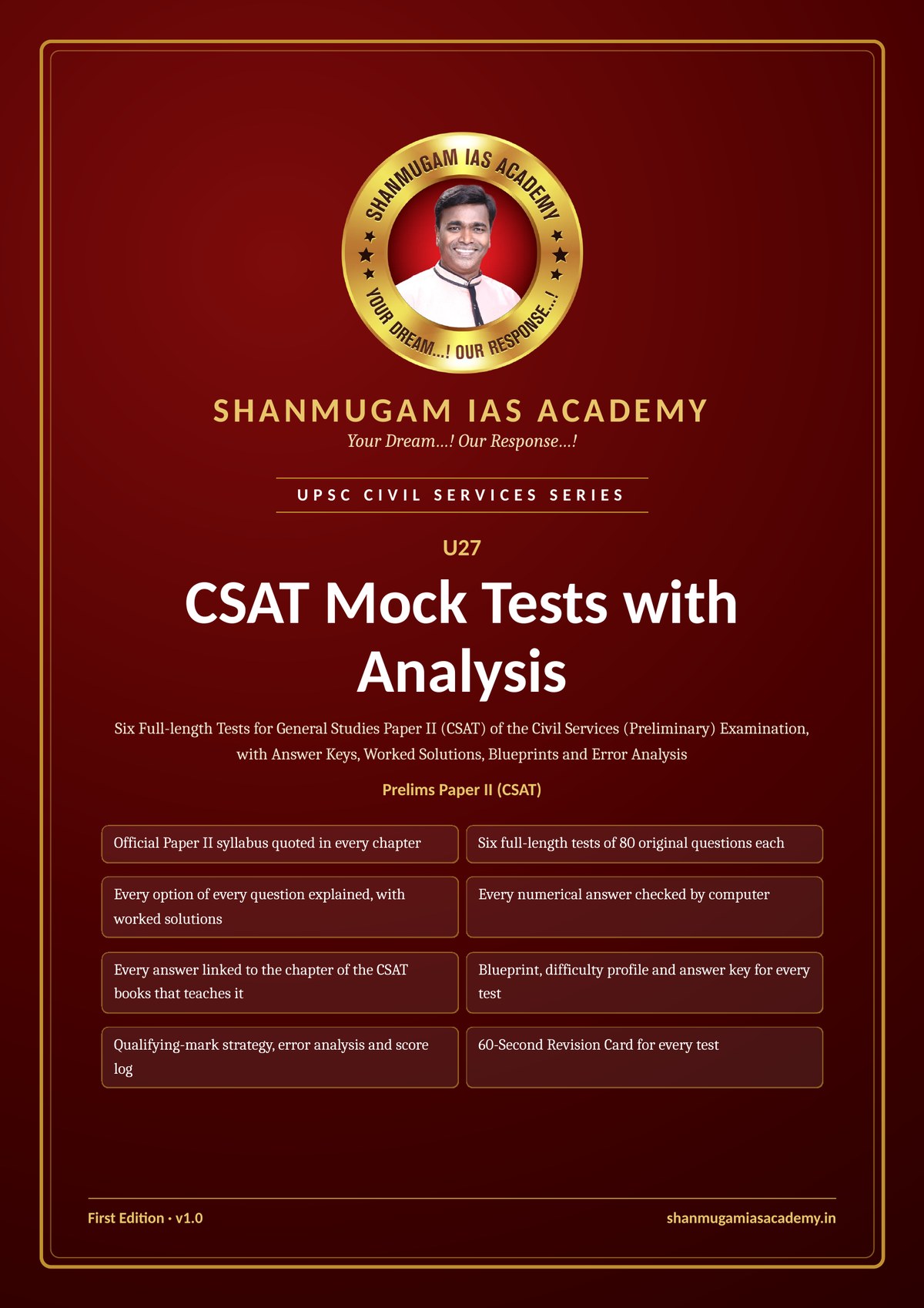 U27 · CSAT Mock Tests with Analysis – UPSC Civil Services (Prelims Paper II – CSAT)
₹249
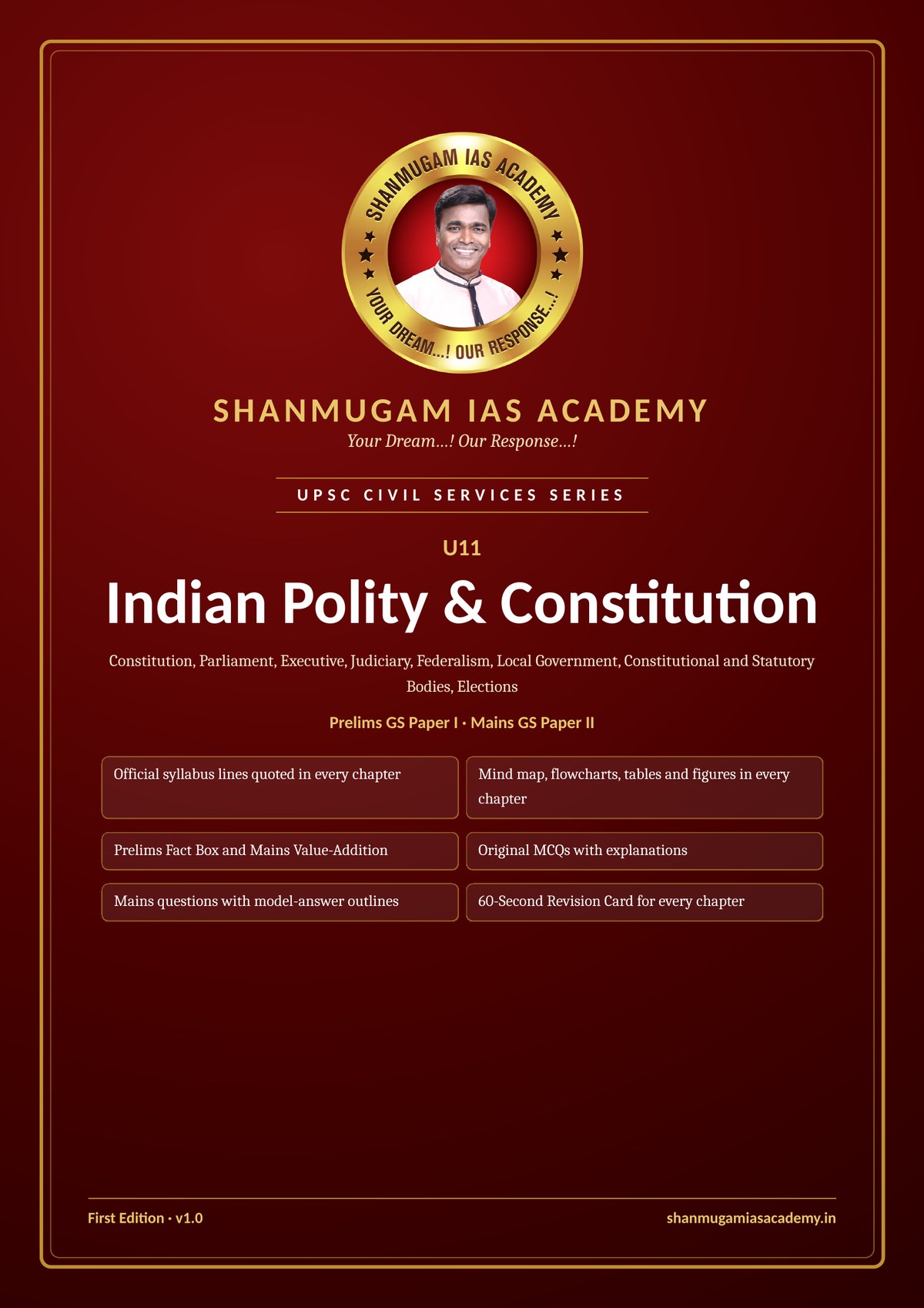 U11 · Indian Polity & Constitution – UPSC Civil Services (Prelims & Mains)
₹249
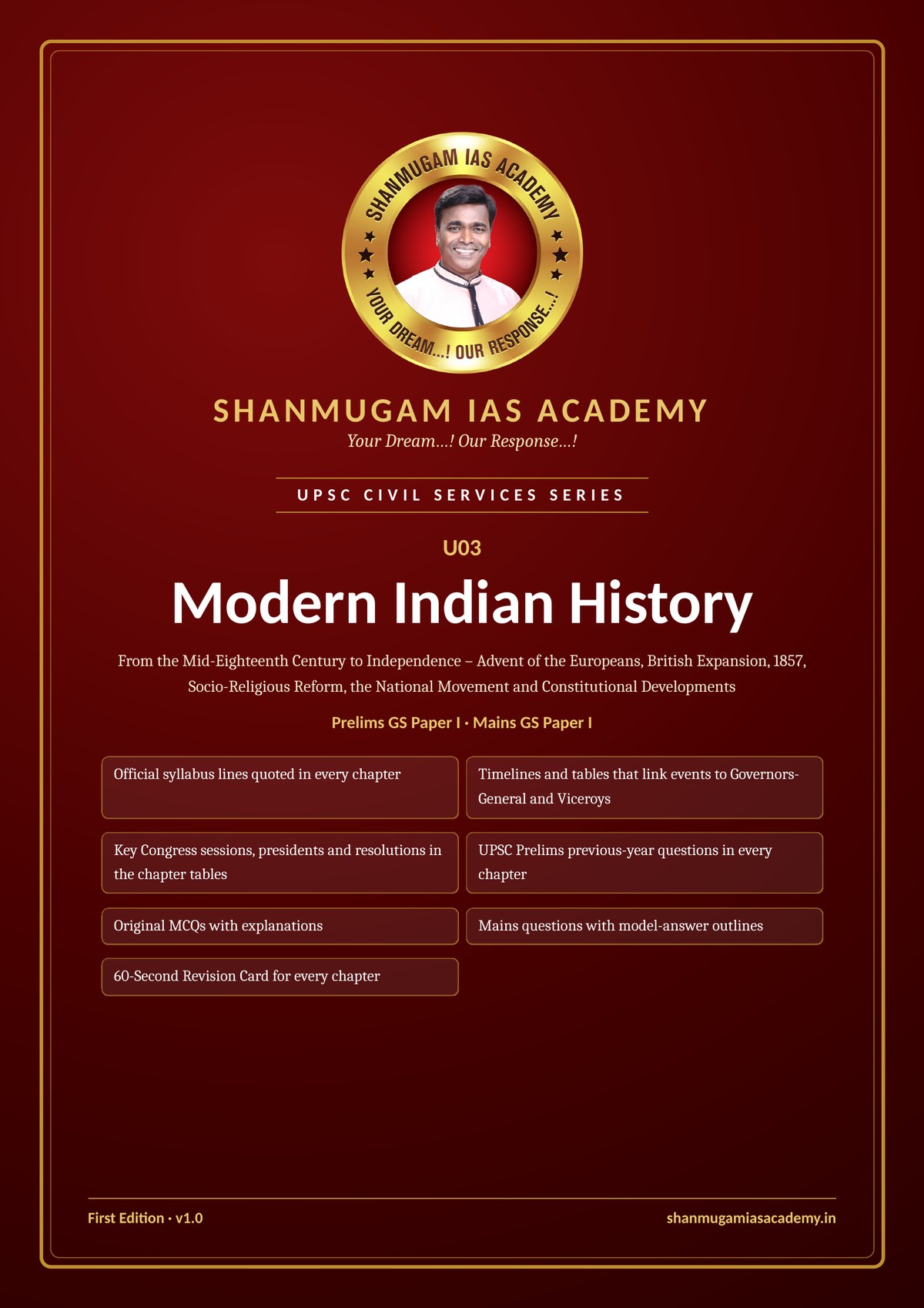 U03 · Modern Indian History – UPSC Civil Services (Prelims & Mains)
₹249
 U15 · Indian Economy – UPSC Civil Services (Prelims & Mains)
₹249
TNPSC குரூப் 1, 2/2A, 4 – நேரடி வகுப்புகள் · கோவை & மதுரை
2006 முதல் சண்முகம் IAS அகாடமி · Classroom & online coaching in Coimbatore and Madurai
