

UPSC Geography Optional Paper I – Chapter 30: Models I – Systems Analysis, Population Models and Central Place Theories (18 MCQs)
UPSC Geography Optional Paper I – Chapter 30: Models I – Systems Analysis, Population Models and Central Place Theories (18 MCQs) – 18 questions, subject: Geography Optional Paper I. Every question has the correct answer with a two-line explanation; tap "Show Answer". Free practice for TNPSC, UPSC, SSC, Bank and RRB exams – Shanmugam IAS Academy, Coimbatore.
Link to this page from your website / blog (HTML code)
Correct Answer: B [an open system]
Explanation:
An open system exchanges both matter and energy with its environment, as a city or a drainage basin does. A closed system exchanges only energy, while an isolated system exchanges neither.
Correct Answer: A [cascading system]
Explanation:
In Chorley and Kennedy's classification, a cascading system is a chain of sub-systems in which the output of one becomes the input of the next. A drainage basin passing water and sediment downstream is an example.
Correct Answer: C [Chorley and Haggett]
Explanation:
Richard Chorley and Peter Haggett edited Models in Geography (1967), central to the quantitative revolution. Their earlier Frontiers in Geographical Teaching (1965) also promoted the new approach.
Correct Answer: B [the square of distance]
Explanation:
Reilly's law of retail gravitation (1931) holds that a city attracts trade in proportion to its population and in inverse proportion to the square of distance. Converse later derived the breaking-point formula from it.
Correct Answer: D [hierarchical diffusion]
Explanation:
Hierarchical diffusion spreads an innovation from large cities to smaller towns and then to villages, jumping down the urban hierarchy. Contagious diffusion, by contrast, spreads outward through direct contact, like a disease.
Correct Answer: A [primary, diffusion, condensing, saturation]
Explanation:
Hagerstrand's stages of diffusion, in order, are primary, diffusion, condensing and saturation. In the saturation stage growth slows as the innovation has reached nearly all potential adopters.
Correct Answer: D [1803]
Explanation:
Malthus added moral restraint (delayed marriage and sexual abstinence) as a preventive check in the second edition of his Essay in 1803. The first edition of 1798 stressed misery and vice as checks.
Correct Answer: C [an industrial reserve army created by the needs of capital]
Explanation:
Marx saw surplus population under capitalism as an industrial reserve army created by capital's use of labour-saving machinery. He rejected Malthus's view that overpopulation follows a universal natural law.
Correct Answer: C [Ehrlich and Holdren]
Explanation:
The equation I = P x A x T (impact equals population times affluence times technology) is associated with Paul Ehrlich and John Holdren in the early 1970s. It shows that environmental impact depends not only on numbers but also on consumption and technology.
Correct Answer: B [Arsène Dumont]
Explanation:
Arsene Dumont proposed social capillarity (1890), the idea that people limit family size to rise socially, like liquid rising in a narrow tube. It was an early social explanation of falling fertility in France.
Correct Answer: D [C. P. Blacker]
Explanation:
C. P. Blacker (1947) set out the demographic transition as five stages: high stationary, early expanding, late expanding, low stationary and declining. Thompson (1929) and Notestein (1945) had earlier described the transition in broader terms.
Correct Answer: D [telephone connections]
Explanation:
To measure centrality in southern Germany, Christaller used the number of telephone connections, compared with population, as an index. A place with more telephones than its population warranted had surplus importance as a centre.
Correct Answer: B [4]
Explanation:
Under Christaller's traffic principle lower-order centres lie at the midpoints of the hexagon's sides, each shared by two higher centres, so K = 1 + 6 x 1/2 = 4. This places as many centres as possible on the main transport routes.
Correct Answer: C [at the corners of the higher-order hexagon]
Explanation:
Under the marketing principle (K = 3), lower-order centres lie at the corners of the higher-order hexagon. Each corner centre is shared by three higher-order centres, so K = 1 + 6 x 1/3 = 3.
Correct Answer: A [Lösch]
Explanation:
Losch's rotated market nets give six city-rich and six city-poor sectors around the metropolis. This arrangement reduces transport distances and is a key difference from Christaller's model.
Correct Answer: D [Each good has its own hexagonal net with its own K-value]
Explanation:
In Losch's theory each good has its own hexagonal market net with its own K-value, and these nets are rotated around a metropolis. Unlike Christaller, Losch did not require every centre to offer all lower-order goods.
Correct Answer: A [Hirschman]
Explanation:
Albert O. Hirschman coined the terms forward and backward linkages in The Strategy of Economic Development (1958). He used them to argue that investment should go to sectors with the strongest linkages.
Correct Answer: B [1, 2 and 3]
Explanation:
All three statements are correct: Boudeville located the pole; Perroux defined three economic spaces.
➤ Models, theories, diagrams, PYQs and Mains answer-writing practice for Geography Optional Paper I – U32 · Geography Optional Paper I (UPSC book, ₹349): www.shanmugamiasacademy.in/study-materials/upsc-geography-optional-paper-1
Today Current Affairs in Tamil | 23 நவம்பர் 2026 | TNPSC Group 4 முக்கிய வினாக்கள்
📚 UPSC Civil Services Books (Prelims & Mains)
PDF நூல்கள் · ₹149 முதல் · ஒவ்வொன்றுக்கும் 50 பக்க இலவச மாதிரி · UPI-இல் பணம் செலுத்தியதும் உடனே பதிவிறக்கம்
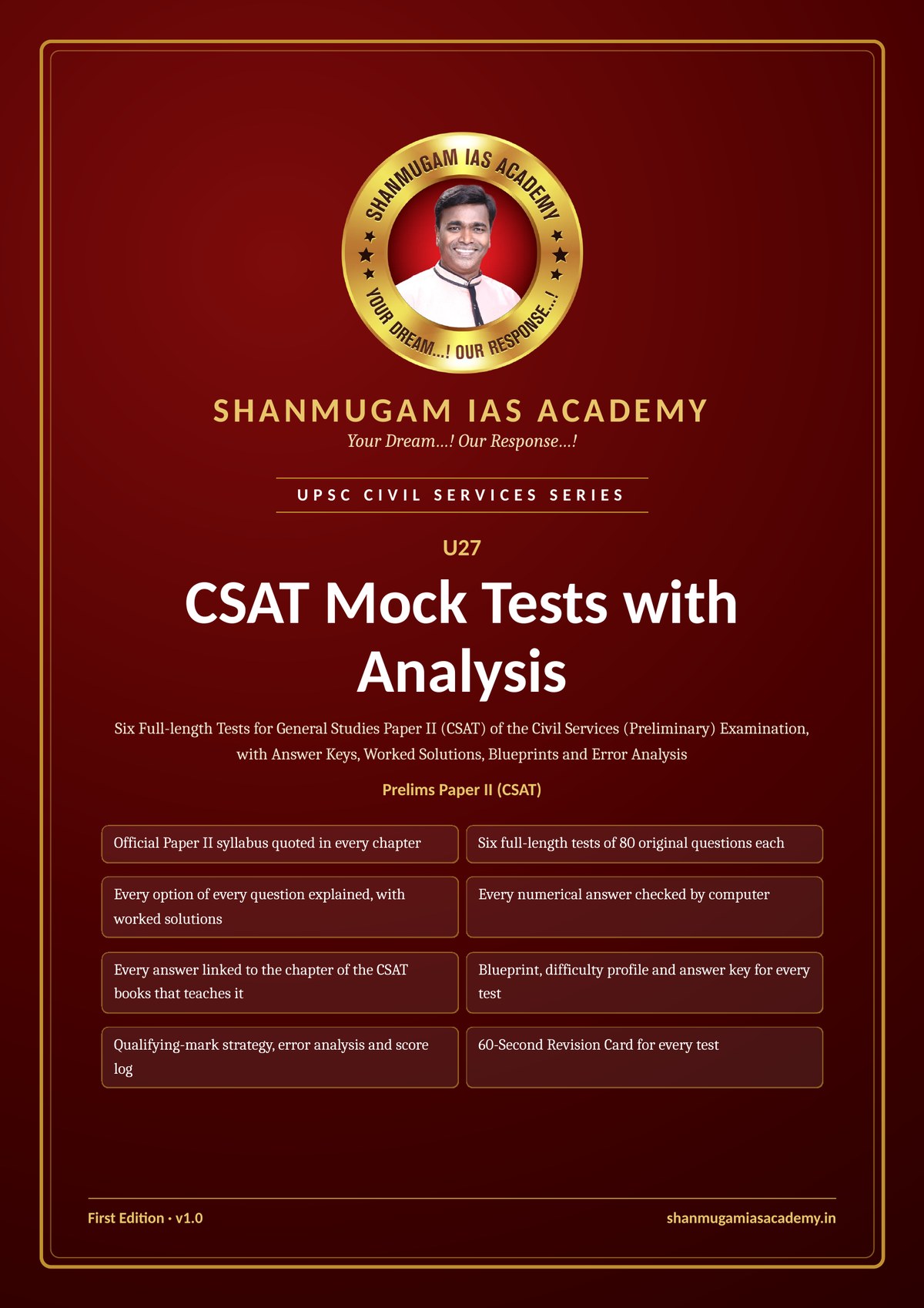 U27 · CSAT Mock Tests with Analysis – UPSC Civil Services (Prelims Paper II – CSAT)
₹249
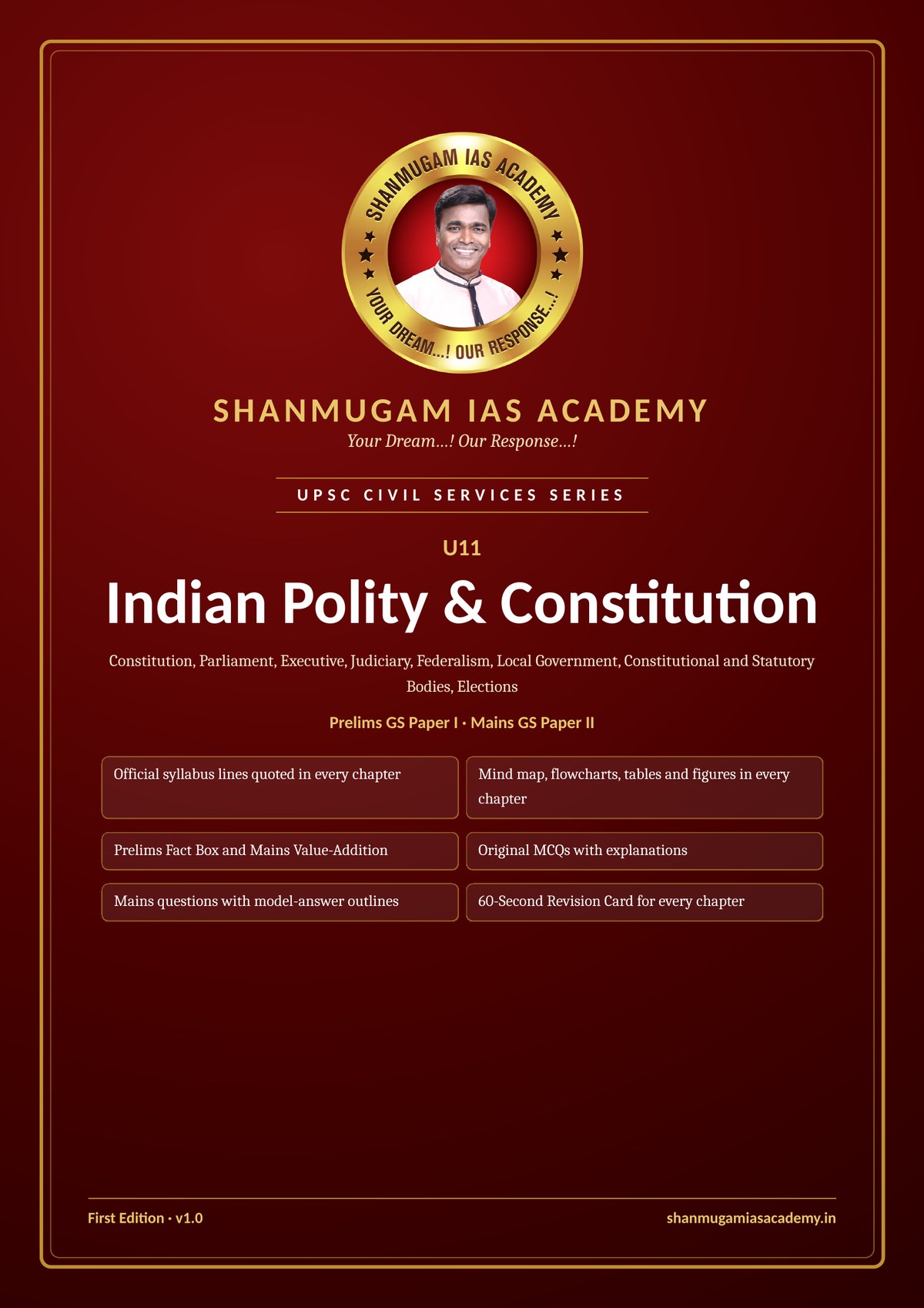 U11 · Indian Polity & Constitution – UPSC Civil Services (Prelims & Mains)
₹249
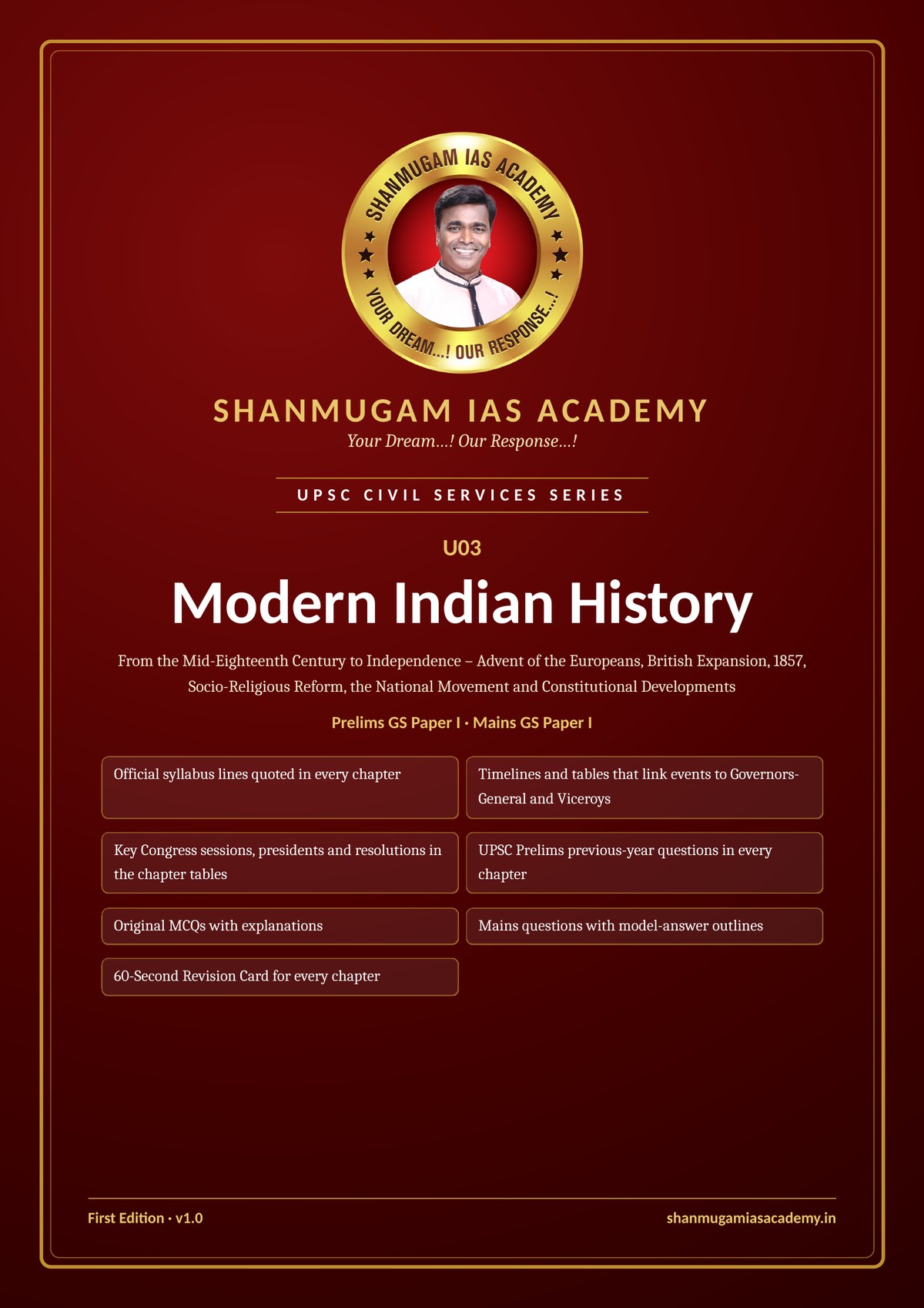 U03 · Modern Indian History – UPSC Civil Services (Prelims & Mains)
₹249
 U15 · Indian Economy – UPSC Civil Services (Prelims & Mains)
₹249
TNPSC குரூப் 1, 2/2A, 4 – நேரடி வகுப்புகள் · கோவை & மதுரை
2006 முதல் சண்முகம் IAS அகாடமி · Classroom & online coaching in Coimbatore and Madurai
