

UPSC Interview – Chapter 14: Handling Stress, Mistakes and Difficult Questions (20 MCQs)
UPSC Interview – Chapter 14: Handling Stress, Mistakes and Difficult Questions (20 MCQs) – 15 questions, subject: Interview (Personality Test). Every question has the correct answer with a two-line explanation; tap "Show Answer". Free practice for TNPSC, UPSC, SSC, Bank and RRB exams – Shanmugam IAS Academy, Coimbatore.
Link to this page from your website / blog (HTML code)
Correct Answer: C [say that you will read up on the area]
Explanation:
If several questions that one cannot answer come together, the candidate should honestly say so and add that he or she will read up on the area. Guessing to avoid looking weak risks a wrong answer, which harms the impression more than an honest admission.
Correct Answer: B [recovers calmly]
Explanation:
What the Board notices most about nervousness is whether the candidate recovers calmly, since nearly every candidate feels some nerves. A calm second half after a shaky start still leaves a good impression.
Correct Answer: A [recent figures such as rates, ranks and numbers]
Explanation:
Under stress, recent figures such as rates, ranks and numbers are the facts most often forgotten. Keeping a one-page sheet of the ten most important figures and revising it shortly before the interview helps.
Correct Answer: C [correct it at the next natural pause]
Explanation:
If a candidate realises an earlier fact was wrong, it should be corrected at the next natural pause, for example 'Sir, may I correct something I said earlier?'. This shows honesty, while interrupting a member at once would be discourteous.
Correct Answer: B [say "That is wrong" at least twice, even when you are right]
Explanation:
Asking the mock panel to say 'That is wrong' at least twice, even when the candidate is right, gives practice in staying calm and politely standing by a correct answer. Avoiding difficult questions in mocks leaves the candidate unprepared for the real Board.
Correct Answer: B [1 and 3 only]
Explanation:
Statements 1 and 3 are correct: rapid follow-ups mainly test alertness and a personal question about failure mainly tests maturity. Statement 2 is wrong because a provocative question on a State's politics tests balance and restraint, not knowledge of party manifestos.
Correct Answer: A [Both A and R are true, and R is the correct explanation of A]
Explanation:
Both statements are true and R explains A: mental alertness and balance of judgement show most clearly under mild pressure, so a Board member may test how a candidate reacts when challenged. A calm, reasoned reply to such a challenge earns credit.
Correct Answer: B [General Studies Paper IV (Ethics, Integrity and Aptitude)]
Explanation:
Emotional intelligence, with its concepts and its uses in administration and governance, is named in the syllabus of General Studies Paper IV (Ethics, Integrity and Aptitude). Its parts such as self-awareness and self-regulation also help a candidate stay calm in the interview.
Correct Answer: C [two mock interviews, with breathing practice daily]
Explanation:
In the early days of a two-week routine (Days 14 to 8), when weaknesses can still be fixed, two mock interviews and daily breathing practice are best, to build familiarity and calm. Preparing clothes and documents and light revision suit the last few days instead.
Correct Answer: C [1915]
Explanation:
Walter Cannon described the 'fight or flight' response in 1915, in his book Bodily Changes in Pain, Hunger, Fear and Rage. He showed how the body prepares to face or escape a threat through a surge of adrenaline.
Correct Answer: A [climb Mount Everest]
Explanation:
Arunima Sinha, a former national-level volleyball player who lost a leg after being pushed from a train in 2011, climbed Mount Everest on 21 May 2013. She is recognised as the first woman amputee to do so and was awarded the Padma Shri in 2015.
Correct Answer: C [1-3-2-4]
Explanation:
The correct order is 1-3-2-4: Cannon described the fight-or-flight response in 1915, Selye's work on stress began in 1936, Kabat-Zinn's mindfulness-based stress reduction came in 1979, and Lazarus and Folkman's Stress, Appraisal, and Coping in 1984. Selye described the general adaptation syndrome.
Correct Answer: C [how a person appraises a situation shapes the stress felt]
Explanation:
Lazarus and Folkman's Stress, Appraisal, and Coping (1984) showed that how a person appraises a situation, as a threat or as a manageable challenge, shapes the stress felt. Seeing the interview as a conversation rather than a trial therefore reduces stress.
Correct Answer: B [in for about four counts, out for about six]
Explanation:
A suggested calming pattern is to breathe in for about four counts and out for about six, for a minute before entering the room. A longer out-breath slows the heart rate, while rapid breathing or holding the breath raises tension.
Correct Answer: D [the body's general response to strain of many kinds]
Explanation:
Selye described the body's general response to strain of many kinds.
➤ DAF analysis, question banks, current affairs, communication and mock-interview practice – U30 · Interview Guide (UPSC book, ₹249): www.shanmugamiasacademy.in/study-materials/upsc-interview-personality-test
Today Current Affairs in Tamil | 23 நவம்பர் 2026 | TNPSC Group 4 முக்கிய வினாக்கள்
📚 UPSC Civil Services Books (Prelims & Mains)
PDF நூல்கள் · ₹149 முதல் · ஒவ்வொன்றுக்கும் 50 பக்க இலவச மாதிரி · UPI-இல் பணம் செலுத்தியதும் உடனே பதிவிறக்கம்
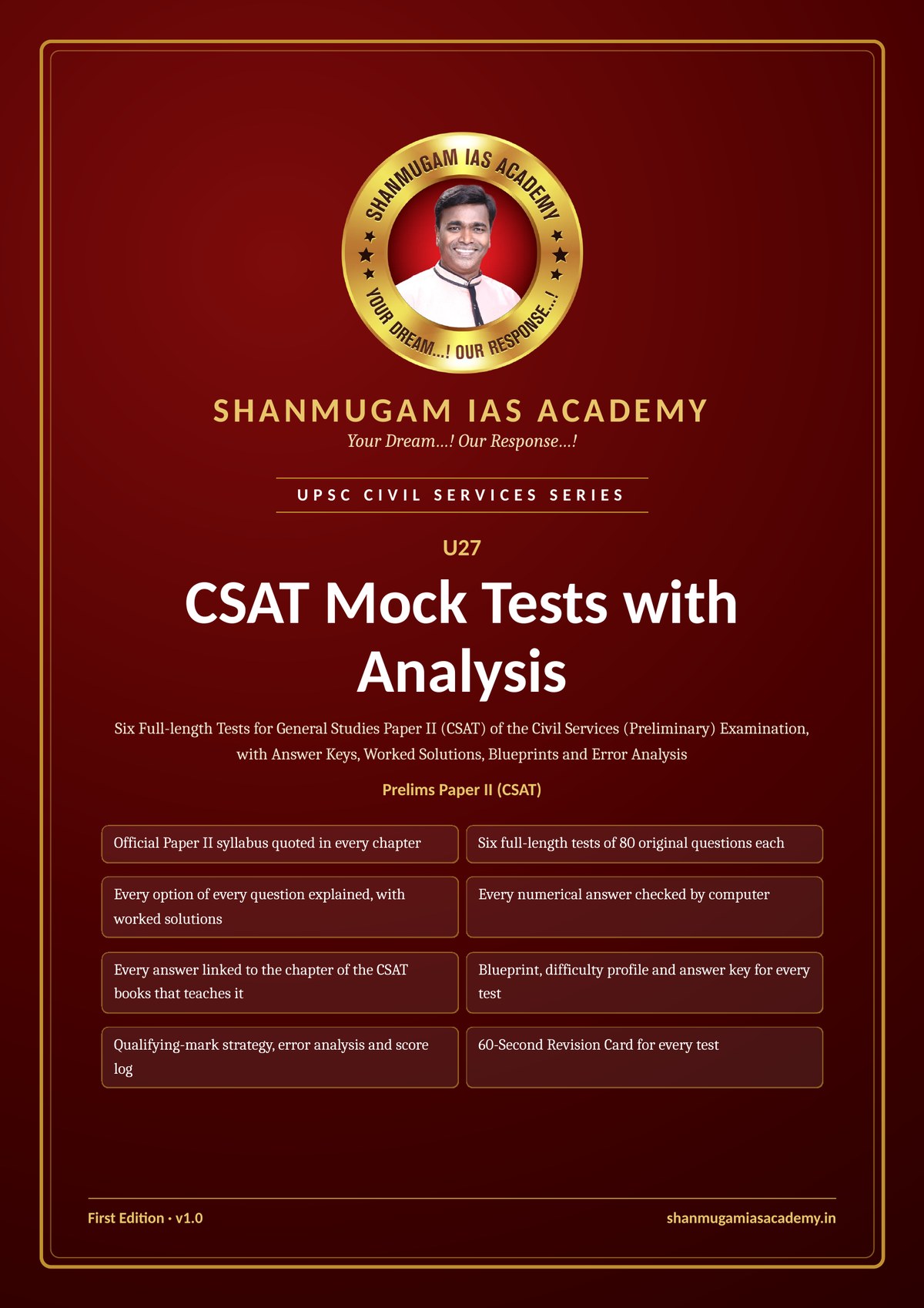 U27 · CSAT Mock Tests with Analysis – UPSC Civil Services (Prelims Paper II – CSAT)
₹249
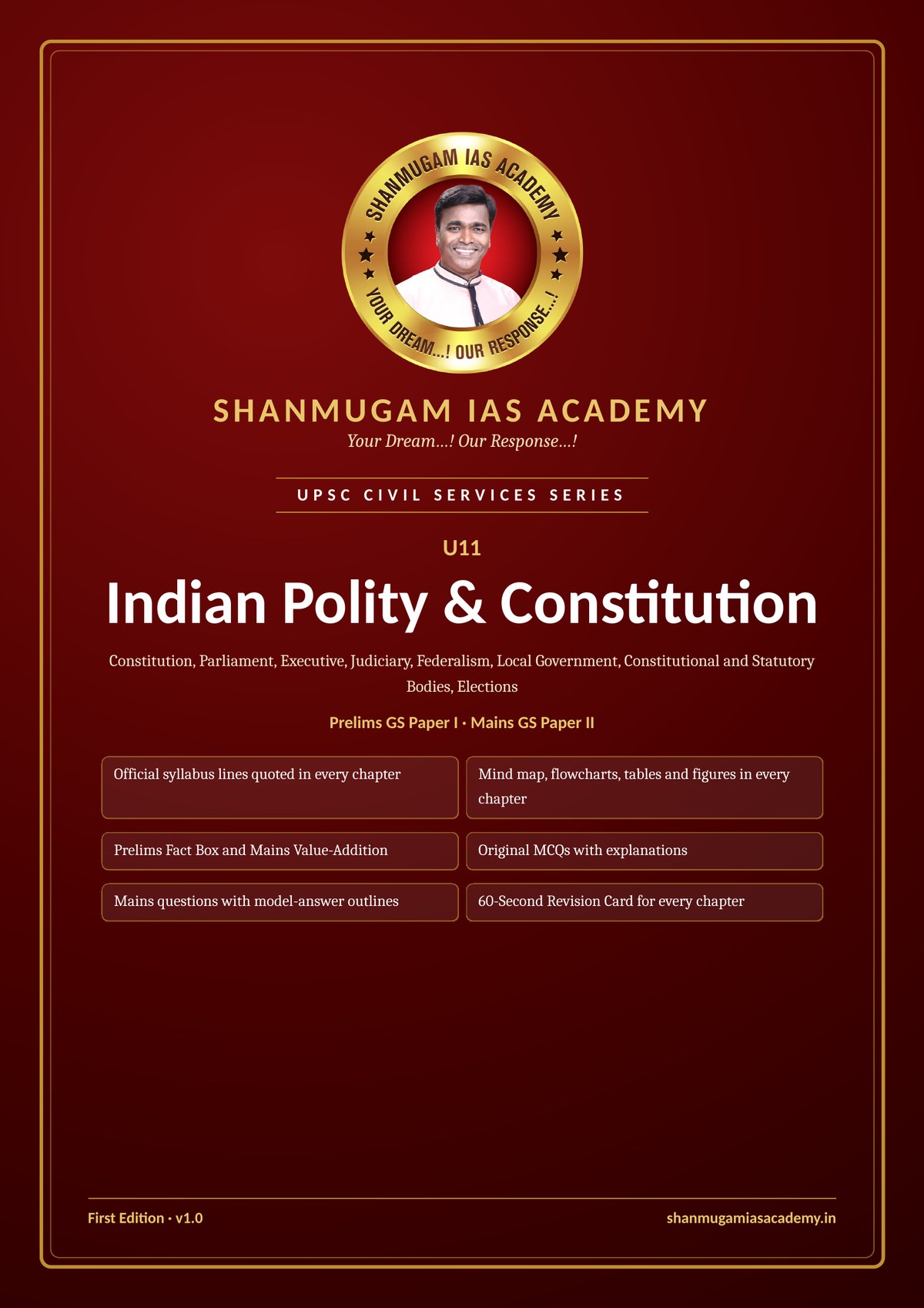 U11 · Indian Polity & Constitution – UPSC Civil Services (Prelims & Mains)
₹249
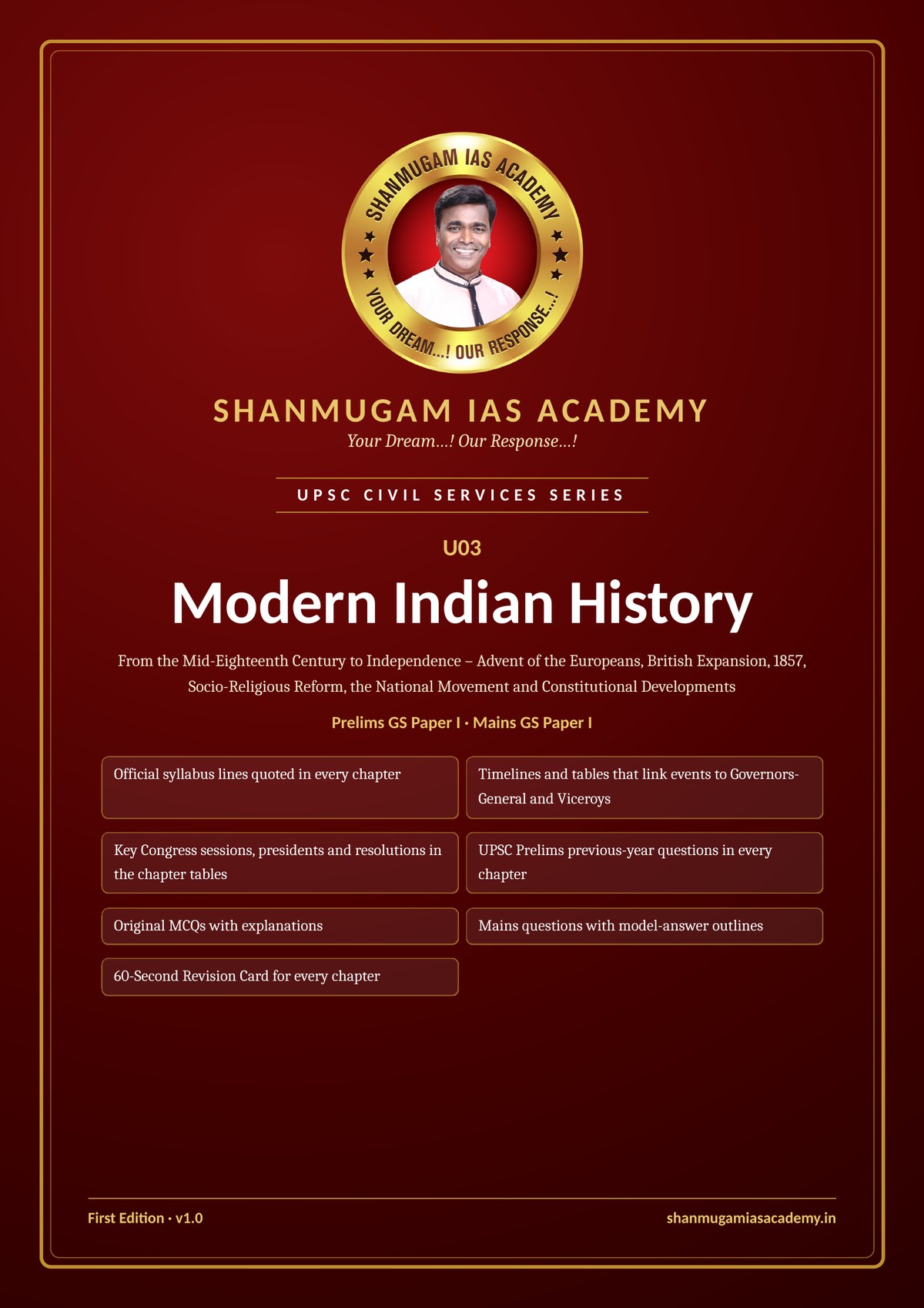 U03 · Modern Indian History – UPSC Civil Services (Prelims & Mains)
₹249
 U15 · Indian Economy – UPSC Civil Services (Prelims & Mains)
₹249
TNPSC குரூப் 1, 2/2A, 4 – நேரடி வகுப்புகள் · கோவை & மதுரை
2006 முதல் சண்முகம் IAS அகாடமி · Classroom & online coaching in Coimbatore and Madurai
