

UPSC Interview – Chapter 3: The Detailed Application Form – Filling It and Mapping Questions (20 MCQs)
UPSC Interview – Chapter 3: The Detailed Application Form – Filling It and Mapping Questions (20 MCQs) – 14 questions, subject: Interview (Personality Test). Every question has the correct answer with a two-line explanation; tap "Show Answer". Free practice for TNPSC, UPSC, SSC, Bank and RRB exams – Shanmugam IAS Academy, Coimbatore.
Link to this page from your website / blog (HTML code)
Correct Answer: B [10 days]
Explanation:
Under para B.2, candidates get a window of 10 (ten) days after the declaration of the Prelims result to update or reconfirm their details. A separate 15-day window follows the Mains result for further updates.
Correct Answer: D [e-Admit Card for the Main Examination]
Explanation:
Para B.2 says candidates update or reconfirm and submit the form after the Prelims result to enable the Commission to generate the e-Admit Card for the Main Examination. The e-summon letter for the Personality Test comes later, after the Mains result.
Correct Answer: C [will not be considered for Service Allocation]
Explanation:
Under para B.4, a candidate who indicates no Service preference will not be considered for Service Allocation. Preferences are therefore mandatory and should be filled very carefully.
Correct Answer: A [IAS or IPS]
Explanation:
Under para B.4 of the notice, a candidate who wishes to be considered for the IAS or the IPS must indicate a home cadre preference. Cadres apply to All India Services, so the question does not arise for Central Services such as the IRS.
Correct Answer: B [a common name used by candidates; the notice speaks of the Application Form]
Explanation:
"DAF" (Detailed Application Form) is a common name used by candidates, while the 2026 notice itself speaks of the Application Form. It is not the name of the interview Board or a Prelims paper.
Correct Answer: D [Yes, where false certification or gross negligence is proved after a fair inquiry]
Explanation:
The most balanced answer is yes, where false certification or gross negligence is proved after a fair inquiry. It combines accountability with due process, unlike the extremes of instant arrest or no criminal liability at all.
Correct Answer: B [1 and 3 only]
Explanation:
Statements 1 and 3 are correct: Service preferences are mandatory (para B.4), and the 15-day window after the Mains result includes updating achievements and employment details (para B.3(b)). Statement 2 is wrong because para B.5 does not allow preferences to be changed freely after submission.
Correct Answer: A [Both A and R are true, and R is the correct explanation of A]
Explanation:
Both A and R are true, and R correctly explains A: "Reading short stories in my mother tongue" is better than "Reading" because a specific entry gives a clear starting point. It also lets the candidate prepare for the likely follow-up questions.
Correct Answer: C [link]
Explanation:
"How will your engineering help you as a District Collector?" is a layer-3 question: link to administration and policy. It goes beyond the fact of the degree and the reason for choosing it, but stops short of an issue or opinion.
Correct Answer: C [1482]
Explanation:
Leonardo da Vinci's letter to Ludovico Sforza, the Duke of Milan, listing his skills is dated to about 1482. It is often cited as one of the earliest known résumés.
Correct Answer: B [securing the first rank in CSE 2014 as a candidate with a disability]
Explanation:
Ira Singhal secured the first rank in CSE 2014 (result declared in 2015) as a candidate with a locomotor disability. She was the first candidate with a disability to top the examination in the general list.
Correct Answer: C [3-1-4-2]
Explanation:
The correct order is 3-1-4-2: Leonardo's letter to Ludovico Sforza (about 1482), Naukri.com (1997), LinkedIn (2003) and the Europass CV (2005). Leonardo's letter is often called one of the earliest known résumés.
Correct Answer: D [matters of general interest]
Explanation:
Besides the record of the candidate's career, the notice says the candidate will be asked questions on matters of general interest. The interview is not a re-test of the optional or Prelims papers but an assessment of personal suitability.
Correct Answer: A [answer it, then add a fact if needed]
Explanation:
If a member jumps to layer 5, answer it, then add a fact if needed.
➤ DAF analysis, question banks, current affairs, communication and mock-interview practice – U30 · Interview Guide (UPSC book, ₹249): www.shanmugamiasacademy.in/study-materials/upsc-interview-personality-test
Today Current Affairs in Tamil | 23 நவம்பர் 2026 | TNPSC Group 4 முக்கிய வினாக்கள்
📚 TNPSC குரூப் 4 / 2 / 2A – பொதுத்தமிழ், பொது அறிவு நூல்கள்
PDF நூல்கள் · ₹149 முதல் · ஒவ்வொன்றுக்கும் 50 பக்க இலவச மாதிரி · UPI-இல் பணம் செலுத்தியதும் உடனே பதிவிறக்கம்
 பொதுத் தமிழ் — முழுமையான கையேடு (TNPSC குரூப் 2 · 2A · 4)
₹199
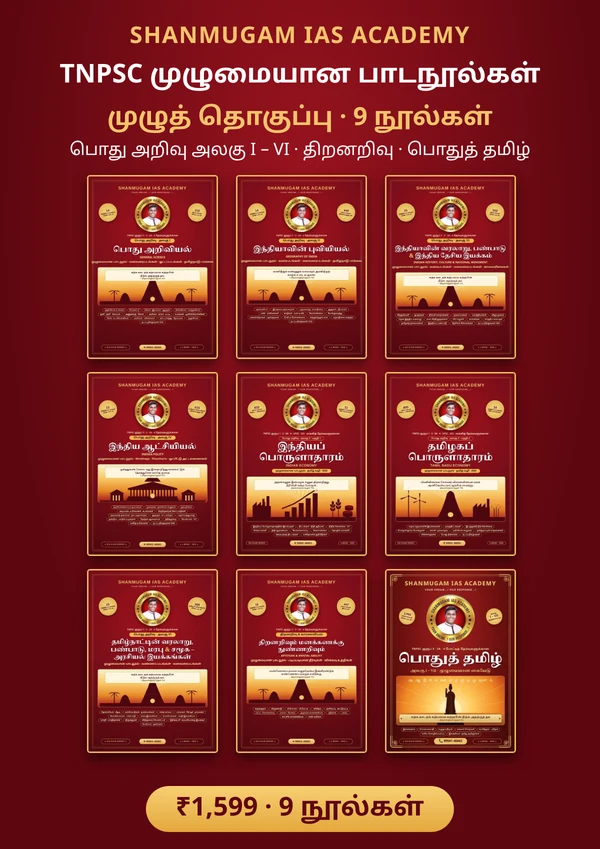 TNPSC முழுமையான பாடநூல்கள் – முழுத் தொகுப்பு (9 நூல்கள்)
₹1599
 பொதுத் தமிழ் — முந்தைய ஆண்டு வினா – விடை – விளக்கம் (புதிய பாடத்திட்டம்)
₹199
 TNPSC திறனறிவும் மனக்கணக்கு நுண்ணறிவும் (Aptitude & Mental Ability) – முழுமையான பாடநூல்
₹199
TNPSC குரூப் 1, 2/2A, 4 – நேரடி வகுப்புகள் · கோவை & மதுரை
2006 முதல் சண்முகம் IAS அகாடமி · Classroom & online coaching in Coimbatore and Madurai
