

Daily History quiz – 24 November 2026
Tap an option – the right answer and a short explanation appear at once. Your score is at the bottom. (TNPSC / UPSC Prelims)
Lothal in Gujarat had a dockyard; Kalibangan in Rajasthan a ploughed field; Mohenjo-daro the Great Bath; Chanhudaro was a bead-making centre and the only Harappan city without a citadel.
All three are correct. The Rigveda has 10 mandalas and 1,028 hymns; the Gayatri mantra (Mandala III) is addressed to the solar deity Savitr, and the Purusha Sukta (Mandala X) is the earliest mention of the four varnas.
All three are correct. Nalanda Mahavihara grew under the Guptas, Harsha and the Palas; Xuanzang studied there under Shilabhadra, and the 'Archaeological Site of Nalanda Mahavihara' became a World Heritage Site in 2016.
Khwaja Moinuddin Chishti settled at Ajmer in the late 12th century and founded the Chishti order in India; his dargah is at Ajmer. Nizamuddin Auliya (Delhi), Baba Farid (Punjab) and Salim Chishti (Fatehpur Sikri) were later Chishti saints.
Statement 3 is wrong: Harihara and Bukka founded the Vijayanagara kingdom (1336), the Bahmanis' great rival. The Bahmani kingdom (1347) moved its capital from Gulbarga to Bidar, where the minister Mahmud Gawan built a famous madrasa.
Both are true and R explains A. As the token coins were easy to copy, forged coins flooded the market and the experiment had to be withdrawn; the Sultan redeemed the tokens from the treasury. He also shifted the capital to Daulatabad (Devagiri).
In 1765 Robert Clive secured the Diwani of Bengal, Bihar and Orissa from Shah Alam II, giving the Company the land revenue of these provinces and laying the base of British political power.
After crop failure in Kheda (Gujarat), peasants sought remission of land revenue; Gandhiji and Patel led a no-revenue campaign in 1918. Indigo was the issue at Champaran (1917) and wages at the Ahmedabad mill strike (1918).
Statement 2 is wrong: the Mission rejected a separate sovereign Pakistan and proposed instead a Union with grouping of provinces. Its plan led to the elections to the Constituent Assembly by the provincial assemblies in July 1946.
The Hunter Commission (1882) under Sir William Wilson Hunter stressed primary education and its transfer to local bodies. Wood's Despatch was in 1854, the Raleigh Commission (universities) in 1902 and the Sadler Commission in 1917.
Frequently asked questions
What is the daily subject quiz?
Ten questions every day from one subject – Monday History, Tuesday Polity, Wednesday Geography, Thursday Economy, Friday Science & Technology, Saturday Environment, Sunday Tamil Nadu – with instant answers and explanations.
Do I need to sign up?
No. Tap an option to see the answer; your score is shown at the end. A free PDF of the day's questions with answers is also available.
Which exams is it for?
TNPSC Group 1, 2, 2A and 4 Prelims and UPSC Prelims; useful for SSC and bank general awareness too.
Link to this page from your website / blog (HTML code)
Free daily practice
- UPSC Mains answer practice
- Weekly Top 20 current affairs
- Daily subject quiz
- Knowledge nugget
- TNPSC Mains Practice
- All free PDFs
Classroom & online coaching – TNPSC, UPSC – Coimbatore, Madurai.
Courses & fees 99941 46662நடப்பு நிகழ்வுகள் 26 நவம்பர் 2026 | Today Current Affairs in Tamil | TNPSC Group 4 வினா விடை
📚 TNPSC குரூப் 4 / 2 / 2A – பொதுத்தமிழ், பொது அறிவு நூல்கள்
PDF நூல்கள் · ₹149 முதல் · ஒவ்வொன்றுக்கும் 50 பக்க இலவச மாதிரி · UPI-இல் பணம் செலுத்தியதும் உடனே பதிவிறக்கம்
 பொதுத் தமிழ் — முழுமையான கையேடு (TNPSC குரூப் 2 · 2A · 4)
₹199
 TNPSC முழுமையான பாடநூல்கள் – முழுத் தொகுப்பு (9 நூல்கள்)
₹1599
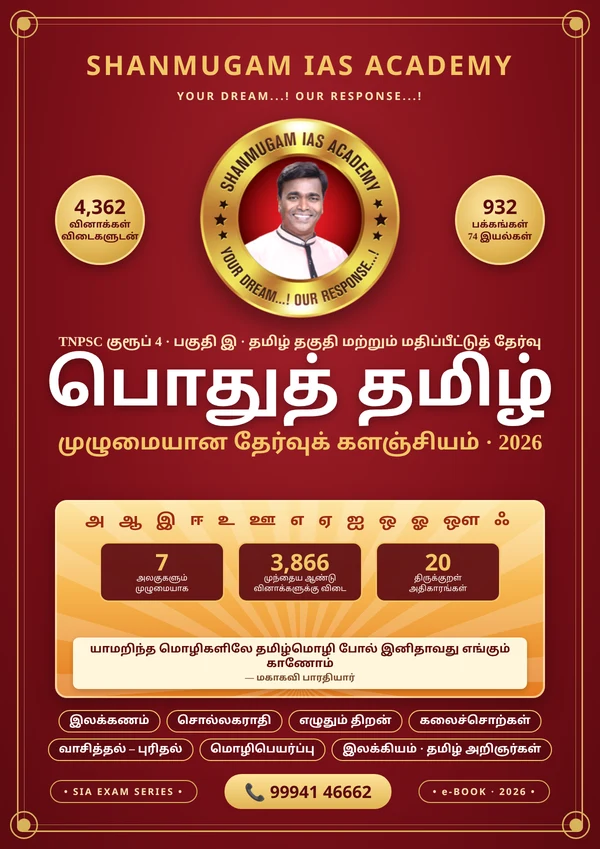 TNPSC குரூப் 4 பொதுத் தமிழ் – முழுமையான தேர்வுக் களஞ்சியம் 2026
₹249
 பொதுத் தமிழ் — முந்தைய ஆண்டு வினா – விடை – விளக்கம் (புதிய பாடத்திட்டம்)
₹199
TNPSC குரூப் 1, 2/2A, 4 – நேரடி வகுப்புகள் · கோவை & மதுரை
2006 முதல் சண்முகம் IAS அகாடமி · Classroom & online coaching in Coimbatore and Madurai
